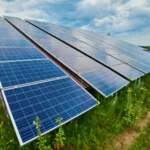
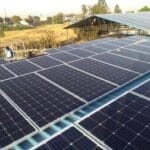
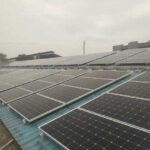
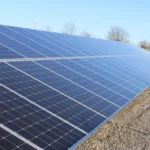
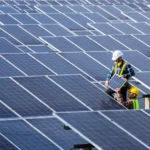
In Uttar Pradesh (UP), solar adoption is ramping up, and a 100 kW solar power plant is becoming an attractive option for large commercial users, institutions, or industries. With the right design and subsidy knowledge, you can lower your solar installation charges, optimize solar energy installation cost, and enjoy long-term returns via solar electricity generation.
At Smart Roof Solar, we help clients in UP understand these numbers, tap into subsidies, and build systems where the total cost of solar installation is transparent and optimized.
What Is a 100 kW Solar Power Plant?
A 100 kW solar system is a mid-large rooftop or ground-mounted system designed to produce significant amounts of electricity. In UP’s good solar irradiance, such a system might generate 1.3 to 1.6 lakh units (kWh) annually (depending on location, tilt, shading).
Price & Cost Breakdown for a 100 kW Plant in UP (2025)
Capacity | Estimated Cost (excluding GST) |
50 kW in UP | Starting from ₹12,50,000* |
100 kW in UP | Starting from ₹24,00,000* |
150 kW in UP | Starting from ₹35,25,000* |
200 kW in UP | Starting from ₹47,00,000* |
*Prices quoted are indicative starting rates for 100 kW solar installations and may vary based on project-specific requirements, including ground mount or tin-shed structures, RC installation types, additional accessories like DG sync, safety rails, etc. Final pricing will be confirmed upon detailed site evaluation and project scope assessment
As a ballpark, large installations in UP might fall in the ₹35,000 – ₹50,000 per kW range depending on component quality, site conditions, and complexity. The solar installation cost per kWh then depends on generation, which improves returns.
Power Generation & Payback
Assuming a generation of ~1,30,000-1,60,000 units per year, and a grid electricity rate of ₹8–₹10 per unit, the annual saving could be ₹10-₹16 Lakh.
With those numbers, the payback period tends to fall around 3 to 4 years. After that, the system continues to generate electricity at near-zero marginal cost, reducing your effective total cost of solar installation decade after decade.
Also, scale helps: every additional unit generated improves your ROI because maintenance and fixed costs are spread over more output.
Best Applications for 100 kW in UP
100 kW systems suit these use-cases:
- Medium and large manufacturing or industrial units in UP’s industrial belts
- Educational campuses, universities, and polytechnics
- Hospitals, medical complexes
- Hotels, cold storage, and large commercial buildings
- Warehouses and logistic hubs
These systems add scale, so the solar energy installation cost per MW or per unit drops, making them viable beyond just small rooftops.
Subsidy, Incentives & Conditions in UP
Unlike small residential rooftop systems, 100 kW commercial installations usually do not qualify for the full residential subsidies. But it’s still important to understand how the subsidy framework works in UP for smaller systems, and how that influences mindset and policy. You can refer to our blog to know more about UPNEDA –
UPNEDA Solar Subsidy 2025 | Solar Savings – Smart Roof Solar
So for a 100 kW system, the direct subsidy benefit is negligible or zero under current rules. The economics must be driven by cost savings, net metering, and scale.
Cost Drivers & Performance Considerations
To optimize performance and returns:
- Use high-efficiency, low-degradation modules, lowers the cost of solar per kWh installed.
- Optimize layout, orientation, and shading to maximize generation.
- Design wiring and earthing carefully to reduce losses.
- Use robust monitoring and operations & maintenance (O&M) to maintain performance over time.
- Be aware of net-metering rules in your DISCOM, they affect how excess electricity credits are given or paid.
In UP, roof structural strength, rooftop height, and shading from nearby structures are real constraints in many locations.
Why Choose Smart Roof Solar in Uttar Pradesh
With our experience in UP:
- We design 100 kW systems tuned for UP’s solar profile
- We handle a detailed cost breakup so you know your solar panel system cost, installation charges, and ROI
- Though the subsidy doesn’t apply for 100 kW, we help you with net metering and incentive compliance
- We offer full O&M, monitoring, and support, ensuring your system stays healthy and productive
Our goal is to make solar energy economical, even for large systems, through design, quality, and operational excellence.
Conclusion
A 100 kW solar power plant in Uttar Pradesh is a strong investment in the clean energy future. While subsidies are primarily focused on residential systems, a 100 kW commercial installation can deliver excellent returns through electricity savings, efficient design, and long-term performance.
If you’re planning a 100 kW solar setup, reach out to Smart Roof Solar today. We’ll help you evaluate your solar installation charges, propose a system using best-in-class panels, estimate generation, and show how your investment pays off.
FAQs
Q1. What is included in the total solar installation cost?
Ans: It covers solar panels, inverters, mounting structures, wiring, protection devices, installation labor, and system commissioning.
Q2. What are the annual maintenance requirements?
Ans: Routine cleaning, performance monitoring, and inverter checks every few months are usually sufficient for consistent output. We offer O&M services which helps increase the life of a solar. To know more, read our blog – Solar O&M Services & Maximum Power Output – Smart Roof Solar
Q3. What affects the total energy generation in UP?
Ans: Panel orientation, tilt angle, local shading, temperature, and dust accumulation are major factors influencing generation.
Q4. Can the system work during power cuts?
Ans: Only hybrid or battery-backed systems can supply power during outages; standard grid-tied systems shut off for safety.
Q5. Can solar systems handle variable loads during the day?
Ans: Yes, inverters automatically adjust solar output to match real-time power demand.