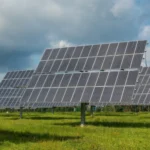
Renewable Energy Hits New Heights: 440 GW Capacity in 2023
Global renewable energy capacity additions are set to reach an all-time high of 440 GW in 2023. This growth is being driven by a number of factors, including expanding policy support, concerns over energy security, and the improved competitiveness of renewable energy compared to fossil fuel alternatives.
Solar is expected to account for two-thirds of the total increase, as policymakers in many countries, particularly in Europe, look to reduce their reliance on imported fossil fuels. Onshore wind is also expected to see significant growth, with capacity additions rebounding by 70% from 2022 levels.
India and the United States are expected to lead the way in terms of renewable capacity additions in 2023. In India, utility-scale solar projects are expected to slow briefly this year due to supply chain challenges, but overall, the country is on track to add more than 10 GW of renewable capacity. The United States is also expected to add more than 10 GW of renewable capacity, with both wind and solar technologies seeing significant growth.
The cost of electricity generation from new onshore wind and solar projects is expected to decline in 2024. However, the costs are still expected to be 10-15% above their pre-COVID levels in most markets outside China.
Solar and onshore wind are the most cost-effective options for new electricity generation in most countries, with 30-50% lower prices than future power contracts in key markets.
Governments need to consider recent inflation, interest rate rises, and commodity price turbulence when designing renewable energy auctions in order to attract investments effectively.
Market-driven procurement, particularly through corporate power purchase agreements, is expected to contribute around one-fifth of solar and wind capacity expansion in 2023 and 2024. The United States leads the expansion in corporate power purchasing agreements, followed by Brazil, Australia, Spain, and Sweden.
The global manufacturing capacity of solar is projected to reach nearly 1000 GW in 2024, which would be sufficient to meet the annual demand in the IEA’s Net Zero Emissions by 2050 Scenario. In contrast, wind equipment manufacturing is expanding slower and may struggle to keep up with the demand growth through 2030.
While China remains the dominant player in global solar manufacturing capacity, there have been announcements of solar manufacturing projects in the United States and India, indicating diversification of supply chains in the medium term.
Overall, the outlook for renewable energy in 2023 is very positive. The global market is expected to grow significantly, driven by a number of factors, including expanding policy support, concerns over energy security, and the improved competitiveness of renewable energy compared to fossil fuel alternatives.
Suggested Articles

Selecting Solar Panels: Best Guide for Homes and Factories
Solar panels are a hot topic these days, as the cost of solar is finally approaching what the average family can afford.

How to Check Battery Location for Solar PV Systems
A complete guide to solar PV battery location assessment, helping installers select safe and efficient locations for battery storage systems.

UP Electricity Tariff Increase 2015-16: Rates Rise by Rs 0.40–1.00 per Unit – What Consumers need to know
Uttar Pradesh has increased electricity tariffs for 2015-16, ranging from Rs 0.40 to 1.00 per unit. This update explains the revised rates, the sectors affected, and what consumers need to know about the tariff hike.

US Lawmakers Approve Tariffs on Solar Imports from Southeast Asia
US lawmakers vote to restore tariffs on solar imports from Southeast Asia, affecting pricing, supply, and the solar industry landscape.
India’s Renewable Energy Revolution: The Role of Agrivoltaics
Agrivoltaics, the integration of solar panels with agricultural land, is emerging as a key driver in India’s renewable energy revolution. This blog explains how agrivoltaics supports sustainable farming, increases land efficiency, and contributes to clean energy production, helping India meet its solar energy targets while boosting rural economies.

Understanding Solar Cells and Modules: A Complete Guide
Understand solar cells and modules, their functioning, and advantages for residential and commercial solar installations.

Should You Replace Solar Panels with Solar Shingles?
Discover how solar batteries store excess energy, maximize your solar system’s efficiency, and provide reliable power during outages. Learn about the types, benefits, lifespan, and maintenance tips to make the most of your solar investment.

500 kW Rooftop Solar for Industries in India: Complete Guide 2026
A complete guide to 500 kW solar for industries covering installation cost, energy generation, ROI, savings, and why it is a smart business investment.