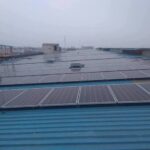
Renewable Energy Hits New Heights: 440 GW Capacity in 2023
Global renewable energy capacity additions are set to reach an all-time high of 440 GW in 2023. This growth is being driven by a number of factors, including expanding policy support, concerns over energy security, and the improved competitiveness of renewable energy compared to fossil fuel alternatives.
Solar is expected to account for two-thirds of the total increase, as policymakers in many countries, particularly in Europe, look to reduce their reliance on imported fossil fuels. Onshore wind is also expected to see significant growth, with capacity additions rebounding by 70% from 2022 levels.
India and the United States are expected to lead the way in terms of renewable capacity additions in 2023. In India, utility-scale solar projects are expected to slow briefly this year due to supply chain challenges, but overall, the country is on track to add more than 10 GW of renewable capacity. The United States is also expected to add more than 10 GW of renewable capacity, with both wind and solar technologies seeing significant growth.
The cost of electricity generation from new onshore wind and solar projects is expected to decline in 2024. However, the costs are still expected to be 10-15% above their pre-COVID levels in most markets outside China.
Solar and onshore wind are the most cost-effective options for new electricity generation in most countries, with 30-50% lower prices than future power contracts in key markets.
Governments need to consider recent inflation, interest rate rises, and commodity price turbulence when designing renewable energy auctions in order to attract investments effectively.
Market-driven procurement, particularly through corporate power purchase agreements, is expected to contribute around one-fifth of solar and wind capacity expansion in 2023 and 2024. The United States leads the expansion in corporate power purchasing agreements, followed by Brazil, Australia, Spain, and Sweden.
The global manufacturing capacity of solar is projected to reach nearly 1000 GW in 2024, which would be sufficient to meet the annual demand in the IEA’s Net Zero Emissions by 2050 Scenario. In contrast, wind equipment manufacturing is expanding slower and may struggle to keep up with the demand growth through 2030.
While China remains the dominant player in global solar manufacturing capacity, there have been announcements of solar manufacturing projects in the United States and India, indicating diversification of supply chains in the medium term.
Overall, the outlook for renewable energy in 2023 is very positive. The global market is expected to grow significantly, driven by a number of factors, including expanding policy support, concerns over energy security, and the improved competitiveness of renewable energy compared to fossil fuel alternatives.
Suggested Articles

1 MW Solar Power Plant Cost in Rajasthan: A Complete Guide
A detailed guide on the cost of setting up a 1 MW solar power plant in Rajasthan. Learn about pricing, EPC components, land needs, subsidies, and expected payback for commercial and industrial users.

Are Solar Panels 12V or 24V? Understanding Solar Panel Voltage Clearly
Solar panel wattage and ratings decide how much electricity you generate. This guide explains panel output, efficiency, and how to choose the right solar panel for your needs.

What Is a Solar Power Generating System? | Complete Guide
A solar power generating system converts sunlight into electricity for residential, industrial, and commercial use. This blog explains the components, working, and benefits of solar systems, helping you understand how to harness solar energy efficiently and sustainably.
AVANCIS Pushes CIGS Thin-Film Solar Modules Beyond 20% Efficiency
AVANCIS achieves a breakthrough in solar technology, pushing CIGS thin-film modules beyond 20% efficiency for higher performance and energy output.

Solar Panel Unpacking Guide: Do’s & Don’ts on Site
A practical solar panel unpacking guide covering safe handling, on-site precautions, and key do’s and don’ts to avoid module damage.

Solar Power System Efficiency: How to Calculate for Residential, Industrial & Commercial Use
Understand and measure your solar system’s performance. Maximize energy output at home, industrial units, and commercial buildings

How to Read the Electricity Bill Before Deciding Solar Plant Capacity
Load assessment is an essential step before installing a solar PV system. It helps determine electricity consumption and ensures accurate system sizing for optimal solar performance.

MPPT and PWM: Which Solar Charge Controller Is Better?
MPPT and PWM are the two most common solar charge controllers. This guide explains MPPT and PWM differences, efficiency, cost, and usage.