For industrial units, large commercial buildings, and institutional campuses in Indore, installing a 100 kW solar power plant is among the smartest moves you can make. It combines high output, manageable space, and strong returns. At Smart Roof Solar, we design these systems to deliver efficient generation, lower your solar installation charges, and make solar energy truly economical.
Here’s your complete guide to what a 100 kW system costs, the benefits you will get, how much you’ll generate, and what you should consider.
What is a 100 kW Solar Power Plant?
A 100 kW solar power plant means installing solar modules and associated equipment to deliver 100 kW of peak power under ideal conditions. In Indore, where solar radiance is high, that typically translates to around 1.4 – 1.6 lakh units (kWh) of solar electricity per year, depending on site specifics.
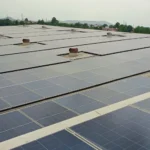
The solar panel area per kW for such a system is roughly 60-80 sq ft per kW, which means you’d likely need around 7,000-8,000 sq ft of clear rooftop or ground space. For rooftop systems, proper strength, orientation, and shadow-free layout matter a lot.
The size of the system is ideal for mid-sized factories, educational institutions, hospitals, hotels, and other commercial facilities in MP, helping reduce their grid dependency and energy costs dramatically.
100 kW Solar Power Plant Price in Indore
When planning, one of the first questions is: “What’s the total cost of solar installation?” Below, the table shows the total estimated cost of the entire project.
Capacity | Estimated Cost (excluding GST) |
50 kW in Indore | Starting from ₹13,00,000* |
100 kW in Indore | Starting from ₹25,00,000* |
150 kW in Indore | Starting from ₹36,75,000* |
200 kW in Indore | Starting from ₹49,00,000* |
*Prices quoted are indicative starting rates for 100 kW solar installations and may vary based on project-specific requirements, including ground mount or tin-shed structures, RC installation types, additional accessories like DG sync, safety rails, etc. Final pricing will be confirmed upon detailed site evaluation and project scope assessment
The cost of solar per kWh installed improves as the system size increases. After installation, your annual generation and savings will help recover this cost, and once your payback period is done, the electricity you get essentially becomes free.
Power Generation & Payback Period
In Indore, with ~300 clear sunny days annually, a well-designed 100 kW system can generate ~1.4 – 1.6 lakh units of solar energy for home use or commercial use each year.
If your electricity tariff is around ₹8 – ₹10 per unit, this means annual savings of approximately ₹11 – ₹16 Lakh. With this math, the payback period is typically around 3 to 4 years, making the investment highly compelling for businesses.
Over a span of 20+ years, the system will continue generating, while your effective solar roof installation cost per unit will drop significantly, enhancing ROI. And because you’re tapping into renewable solar technology, your long-term energy costs become far more predictable.
Ideal Applications for a 100 kW Solar System
This capacity makes sense for:
- Manufacturing units or factories with high daytime consumption
- Commercial complexes, hotels, and educational institutions
- Cold-storage houses or warehouses needing consistent power
- Hospitals and labs where uninterrupted power is critical
For each of these, installing the correct size reduces your monthly grid bills, boosts asset value, and aligns with targets for renewable energy and solar energy adoption.
Benefits of Installing a 100 kW Solar System
Here’s why you should consider this investment now:
- Massive savings on electricity bills thanks to high generation output.
- High-quality system life – with A-grade modules, the average cost of solar panels on a house or facility improves over time.
- Improved sustainability – You’re investing in renewable energy technology and reducing your carbon footprint.
- Stronger ROI – With low maintenance, the solar panel system costs pay back quickly and keeps earning for years.
- Energy independence – With a 100 kW system, you move closer to a self-sufficient power supply and protect against tariff hikes.
By optimizing design and using credible materials, the smart solar panel price you pay reflects quality and long-term value.
Factors Influencing Cost & Performance
Before sign-off, here are the main factors that affect system economics:
Module type & efficiency
Higher-efficiency panels cost more but reduce solar installation cost per kWh.
Rooftop vs ground
Rooftops may reduce land cost but might need more reinforcement.
Wiring, cables & earthing
Good design minimizes losses and improves generation output.
Shading and orientation
Poor layout can reduce generation and increase your effective cost.
After-sales & O&M
Good monitoring keeps the system healthy, reducing the long-term cost of ownership.
At Smart Roof Solar, we provide full design transparency, so you know your solar installation charges from day one, and our aim is to make solar energy economical and hassle-free.
With us, your total cost of solar installation is transparent and optimized, your system performs reliably, and you start saving quickly.
Conclusion
A 100 kW solar power plant in Indore is more than just a green move; it’s a smart business strategy. With rising tariffs, high solar irradiance, and ample government support, this system size offers excellent value.
If you’re ready to reduce your solar installation cost, get high-quality home roof solar panels cost or a commercial rooftop system, and benefit from solar electricity generation for decades, contact Smart Roof Solar today. Let’s build your solar future together.
FAQs
Q1. What is DG synchronization in solar plants?
Ans: DG sync ensures your solar system works smoothly alongside a diesel generator without causing power fluctuations.
Q2. How is solar generation monitored?
Ans: At Smart Roof Solar, we use SolarMaxx, which is an online monitoring platform to track real-time power generation and system performance. Read our blog to know more – Monitoring Services for Solar Plants – Smart Roof Solar
Q3. Can I expand my solar capacity later?
Ans: Yes, systems can be scaled up by adding more panels and compatible inverters, depending on available space and load.
Q4. Is battery storage mandatory for a 100 kW plant?
Ans: No, it’s optional. Most commercial systems are grid-tied without batteries for cost efficiency.
Q5. Can I relocate my solar plant if I shift premises?
Ans: Yes, panels and equipment can be dismantled and reinstalled at a new location by professionals.