
Industrial Solar Plants with Diesel Generator Backup: What You Need to Know
Many industries in Delhi/NCR (Kundali, Sonipat, Faridabad, Bahudargarh, Manesar, Bawal, Ghaziabad, Greater Noida etc) have to still depend on the Diesel Generator sets for running factories for few hours daily. What happens if the discom supply is disrupted during the sunny hours when the sun is still out generating the power?
Grid tied solar plants or On-grid solar systems will run when the Discom power is available as the solar inverters have in built feature which commands the solar system to generate power when it can sense that the supply is available from other sources. Such a feature is built in solar inverters as the solar power is an intermittent source of electricity supply which provides variable output depending on the solar intensity at that moment. Hence if suddenly the clouds cover the sun, the solar generation will dip making the system unstable.
Therefore, solar has to always run in conjunction with any other dependable and stable source of supply like Discom power, DG power or the batteries.
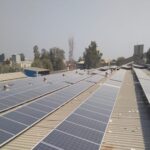
Rooftop Solar with DG
As the batteries are quite expensive and need to be replaced periodically, most factories depend on the DGs for the back up power. Solar can be connected to the DG panel directly as it is connected to the LT panel of the Discom supply in the factories. Certain protections require to be built in based on the DG sizing however. Also, the factory load that can be served by solar should never be more than the DG supply which means that the primary supply source will always remain the DG.
So, the size of solar plant cannot be more than that of the DG size as the solar alone cannot take the factory or plant’s load.
Solar will help to reduce the diesel consumption during the DG hours as the DG will run at lower loads and even idle loads depending on the system design. For the system to work smoothly, if there are multiple DGs, they should be synchronized (manually or automatically) before they are put in sync with the rooftop solar system.
Suggested Articles

Why Go Solar: A Complete Guide to Solar Power for Homes and Industries
Switching to solar energy offers significant savings and environmental benefits. This guide explains why going solar is a smart choice, covering financial incentives, reduced electricity bills, and positive impacts on the planet.
How to Calculate Battery Capacity for Solar Off-Grid Applications
Sizing a solar battery correctly is vital for off-grid performance and energy independence. This guide explains how to calculate battery capacity, choose the right type, and design a balanced off-grid system for uninterrupted power supply.
7 Common Myths about Solar Energy in India
Solar power is not only less expensive, but it is also the most abundant source of clean energy.
How to Check Solar PV Module Performance
A complete guide to testing solar PV module performance, including voltage and current measurements, power output analysis, and performance verification techniques.
PV System Maintenance Tools & Equipment Guide
A complete guide to performing the solar PV anti-islanding test, ensuring safe grid-connected operation, regulatory compliance, and reliable inverter performance.
Unintentional Islanding Test for Solar PV Systems
A complete guide to performing the solar PV anti-islanding test, ensuring safe grid-connected operation, regulatory compliance, and reliable inverter performance.
Higher Electricity Bills in Haryana as Fuel Surcharge Rises
Haryana consumers are facing higher electricity bills after the Haryana Electricity Regulatory Commission (HERC) approved a fuel surcharge hike for DHBVN and UHBVN areas. The increase reflects rising fuel and power purchase costs, directly impacting domestic, commercial, and industrial users across the state.
Solar System Grounding Conductor Size Guide
A complete guide to determining grounding conductor size for solar PV systems, ensuring safe, compliant, and reliable installations.