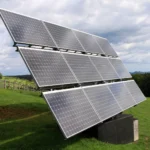
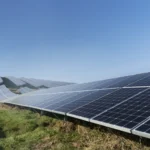
Switching to solar isn’t just about saving money anymore; it’s about building a cleaner, smarter future. For industries, schools, hospitals, and large establishments, a 100 kW solar power plant offers the perfect balance between performance and space utilization.
At Smart Roof Solar, we specialize in designing and installing high-efficiency systems that make solar energy economical, reduce solar installation charges, and deliver reliable solar electricity year after year.
What is a 100 kW Solar Power Plant?
A 100 kW solar panel system generates enough power to run medium-sized factories, commercial complexes, or institutions. On average, it produces 400–450 units of solar electricity per day, depending on sunlight and location.
This system usually needs around 7,000-8,000 sq. ft of rooftop area (roughly 70 sq. m per 10 kW, the approximate solar panel area per kW). It can be installed as an on-grid or hybrid setup to maximize savings and energy reliability.
With rising power tariffs, this scale of installation offers one of the lowest costs of solar per kWh installed, making it a smart long-term investment in renewable energy technology.
100 kW Solar Power Plant Price we offer (2025)
The total cost of solar installation varies by system design, brand quality, and site conditions. The table below shows the total estimated cost in Haryana:
Capacity | Estimated Cost (excluding GST) |
50 kW in Haryana | Starting from ₹12,50,000* |
100 kW in Haryana | Starting from ₹24,00,000* |
150 kW in Haryana | Starting from ₹35,25,000* |
200 kW in Haryana | Starting from ₹47,00,000* |
*Prices quoted are indicative starting rates for 100 kW solar installations and may vary based on project-specific requirements, including ground mount or tin-shed structures, RC installation types, additional accessories like DG sync, safety rails, etc. Final pricing will be confirmed upon detailed site evaluation and project scope assessment
For 2025, the average cost of solar panels on a house or industry will differ, depending on quality and service scope.
System Specifications
Typical 100 kW setup details:
- Solar Modules: 400-450 W Mono PERC panels (smart solar panel price depends on brand).
- Inverter: 3-phase on-grid 100 kW model with efficiency > 98%.
- Mounting Structure: MS hot-dip galvanized frame for durability.
- Generation: 1.4-1.6 lakh units annually.
- Expected Lifespan: 25 years with O&M support.
Power Generation and Payback
Thanks to Rajasthan-level irradiation, a 100 kW plant can save ₹12 – ₹16 lakh per year on bills. Depending on tariff rates and solar roof installation cost, the payback period is typically 3-4 years.
After that, you generate free solar electricity, reducing your long-term energy dependence and making solar energy economical for decades.
Ideal Applications
A 100 kW solar plant is suitable for:
- Manufacturing units & industries
- Schools, colleges & institutions
- Offices & corporate buildings
- Hospitals & healthcare facilities
- Warehouses & cold storage
Each installation is custom-engineered to reduce the solar energy installation cost and enhance return on investment.
Benefits of Installing a 100 kW Solar System
1. Significant Savings
Lower power bills and better ROI per unit of solar electricity.
2. Low Maintenance
Professional O&M reduces downtime and extends life.
3. Sustainability
Cuts CO₂ emissions by over 140 tons per year.
4. Strong ROI
15–20 % annual return over 25 years.
5. Supports Renewable Goals
Shows commitment to renewable energy and solar energy adoption.
Factors Affecting the 100 kW Solar Plant Cost
Module Efficiency
High-efficiency mono PERC panels cost more but yield better solar installation cost per kWh.
Roof Type & Height
Affects the mounting material and labor.
Cables & Safety
Proper sizing reduces losses and fire risks.
Location
Sunlight availability affects generation and ROI.
Warranty & After-Sales
Affects the long-term total cost of solar installation.
Smart Roof Solar ensures transparent breakdowns for every component, from solar installation charges to panel quality and performance.
Why Choose Smart Roof Solar
At Smart Roof Solar, we don’t just install panels, we engineer performance.
- Design & Yield Optimization to lower your solar roof installation cost.
- Clear pricing on solar panel system cost and materials.
- End-to-end O&M and monitoring services.
- Expert guidance on the government solar subsidy scheme for eligible projects.
Our goal is simple: deliver clean, dependable, and renewable solar solutions that help you save and sustain.
Conclusion
A 100 kW solar power plant offers the perfect mix of efficiency, scale, and savings. By investing in solar today, you cut operational expenses, reduce carbon impact, and secure energy independence for the future.
Contact Smart Roof Solar to get a customized quote for your 100 kW installation, including accurate solar module price per watt, estimated generation, and a complete breakdown of solar installation charges and returns.
FAQs
Q1. How long does it take to install a 100 kW solar power plant?
Ans: Typically, installation takes 4–6 weeks from design approval to commissioning, depending on site conditions.
Q2. What type of maintenance does a 100 kW system need?
Ans: Mainly cleaning of panels and routine inverter checks every 3–6 months. Check our blog to know more about maintenance – Monitoring Services for Solar Plants – Smart Roof Solar
Q3. Do I need a separate meter for solar energy export?
Ans: Yes, a bi-directional net meter is installed to track both import and export of electricity.
Q4. Can a 100 kW system power an entire factory independently?
Ans: It depends on the factory’s load profile; typically, it offsets a major portion of grid usage but not all.
Q5. How does dust or pollution affect solar generation in Haryana?
Ans: Dust accumulation can reduce efficiency by 5–10%, so regular cleaning is essential.