
In solar photovoltaic (PV) projects, the quality of solar panels directly determines system performance, reliability, and lifespan. Even minor defects in PV modules can significantly impact solar electricity generation, increase maintenance needs, and raise overall solar installation charges.
For EPC (Engineering, Procurement, and Construction) professionals, conducting thorough damage inspection and quality checks of PV modules is a critical step before installation. Identifying defects early helps avoid costly replacements and ensures optimal system efficiency.
Proper inspection and quality assurance are essential for successful renewable solar installations.
This blog provides a complete guide to PV module damage inspection and quality checks, helping installers maintain high standards and optimize solar panel system cost.
Why PV Module Inspection is Important
Solar panels are sensitive components that can be damaged during:
- Transportation
- Unpacking
- Storage
- Handling
Undetected damage can lead to:
- Reduced solar electricity generation
- Hotspots and overheating
- System failure
- Increased solar energy installation cost
Proper inspection ensures long-term performance and reliability.
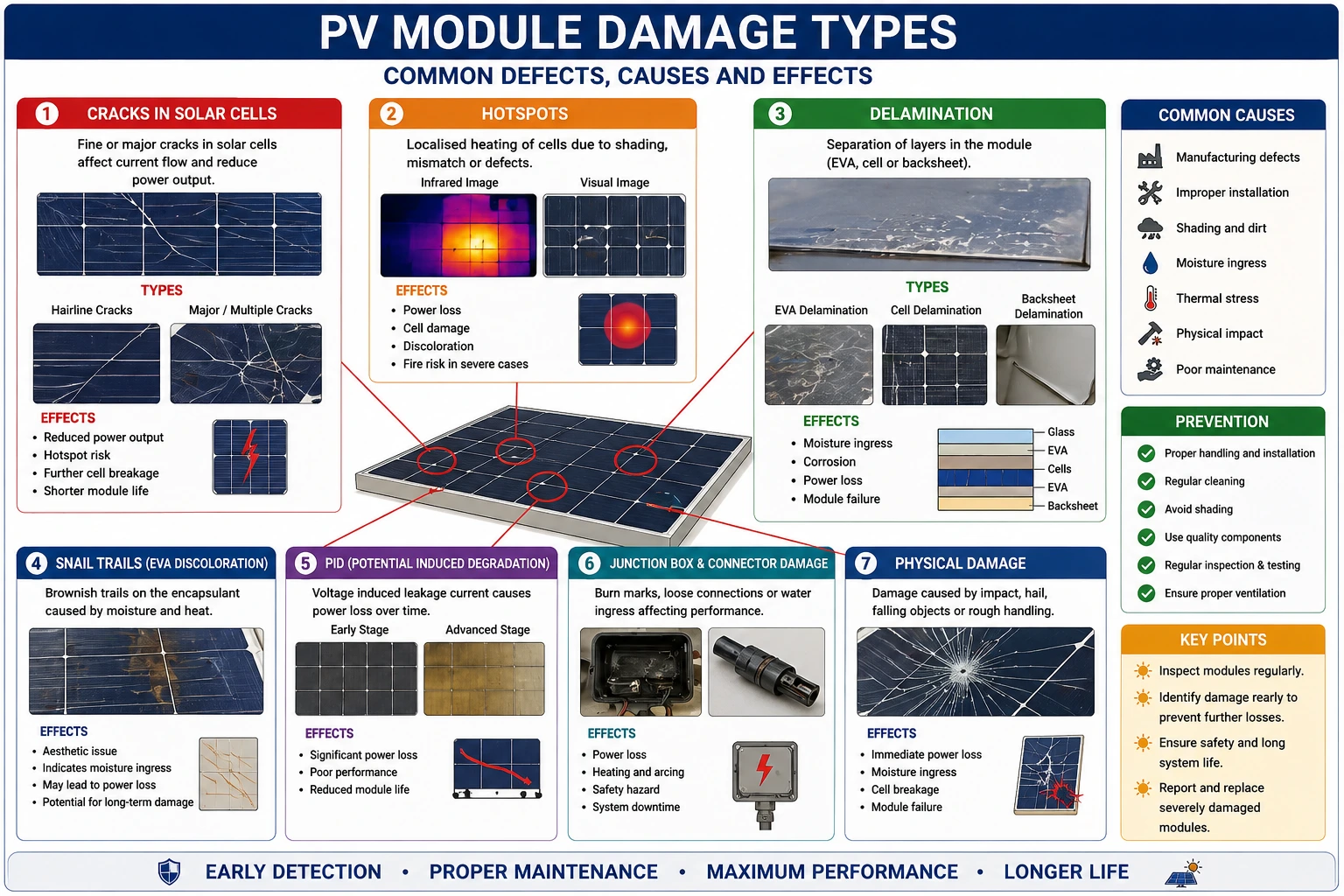
Types of PV Module Damage
1. Micro-Cracks
- Invisible cracks in solar cells
- Reduce efficiency over time
2. Glass Breakage
- Visible cracks on the panel surface
- Compromises durability
3. Frame Damage
- Bent or damaged aluminum frame
- Affects mounting and alignment
4. Delamination
- Separation of layers within the module
- Reduces performance
5. Hotspots
- Localized overheating areas
- Can cause permanent damage
6. Junction Box Issues
- Loose connections
- Damaged wiring
Stages of Inspection
1. Pre-Delivery Inspection
- Verify manufacturer quality
- Check certifications
2. Delivery Inspection
- Inspect packaging
- Check for transport damage
3. Site Inspection
- Inspect panels after unpacking
- Perform visual and technical checks
Step-by-Step Inspection Process
Step 1 – Visual Inspection
Check for:
- Cracks on glass
- Scratches
- Frame damage
- Discoloration
Step 2 – Check Label and Specifications
Verify:
- Module rating
- Serial number
- Manufacturer details
Step 3 – Electrical Testing
- Measure open-circuit voltage (Voc)
- Check short-circuit current (Isc)
Step 4 – Check Junction Box
- Inspect connectors and cables
- Ensure proper sealing
Step 5 – Infrared (IR) Testing
- Detect hotspots
- Identify hidden defects
Step 6 – Electroluminescence (EL) Testing (if available)
- Detect micro-cracks
- Identify internal defects
Step 7 – Documentation
- Record inspection results
- Report damaged modules
Tools and Equipment Required
- Multimeter
- IR camera
- EL testing equipment
- Visual inspection checklist
Quality Check Parameters
1. Electrical Performance
Ensure output matches specifications.
2. Physical Condition
No visible damage or defects.
3. Structural Integrity
Frame and glass must be intact.
4. Connector Quality
Ensure proper electrical connections.
5. Compliance with Standards
Modules should meet quality certifications.
Conclusion
PV module inspection and quality checks are critical steps in solar PV projects that ensure system reliability, efficiency, and durability. By conducting thorough inspections and following best practices, EPC professionals can prevent damage-related losses and improve overall system performance.
Quality assurance is a key aspect of successful renewable solar installations. Additionally, compliance with standards set by the Ministry of New and Renewable Energy ensures safety and reliability.
With proper inspection practices, solar professionals can optimize solar panel system cost, enhance solar electricity generation, and contribute to sustainable solar energy for home use and large-scale renewable solar solutions.
FAQs
Q1. Why is PV module inspection important?
Ans: It ensures modules are free from defects and perform efficiently.
Q2. What are common types of PV module damage?
Ans: Micro-cracks, glass breakage, frame damage, and hotspots.
Q3. What tools are used for inspection?
Ans: Multimeter, IR camera, and EL testing equipment.
Q4. How does inspection affect solar panel system cost?
Ans: It reduces replacement and maintenance costs.
Q5. Can damaged modules be used?
Ans: No, damaged modules should be replaced to ensure system performance.

Complete Guide To 100 kW Solar Setup Cost And Benefits In Uttar Pradesh
Planning to install a 100 kW solar power plant in Uttar Pradesh? This guide covers everything — from installation costs and available subsidies to long-term savings and payback time. Learn how investing in solar can reduce your electricity expenses and support a sustainable energy future for your business.
Solar Inverter Hazard Prevention Guide
A complete guide to identifying inverter hazards in solar PV systems and following safe work practices during installation, testing, operation, and maintenance.
Sequential Troubleshooting for Grid Power Interruptions in Solar PV Systems
A complete guide to sequential troubleshooting in solar PV systems, helping identify and resolve faults during grid power supply interruptions through systematic testing and diagnosis.
UP Discoms Propose 9.21% Electricity Tariff Hike for 2015-16
Uttar Pradesh Discoms propose a 9.21% increase in electricity tariffs for 2015-16, impacting residential, commercial, and industrial consumers across the state.
India and Japan Strengthen Renewable Energy Cooperation
India and Japan have initiated a partnership under the Asia Energy Transition Initiative (AETI) to support India’s clean energy transition. India has set an ambitious target of achieving net-zero by 2070, while Japan aims to achieve the same by 2050.

BOOT vs PPA Explained: Find the Best Way to Finance Your Solar Plant
Choosing between the PPA and BOOT models can significantly impact your solar savings. This guide compares both financing options to help businesses make the right decision.
Delhi Government Pledges to Boost Renewable Energy Generation
Delhi, the capital city of India, is moving towards a greener future with an ambitious plan to generate an additional 6,000 MW of electricity using renewable energy sources.

Market Demand of Solar PV Installer in India – Growth, Opportunities & Future Scope
India’s solar energy sector is expanding rapidly, creating strong demand for skilled solar PV installers across rooftop, commercial, and utility-scale projects. With increasing investments in renewable energy and rising industrial solar adoption, trained installers are becoming critical to project execution and performance. This blog explores market growth trends, career opportunities, salary potential, and the future scope of solar PV installation jobs in India’s booming renewable energy industry.