
In solar photovoltaic (PV) projects, the quality of solar panels directly determines system performance, reliability, and lifespan. Even minor defects in PV modules can significantly impact solar electricity generation, increase maintenance needs, and raise overall solar installation charges.
For EPC (Engineering, Procurement, and Construction) professionals, conducting thorough damage inspection and quality checks of PV modules is a critical step before installation. Identifying defects early helps avoid costly replacements and ensures optimal system efficiency.
Proper inspection and quality assurance are essential for successful renewable solar installations.
This blog provides a complete guide to PV module damage inspection and quality checks, helping installers maintain high standards and optimize solar panel system cost.
Why PV Module Inspection is Important
Solar panels are sensitive components that can be damaged during:
- Transportation
- Unpacking
- Storage
- Handling
Undetected damage can lead to:
- Reduced solar electricity generation
- Hotspots and overheating
- System failure
- Increased solar energy installation cost
Proper inspection ensures long-term performance and reliability.
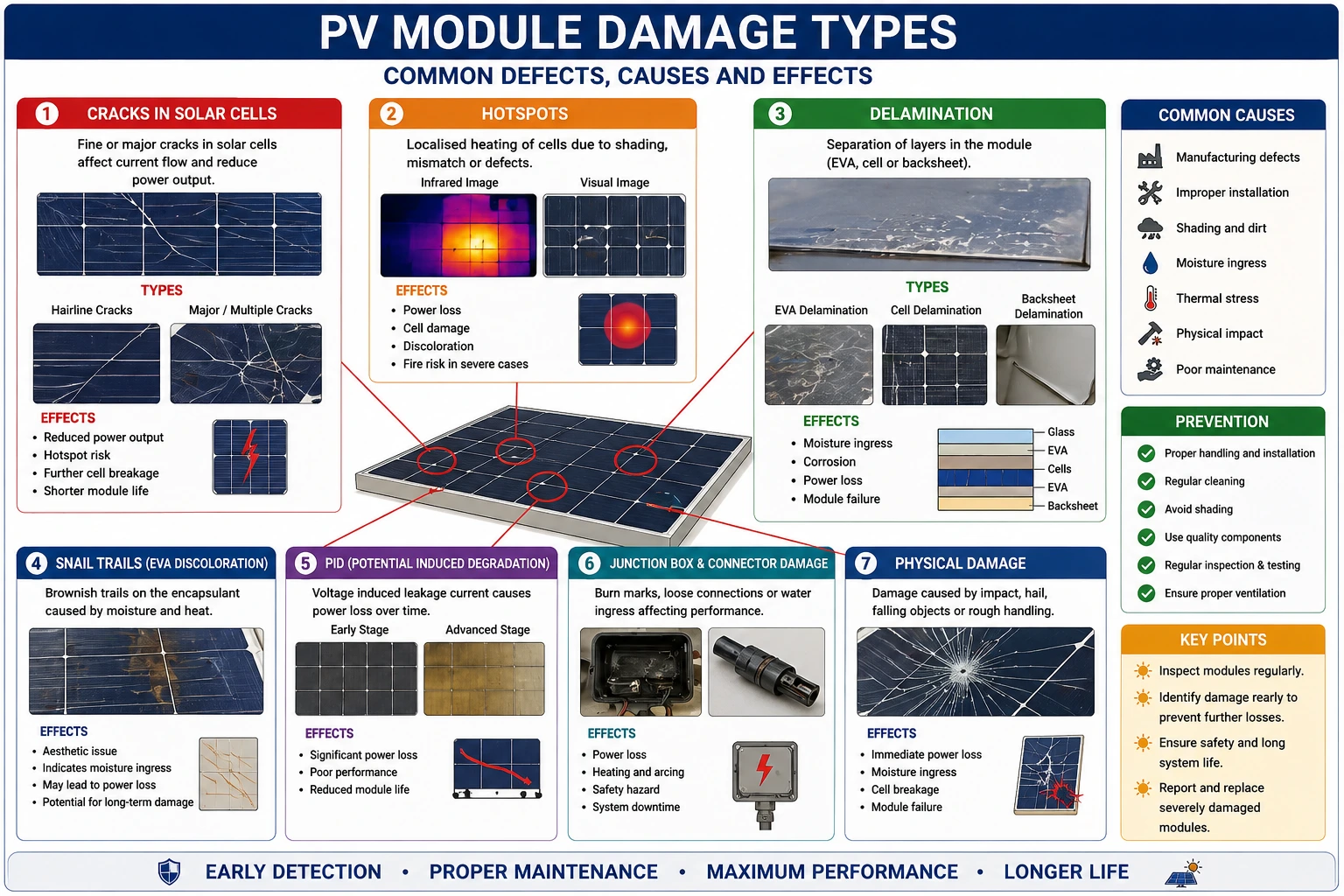
Types of PV Module Damage
1. Micro-Cracks
- Invisible cracks in solar cells
- Reduce efficiency over time
2. Glass Breakage
- Visible cracks on the panel surface
- Compromises durability
3. Frame Damage
- Bent or damaged aluminum frame
- Affects mounting and alignment
4. Delamination
- Separation of layers within the module
- Reduces performance
5. Hotspots
- Localized overheating areas
- Can cause permanent damage
6. Junction Box Issues
- Loose connections
- Damaged wiring
Stages of Inspection
1. Pre-Delivery Inspection
- Verify manufacturer quality
- Check certifications
2. Delivery Inspection
- Inspect packaging
- Check for transport damage
3. Site Inspection
- Inspect panels after unpacking
- Perform visual and technical checks
Step-by-Step Inspection Process
Step 1 – Visual Inspection
Check for:
- Cracks on glass
- Scratches
- Frame damage
- Discoloration
Step 2 – Check Label and Specifications
Verify:
- Module rating
- Serial number
- Manufacturer details
Step 3 – Electrical Testing
- Measure open-circuit voltage (Voc)
- Check short-circuit current (Isc)
Step 4 – Check Junction Box
- Inspect connectors and cables
- Ensure proper sealing
Step 5 – Infrared (IR) Testing
- Detect hotspots
- Identify hidden defects
Step 6 – Electroluminescence (EL) Testing (if available)
- Detect micro-cracks
- Identify internal defects
Step 7 – Documentation
- Record inspection results
- Report damaged modules
Tools and Equipment Required
- Multimeter
- IR camera
- EL testing equipment
- Visual inspection checklist
Quality Check Parameters
1. Electrical Performance
Ensure output matches specifications.
2. Physical Condition
No visible damage or defects.
3. Structural Integrity
Frame and glass must be intact.
4. Connector Quality
Ensure proper electrical connections.
5. Compliance with Standards
Modules should meet quality certifications.
Conclusion
PV module inspection and quality checks are critical steps in solar PV projects that ensure system reliability, efficiency, and durability. By conducting thorough inspections and following best practices, EPC professionals can prevent damage-related losses and improve overall system performance.
Quality assurance is a key aspect of successful renewable solar installations. Additionally, compliance with standards set by the Ministry of New and Renewable Energy ensures safety and reliability.
With proper inspection practices, solar professionals can optimize solar panel system cost, enhance solar electricity generation, and contribute to sustainable solar energy for home use and large-scale renewable solar solutions.
FAQs
Q1. Why is PV module inspection important?
Ans: It ensures modules are free from defects and perform efficiently.
Q2. What are common types of PV module damage?
Ans: Micro-cracks, glass breakage, frame damage, and hotspots.
Q3. What tools are used for inspection?
Ans: Multimeter, IR camera, and EL testing equipment.
Q4. How does inspection affect solar panel system cost?
Ans: It reduces replacement and maintenance costs.
Q5. Can damaged modules be used?
Ans: No, damaged modules should be replaced to ensure system performance.
Battery Inspection in Solar PV Systems Guide
A complete guide to battery inspection in solar PV systems, helping identify performance issues, safety concerns, and maintenance requirements.
How Total Solar PV Power Affects Solar System Efficiency
Total solar PV power represents the combined power output of a solar photovoltaic system. This guide explains its meaning, calculation, and how it directly impacts solar performance, efficiency, and long-term energy generation.
How to Assess Customer Requirements Before Solar Installation
Understanding customer requirements is essential before installing a solar plant. This guide explains key assessment methods such as energy analysis, site survey, and feasibility evaluation.

Difference Between Electric Power and Energy: Why Is It Important for Solar Installers?
Electric power and electrical energy are fundamental concepts in solar installations. This guide explains their differences, formulas, units, and importance for solar PV system performance.
Solar PV String Voltage and Current Measurement Guide
A complete guide to DC voltage and current testing for solar PV strings and arrays, ensuring accurate performance verification during commissioning.
Can Solar Systems Support Industrial Motors and Machines? A Complete Guide
Discover how using solar for heavy machines can power industrial equipment reliably and cost-effectively for greener operations.

Difference Between an On-Grid Inverter and a Hybrid Solar Inverter
Confused between an on-grid inverter and a hybrid solar inverter? This blog explains their differences, advantages, and which solar inverter is right for you.
EIB Green Hydrogen India: €1 Billion Investment to Boost Clean Energy Transition
The European Investment Bank (EIB), the bank of the European Union, has joined forces with the India Hydrogen Alliance (IH2A) to increase support for the development of green hydrogen projects across India.