
In solar photovoltaic (PV) systems, efficient electrical design is essential for ensuring safety, reliability, and long-term performance. One of the most important aspects of solar electrical installation is preparing a proper conduit and cable routing plan.
A well-designed cable routing plan ensures organized wiring, minimizes power losses, protects cables from environmental damage, and improves maintenance accessibility. Poor cable routing can lead to overheating, voltage drop, insulation damage, safety hazards, and increased solar installation charges.
Whether for residential rooftop systems, commercial solar plants, or utility-scale renewable solar projects, proper conduit and cable planning is critical for optimizing solar electricity generation and maintaining system safety.
Cable management and conduit planning are essential components of renewable energy technology and solar energy for home use.
This blog provides a complete guide to preparing conduit and cable routing plans for solar PV systems, including design considerations, routing methods, safety standards, and best practices.
Importance of Cable Routing in Solar PV Systems
Proper cable routing helps:
- Reduce voltage drop
- Prevent cable damage
- Improve safety
- Simplify maintenance
- Improve system aesthetics
- Optimize solar panel system cost
Poor routing can increase:
- Energy losses
- Maintenance expenses
- Solar installation cost per kWh
What is a Conduit and Cable Routing Plan?
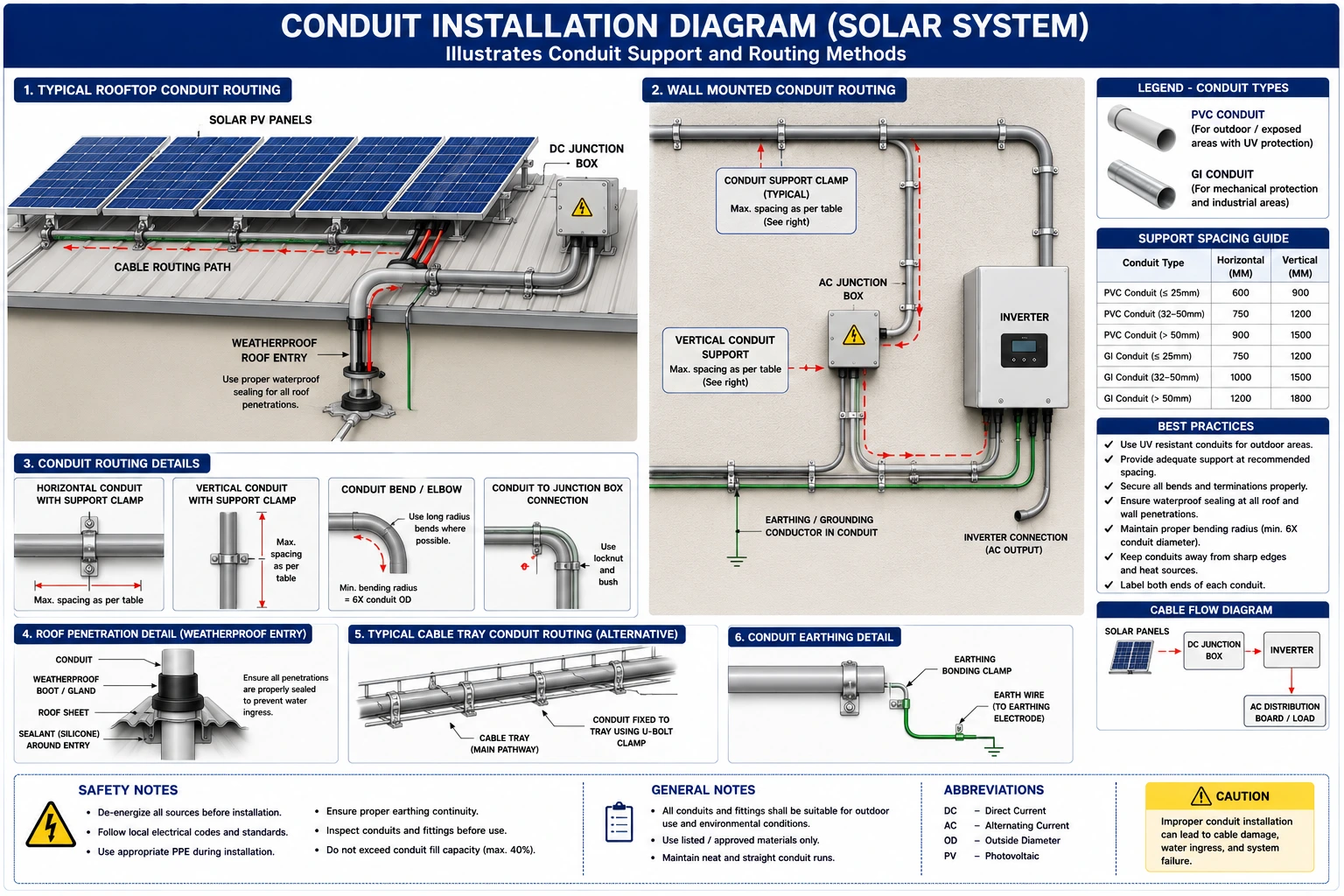
A conduit and cable routing plan is a detailed layout that defines:
- Cable paths
- Conduit locations
- Cable tray arrangements
- Entry and exit points
- Protection methods
It helps installers execute safe and organized electrical installations.
Types of Cables Used in Solar PV Systems
1. DC Solar Cables
Used between:
- Solar panels
- DC combiner box
- Inverter
Features:
- UV resistant
- Heat resistant
- Double insulated
2. AC Power Cables
Used between:
- Inverter output
- AC combiner box
- Utility grid
3. Earthing Cables
Used for grounding and safety protection.
Types of Conduits Used in Solar Installations
1. PVC Conduits
Suitable for indoor and concealed wiring.
2. HDPE Conduits
Used in underground cable routing.
3. GI (Galvanized Iron) Conduits
Used in industrial and outdoor installations.
4. Flexible Conduits
Used where movement or vibration exists.
Importance of Proper Conduit Selection
Correct conduit selection helps:
- Protect cables from mechanical damage
- Prevent moisture ingress
- Improve fire safety
- Increase cable lifespan
Key Factors to Consider While Preparing a Routing Plan
1. System Layout and Design
Understand:
- Solar panel arrangement
- Inverter location
- Combiner box positions
2. Cable Length Optimization
Shorter cable routes help reduce:
- Voltage drop
- Power loss
- Solar energy installation cost
3. Environmental Conditions
Consider:
- Sunlight exposure
- Rainwater
- Dust
- High temperature areas
4. Accessibility for Maintenance
Ensure easy access for:
- Inspection
- Troubleshooting
- Cable replacement
5. Safety Compliance
- Follow electrical standards and safety regulations.
6. Separation of AC and DC Cables
- Avoid electromagnetic interference and improve safety.
Components Required for Cable Routing
1. Cable Trays
Used for organized cable support.
2. Junction Boxes
Provide cable connection points.
3. Cable Glands
Protect cable entry points.
4. Cable Ties and Clamps
Secure cables properly.
5. Warning Labels and Markers
Improve identification and safety.
Step-by-Step Guide to Prepare Conduit and Cable Routing Plan
Step 1 – Study System Drawings
Review:
- Single Line Diagram (SLD)
- General Arrangement (GA) drawing
- Electrical layouts
Step 2 – Identify Equipment Locations
Locate:
- Solar panels
- Inverters
- Combiner boxes
- Battery bank
- Utility connection points
Step 3 – Determine Cable Types and Sizes
Calculate cable requirements based on:
- Current carrying capacity
- Voltage rating
- Distance
Step 4 – Plan Cable Routes
Select routes that:
- Minimize cable length
- Avoid sharp bends
- Prevent water accumulation
Step 5 – Select Suitable Conduit Type
Choose conduits according to:
- Installation environment
- Mechanical protection needs
- Fire resistance requirements
Step 6 – Separate AC and DC Cable Routes
Maintain proper spacing between:
- AC cables
- DC cables
- Communication cables
Step 7 – Plan Conduit Supports and Cable Trays
- Ensure proper support intervals.
Step 8 – Mark Cable Entry and Exit Points
Identify:
- Wall penetrations
- Roof entries
- Junction locations
Step 9 – Plan Earthing Cable Routing
- Ensure safe grounding paths.
Step 10 – Prepare Final Routing Drawing
Include:
- Cable sizes
- Conduit sizes
- Routing paths
- Equipment labels
Conclusion
Preparing a proper conduit and cable routing plan is a critical step in ensuring safe and efficient solar PV system installation. By carefully planning cable paths, selecting suitable conduits, maintaining proper separation, and following safety standards, installers can significantly improve system reliability and performance.
Organized cable management is fundamental to renewable solar systems and solar energy for home use. Additionally, adherence to standards established by the Ministry of New and Renewable Energy ensures safe and standardized installation practices.
With proper conduit and cable routing techniques, solar professionals can optimize solar panel system cost, improve solar electricity generation efficiency, and support sustainable renewable energy technology projects across residential, commercial, and industrial sectors.
FAQs
Q1. Why is cable routing important in solar PV systems?
Ans: It improves safety, reduces power losses, and protects cables.
Q2. Why should AC and DC cables be separated?
Ans: To reduce interference and improve safety.
Q3. Which conduit is commonly used for outdoor solar installations?
Ans: GI and HDPE conduits are commonly used outdoors.
Q4. Does proper cable routing affect solar panel system cost?
Ans: Yes, it reduces maintenance and energy losses.
Q5. What safety precautions should be followed during installation?
Ans: Use PPE, proper cable supports, and weatherproof protection.
How to Connect a Solar Panel to an MPPT Charge Controller: Step-by-Step Guide
This guide explains how to connect a solar panel to an MPPT charge controller step by step. Learn correct wiring, safety tips, and best practices to ensure efficient and reliable solar power performance.
How Solar Energy Is Converted into Electricity Using Solar Panels – Complete Guide
Solar panels convert sunlight into usable electricity through the photovoltaic effect. From photon absorption to inverter conversion and grid connection, each component plays a critical role in solar power generation. This complete guide explains the step-by-step process of how solar energy becomes electricity for homes, businesses, and industries, helping you understand the technology behind India’s growing renewable energy movement.
Solar PPA for Commercial Buildings: Cost, Benefits & Savings
Looking to cut electricity bills without investing in solar assets? Commercial Solar PPA providers offer zero-investment solar solutions where businesses pay only for the power generated—simple, risk-free, and cost-effective.
Haryana and UP Face Delays in Solar Net Metering Approvals
Net metering for rooftop solar in Haryana and Uttar Pradesh faces procedural delays, affecting solar adoption and efficiency for residential and commercial consumers
New IREDA Loan Scheme for Solar Rooftop Projects: Benefits, Eligibility & Interest Rates
India’s renewable energy push gets a major boost with the new IREDA loan scheme for solar rooftop projects. This scheme offers low-interest financing, simplified approvals, and better support for residential, commercial, and industrial consumers. Here’s a detailed look at its benefits, eligibility, interest rates, and how to apply for funding.
Should You Switch to Solar in India? Complete Guide
India has become a hot-selling solar market and people are interested in installing solar systems in their homes as well as in industries and factories.
Can Solar Systems Support Industrial Motors and Machines? A Complete Guide
Discover how using solar for heavy machines can power industrial equipment reliably and cost-effectively for greener operations.
How Total Solar PV Power Affects Solar System Efficiency
Total solar PV power represents the combined power output of a solar photovoltaic system. This guide explains its meaning, calculation, and how it directly impacts solar performance, efficiency, and long-term energy generation.