
In a solar photovoltaic (PV) system, the way solar modules are interconnected plays a crucial role in determining overall system performance, voltage levels, and current output. Proper wiring ensures efficient solar electricity generation, safety, and optimal system design, while incorrect connections can lead to power losses, overheating, and increased solar installation charges.
Understanding series and parallel interconnections is fundamental for every installer and EPC professional. Correct electrical configuration is essential for reliable renewable solar installations.
This blog provides a complete step-by-step guide to solar module interconnection, covering both series and parallel wiring techniques.
Basics of Solar Module Interconnection
Solar panels can be connected in two main ways:
- Series connection
- Parallel connection
These configurations determine the system’s voltage and current output.
Series Connection of Solar Modules
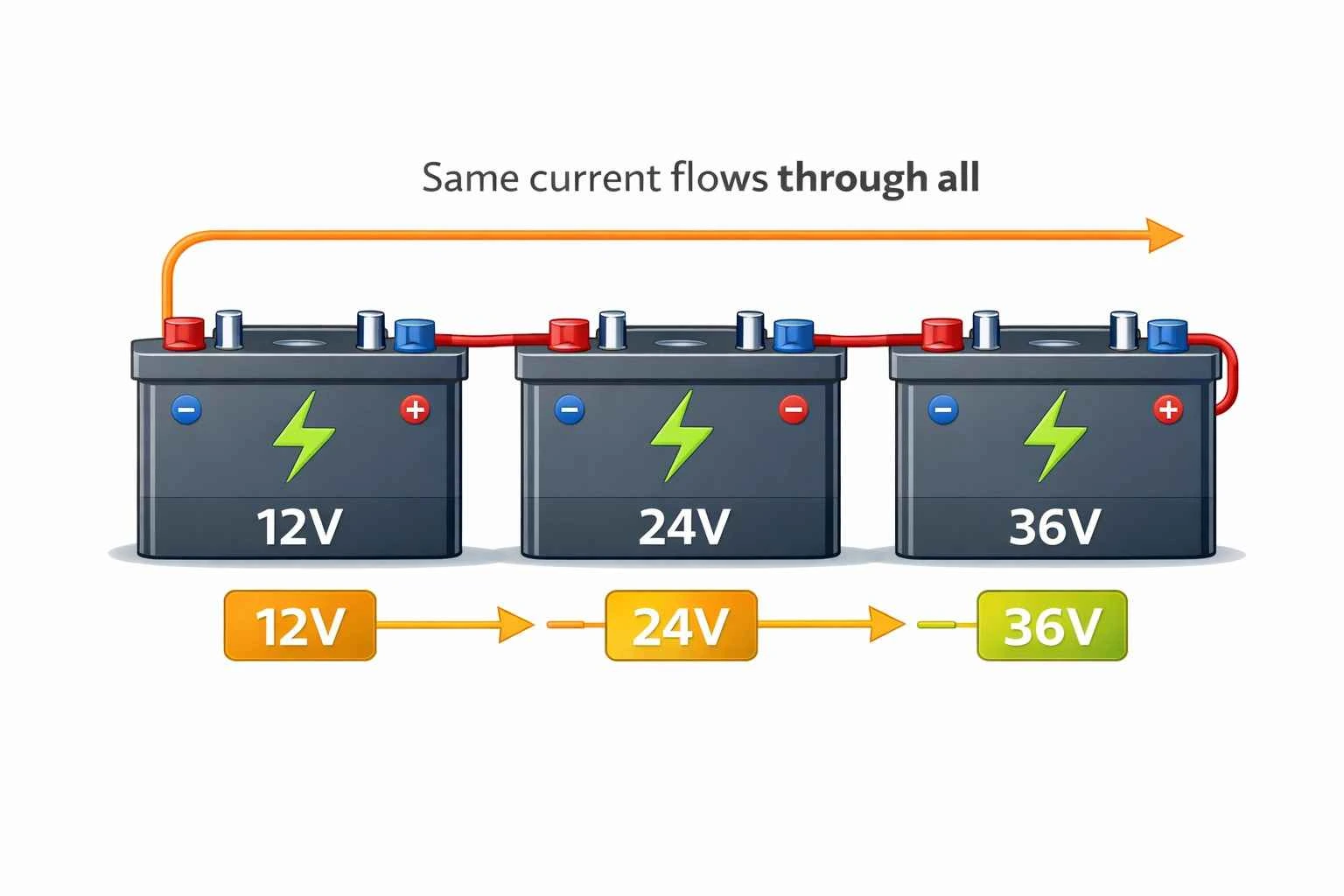
What is Series Connection?
In a series connection, the positive terminal of one module is connected to the negative terminal of the next module.
Effect on Electrical Parameters
- Voltage increases
- Current remains constant
Example
If each module has:
- Voltage = 40V; Current = 10A
For 5 modules in series:
Total Voltage = 200V; Current = 10A
Advantages
- Suitable for high-voltage systems
- Reduces cable losses
Disadvantages
- Shading on one module affects entire string
Parallel Connection of Solar Modules
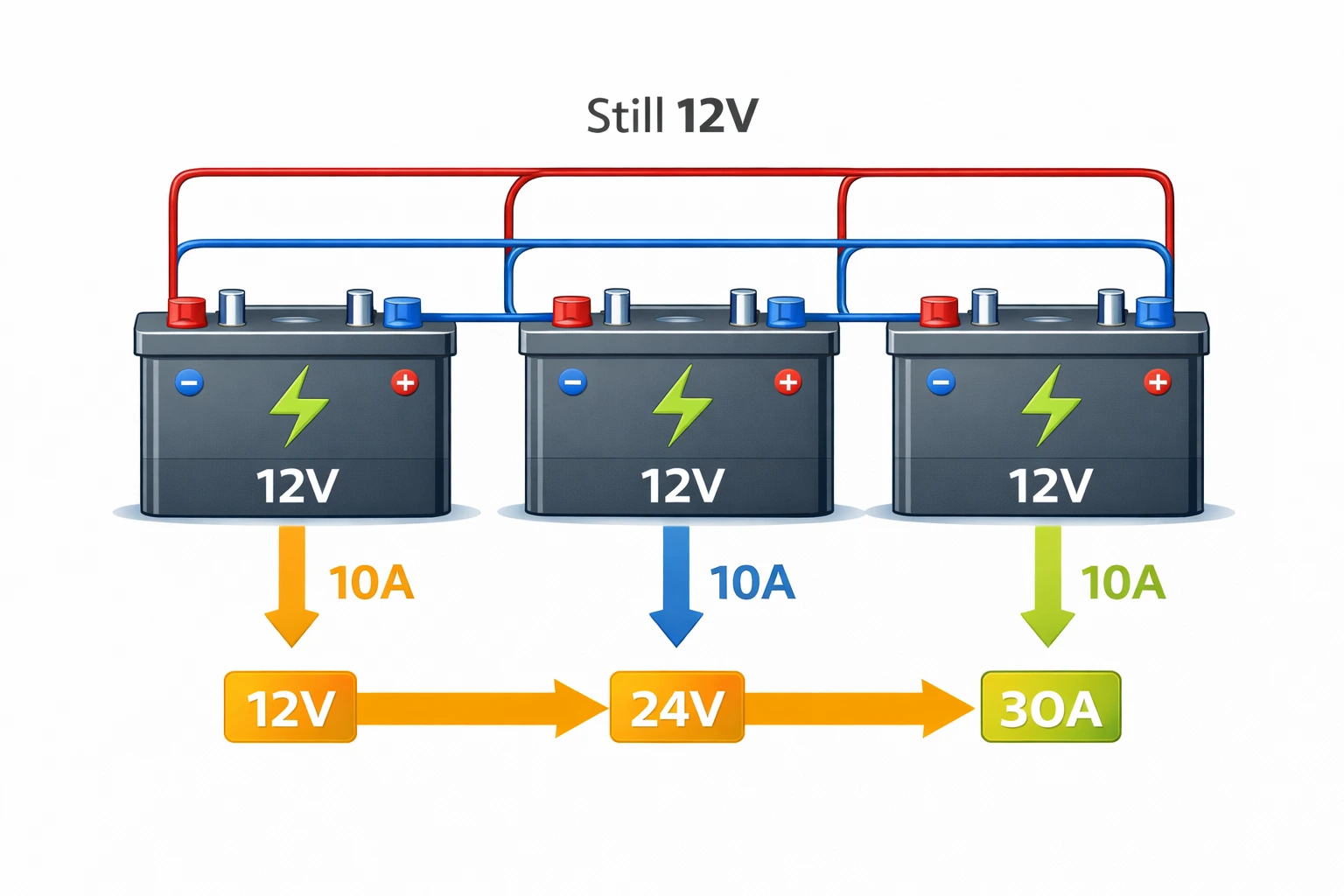
What is Parallel Connection?
In a parallel connection, all positive terminals are connected together and all negative terminals are connected together.
Effect on Electrical Parameters
- Current increases
- Voltage remains constant
Example
If each module has:
- Voltage = 40V; Current = 10A
For 5 modules in parallel:
- Voltage = 40V; Total Current = 50A
Advantages
- Better performance under partial shading
- Higher current output
Disadvantages
- Requires thicker cables
- Higher installation complexity
Series-Parallel Combination
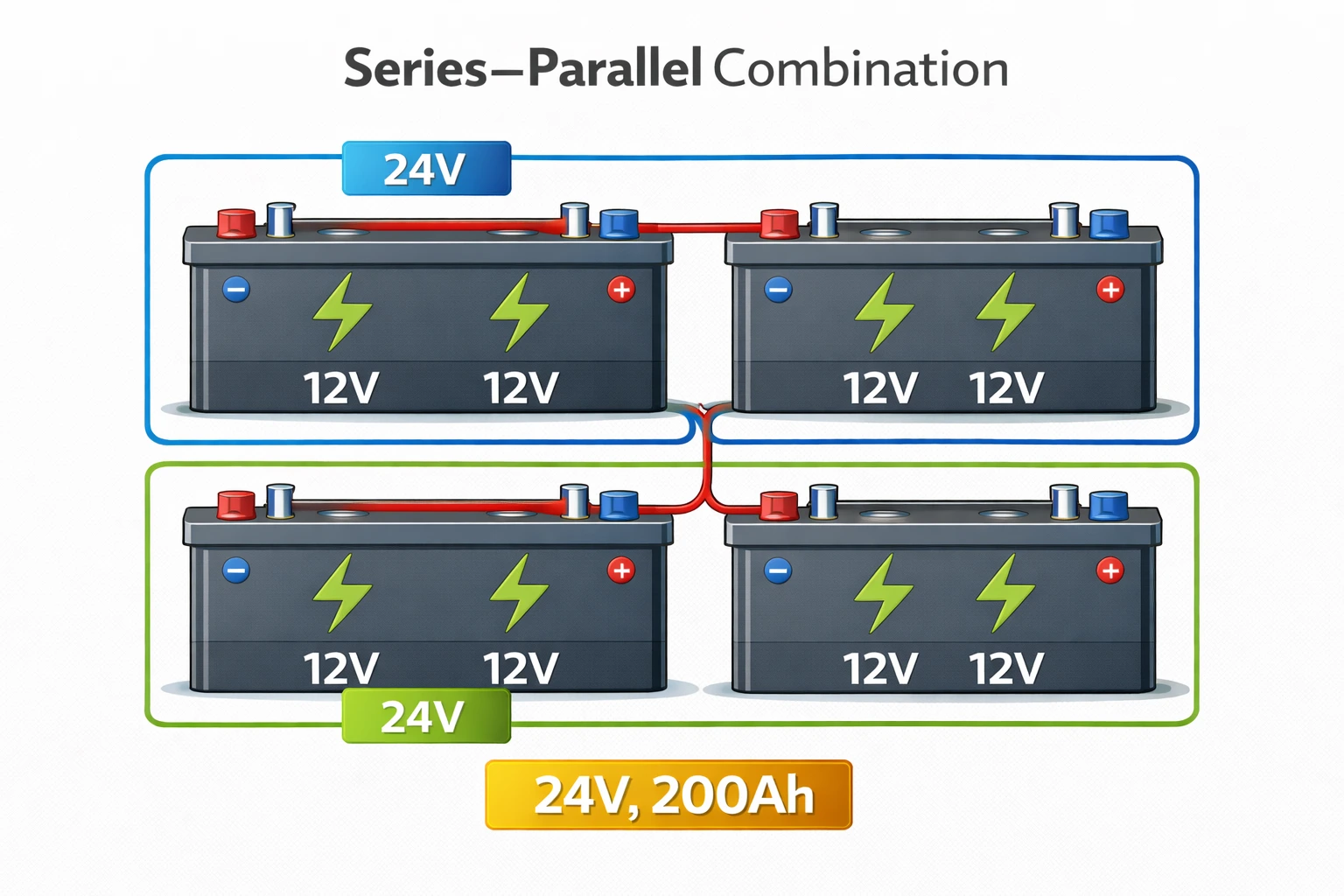
Most solar PV systems use a combination of series and parallel connections to achieve desired voltage and current levels.
Components Required for Interconnection
- Solar cables
- MC4 connectors
- String combiner box
- Junction boxes
Tools Required
- Crimping tools
- Wire strippers
- Multimeter
- Insulation tester
Step-by-Step Wiring Guide
Step 1 – Understand System Design
- Review system voltage and current requirements
- Study wiring diagrams
Step 2 – Arrange Modules
- Position modules as per layout
- Ensure proper spacing
Step 3 – Connect Modules in Series
- Connect positive of one module to negative of next
- Form strings
Step 4 – Connect Strings in Parallel
- Combine strings using combiner box
- Connect positive to positive, negative to negative
Step 5 – Use Proper Connectors
- Use MC4 connectors
- Ensure tight connections
Step 6 – Cable Management
- Route cables properly
- Avoid loose or hanging wires
Step 7 – Electrical Testing
- Measure voltage and current
- Verify connections
Step 8 – Final Inspection
- Check insulation
- Ensure secure connections
Conclusion
Proper solar module interconnection is essential for achieving efficient and reliable solar PV system performance. By following correct wiring techniques, ensuring proper connections, and conducting thorough testing, installers can maximize solar electricity generation and system efficiency.
Electrical configuration plays a key role in the success of renewable solar installations. Additionally, compliance with standards set by the Ministry of New and Renewable Energy ensures safety and quality.
With proper interconnection practices, solar professionals can optimize solar panel system cost, enhance solar electricity generation, and contribute to sustainable solar energy for home use and large-scale renewable solar solutions.
FAQs
Q1. What is the difference between series and parallel connection?
Ans: Series increases voltage, while parallel increases current.
Q2. Why are series connections used?
Ans: They are used to achieve higher voltage levels.
Q3. Why are parallel connections used?
Ans: They increase current and improve performance under shading.
Q4. What connectors are used in solar wiring?
Ans: MC4 connectors are commonly used.
Q5. Does wiring affect solar panel system cost?
Ans: Yes, proper wiring improves efficiency and reduces losses.
Solar Tracking System Installation for Maximum Efficiency
A step-by-step guide to solar tracking system installation, covering setup, alignment, and best practices for maximum efficiency and performance.

Safe Access and Tool Safety at Solar PV Sites
A complete guide to safely accessing solar PV sites and minimizing tool-related hazards through proper planning, equipment inspection, handling, storage, and safe work practices.
Solar EPC Installation Tools & Consumables Guide for Civil & Mechanical Work
A complete Solar EPC guide covering essential tools and consumables required for civil and mechanical installation to ensure smooth and efficient project execution.

Top 10 Sustainable Building Practices to Consider for Your Construction Business
The construction industry is embracing sustainability like never before. From smart design to renewable energy use, these top 10 practices ensure businesses stay competitive, compliant, and environmentally responsible.
Workplace Safety Violations in Solar PV Projects
A complete guide to establishing and following safe work procedures in solar PV systems, ensuring worker safety during installation, testing, commissioning, operation, and maintenance.
Battery Troubleshooting in Solar PV Systems Guide
A complete guide to battery troubleshooting in solar PV systems, including fault diagnosis, performance testing, common battery issues, and effective corrective measures.
How to Identify the Type of Footing Required for Solar PV Installations: Complete Guide
Learn how to identify the right footing for solar PV installations based on soil conditions, load requirements, and site factors. This complete guide covers different foundation types, selection criteria, and practical insights for safe and efficient solar system design.

Basics of Electricity and Electric Terms and Laws Required for Renewable Energy – Complete Guide
Understanding the basics of electricity is essential for anyone working in renewable energy and solar power systems. From voltage and current to Ohm’s Law and power calculations, strong electrical fundamentals ensure safe and efficient solar installations. This complete guide explains key electrical terms, units, formulas, and laws required for renewable energy professionals, students, and solar PV installers.