
In a solar photovoltaic (PV) system, the way solar modules are interconnected plays a crucial role in determining overall system performance, voltage levels, and current output. Proper wiring ensures efficient solar electricity generation, safety, and optimal system design, while incorrect connections can lead to power losses, overheating, and increased solar installation charges.
Understanding series and parallel interconnections is fundamental for every installer and EPC professional. Correct electrical configuration is essential for reliable renewable solar installations.
This blog provides a complete step-by-step guide to solar module interconnection, covering both series and parallel wiring techniques.
Basics of Solar Module Interconnection
Solar panels can be connected in two main ways:
- Series connection
- Parallel connection
These configurations determine the system’s voltage and current output.
Series Connection of Solar Modules
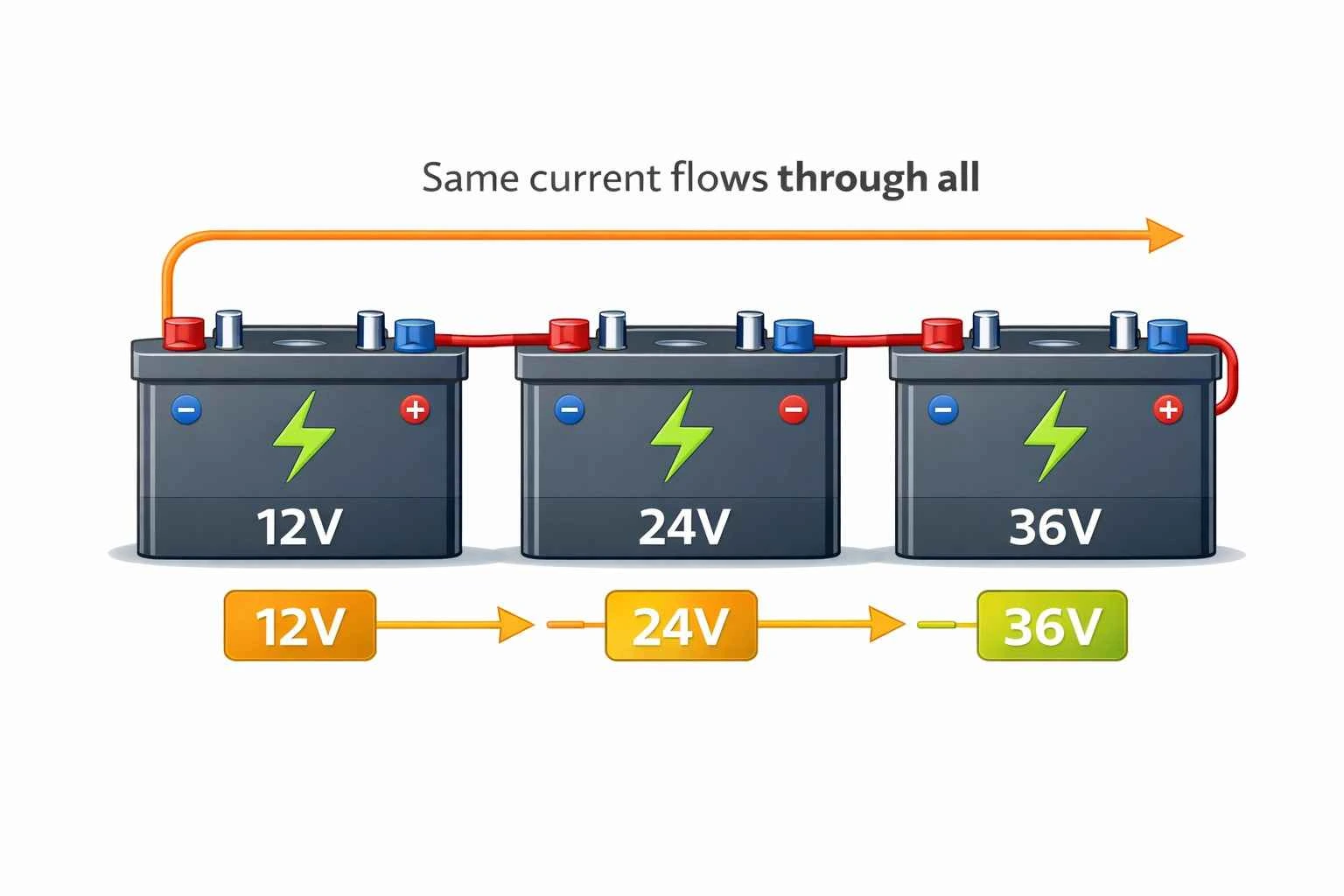
What is Series Connection?
In a series connection, the positive terminal of one module is connected to the negative terminal of the next module.
Effect on Electrical Parameters
- Voltage increases
- Current remains constant
Example
If each module has:
- Voltage = 40V; Current = 10A
For 5 modules in series:
Total Voltage = 200V; Current = 10A
Advantages
- Suitable for high-voltage systems
- Reduces cable losses
Disadvantages
- Shading on one module affects entire string
Parallel Connection of Solar Modules
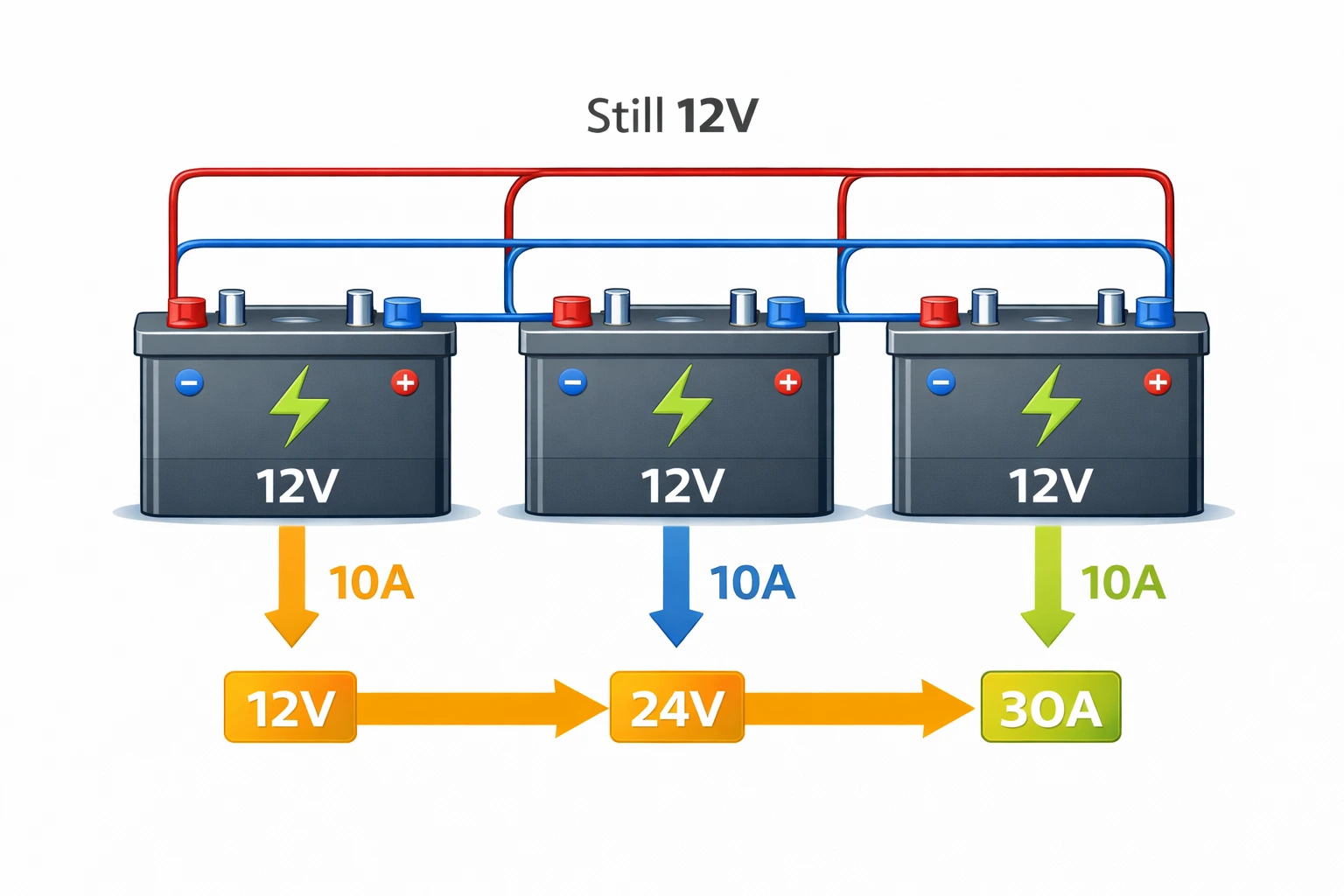
What is Parallel Connection?
In a parallel connection, all positive terminals are connected together and all negative terminals are connected together.
Effect on Electrical Parameters
- Current increases
- Voltage remains constant
Example
If each module has:
- Voltage = 40V; Current = 10A
For 5 modules in parallel:
- Voltage = 40V; Total Current = 50A
Advantages
- Better performance under partial shading
- Higher current output
Disadvantages
- Requires thicker cables
- Higher installation complexity
Series-Parallel Combination
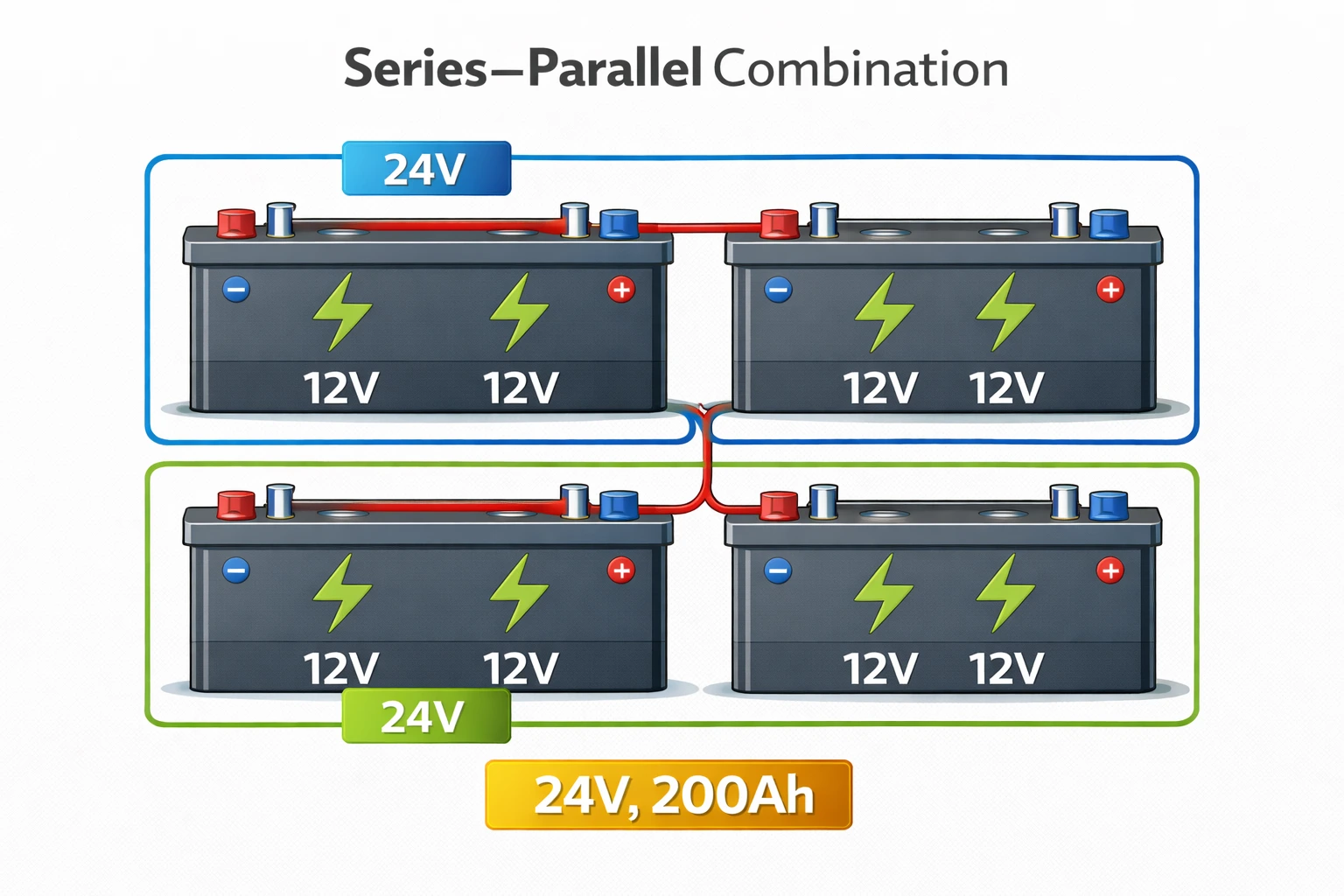
Most solar PV systems use a combination of series and parallel connections to achieve desired voltage and current levels.
Components Required for Interconnection
- Solar cables
- MC4 connectors
- String combiner box
- Junction boxes
Tools Required
- Crimping tools
- Wire strippers
- Multimeter
- Insulation tester
Step-by-Step Wiring Guide
Step 1 – Understand System Design
- Review system voltage and current requirements
- Study wiring diagrams
Step 2 – Arrange Modules
- Position modules as per layout
- Ensure proper spacing
Step 3 – Connect Modules in Series
- Connect positive of one module to negative of next
- Form strings
Step 4 – Connect Strings in Parallel
- Combine strings using combiner box
- Connect positive to positive, negative to negative
Step 5 – Use Proper Connectors
- Use MC4 connectors
- Ensure tight connections
Step 6 – Cable Management
- Route cables properly
- Avoid loose or hanging wires
Step 7 – Electrical Testing
- Measure voltage and current
- Verify connections
Step 8 – Final Inspection
- Check insulation
- Ensure secure connections
Conclusion
Proper solar module interconnection is essential for achieving efficient and reliable solar PV system performance. By following correct wiring techniques, ensuring proper connections, and conducting thorough testing, installers can maximize solar electricity generation and system efficiency.
Electrical configuration plays a key role in the success of renewable solar installations. Additionally, compliance with standards set by the Ministry of New and Renewable Energy ensures safety and quality.
With proper interconnection practices, solar professionals can optimize solar panel system cost, enhance solar electricity generation, and contribute to sustainable solar energy for home use and large-scale renewable solar solutions.
FAQs
Q1. What is the difference between series and parallel connection?
Ans: Series increases voltage, while parallel increases current.
Q2. Why are series connections used?
Ans: They are used to achieve higher voltage levels.
Q3. Why are parallel connections used?
Ans: They increase current and improve performance under shading.
Q4. What connectors are used in solar wiring?
Ans: MC4 connectors are commonly used.
Q5. Does wiring affect solar panel system cost?
Ans: Yes, proper wiring improves efficiency and reduces losses.
Solar PV Start-Up and Shutdown Procedures
A complete guide to demonstrating safe start-up and shutdown procedures for solar PV systems, covering pre-start checks, equipment sequencing, isolation, inverter operation, and system verification.
Delhi Jal Board Solar Project: A Step Towards Sustainable Energy
Delhi Jal Board has embraced solar power, becoming a leader in renewable energy adoption. This initiative highlights the benefits of solar energy, including cost savings, sustainability, and promoting clean energy practices in institutional operations.
Electrical Wiring Requirements Before Installing a Solar Power System
Before designing a solar power system, assessing the building’s electrical wiring is essential. Proper inspection ensures the wiring can safely handle solar power integration, prevents electrical risks, and improves overall system efficiency.
Higher Electricity Bills in Haryana as Fuel Surcharge Rises
Haryana consumers are facing higher electricity bills after the Haryana Electricity Regulatory Commission (HERC) approved a fuel surcharge hike for DHBVN and UHBVN areas. The increase reflects rising fuel and power purchase costs, directly impacting domestic, commercial, and industrial users across the state.
Can Solar Systems Support Industrial Motors and Machines? A Complete Guide
Discover how using solar for heavy machines can power industrial equipment reliably and cost-effectively for greener operations.

Battery Bank Installation in Solar Projects: Site Selection & Best Practices
Battery banks are essential for energy storage in solar projects. This guide explains site selection, installation procedures, safety measures, and best practices for solar battery systems.

Solar for Warehouses and Malls: Cost, Benefits, Installation & ROI in India
A complete guide on solar for warehouses and malls in India covering installation cost, benefits, ROI, system sizing, and installation process.
Solar Inverter Stand Installation: Step-by-Step Guide
A step-by-step guide to solar inverter stand installation as per drawings and manuals, ensuring proper alignment, stability, and safety.