
Solar photovoltaic (PV) modules are continuously exposed to environmental conditions such as dust, dirt, bird droppings, pollen, leaves, industrial pollution, sand, salt deposits, and other airborne contaminants. Over time, these substances accumulate on the surface of solar panels, reducing the amount of sunlight reaching the photovoltaic cells and ultimately decreasing the system’s energy output. Regular cleaning is one of the simplest yet most effective preventive maintenance activities for maintaining the efficiency and reliability of a renewable solar system.
While solar panels are designed to withstand harsh weather conditions, improper cleaning methods can cause scratches, cracks, damaged coatings, water ingress, or electrical hazards. Therefore, cleaning should always be carried out using appropriate tools, safe techniques, and manufacturer-recommended procedures. The cleaning frequency depends on factors such as location, weather conditions, air pollution, nearby vegetation, and the amount of dust or debris present at the site.
Whether the system is installed on a residential rooftop, commercial building, industrial facility, or utility-scale solar power plant, proper PV module cleaning helps maximize solar electricity generation, extend module lifespan, and improve the overall return on investment.
Regular cleaning of solar PV modules is an important preventive maintenance practice that ensures efficient renewable solar system performance and long-term reliability.
This comprehensive guide explains when and how to clean PV modules, required tools, safety precautions, step-by-step cleaning procedures, common mistakes to avoid, and industry best practices.
Why is Cleaning PV Modules Important?
Solar panels generate electricity by converting sunlight into electrical energy. When dirt or debris blocks sunlight from reaching the photovoltaic cells, energy production decreases.
Regular cleaning helps:
- Increase solar electricity generation
- Improve renewable solar system efficiency
- Reduce power losses
- Prevent long-term surface damage
- Extend module lifespan
- Improve return on investment
Even a thin layer of dust can reduce system performance, especially in dusty or polluted environments.
Common Causes of Dirt Accumulation on Solar Panels
Several environmental factors contribute to module contamination.
These include:
- Dust
- Bird droppings
- Tree leaves
- Pollen
- Industrial emissions
- Sand
- Salt deposits in coastal areas
- Air pollution
- Soot
- Moss or algae in humid climates
The cleaning schedule should consider local environmental conditions.
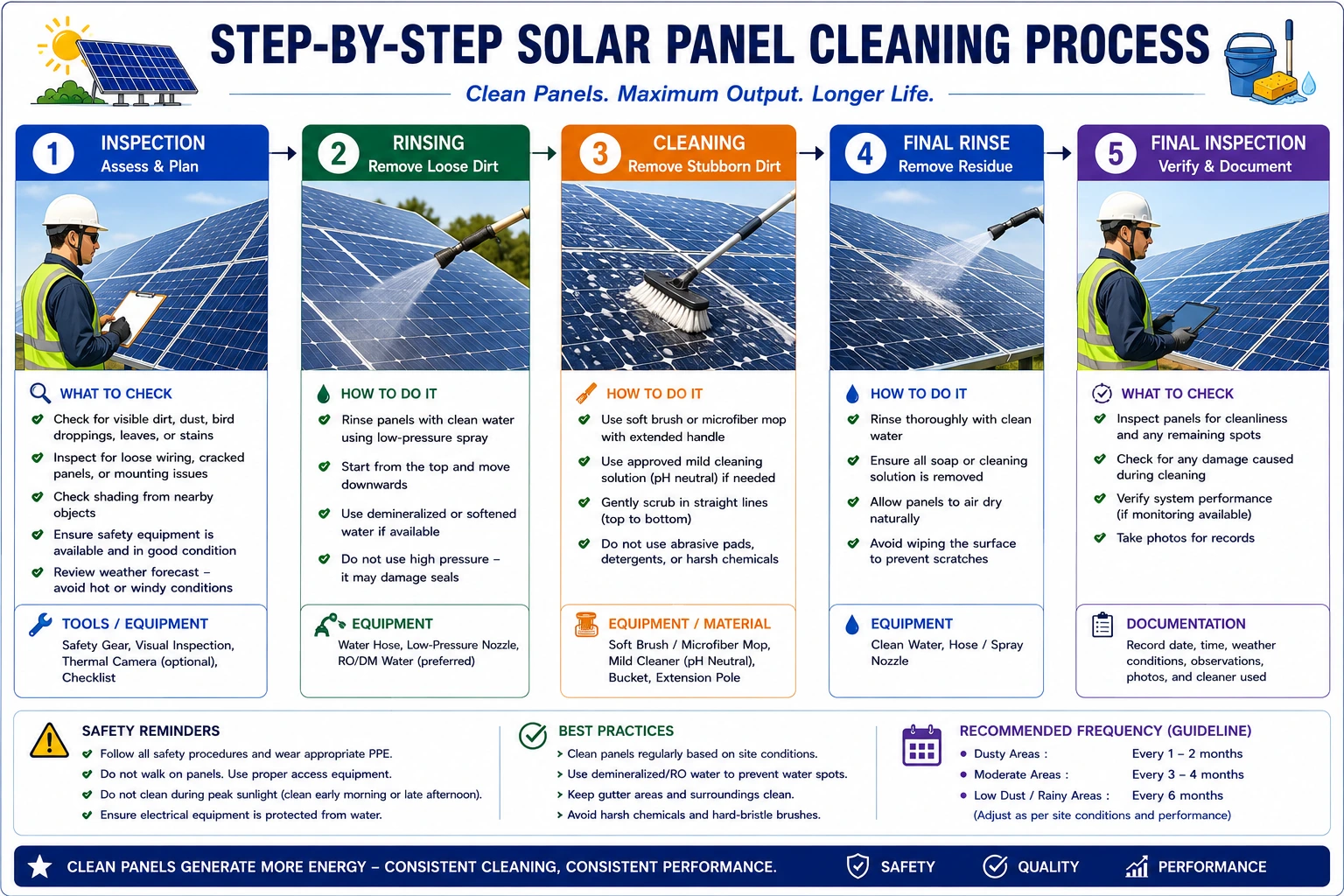
Benefits of Regular PV Module Cleaning
Routine cleaning provides several advantages.
Improved Energy Output
Clean modules absorb more sunlight, increasing power generation.
Higher System Efficiency
Removing dirt reduces shading losses and improves overall efficiency.
Longer Module Life
Regular maintenance prevents permanent surface contamination and protects the glass.
Lower Maintenance Costs
Preventive cleaning reduces the likelihood of performance issues requiring corrective maintenance.
Better Financial Returns
Higher energy production improves the overall cost-effectiveness of the solar installation.
When Should PV Modules Be Cleaned?
Cleaning frequency depends on several factors, including:
- Local climate
- Dust levels
- Rainfall
- Industrial pollution
- Bird activity
- Nearby construction
- Agricultural environments
In dusty regions, modules may require more frequent cleaning than in areas with regular rainfall. Always inspect modules before deciding whether cleaning is necessary.
Best Time to Clean Solar Panels
Cleaning should ideally be performed:
- Early in the morning
- Late in the evening
- During cool weather
- When module surfaces are not excessively hot
Avoid cleaning hot modules because sudden temperature changes may stress the glass, and water can evaporate quickly, leaving mineral deposits.
Tools Required for Cleaning PV Modules
Proper cleaning tools reduce the risk of damage.
Common equipment includes:
- Soft-bristle brush
- Microfiber cloth
- Soft sponge
- Deionized or clean water
- Non-abrasive squeegee
- Extension pole
- Bucket
- Personal protective equipment (PPE)
Use only tools recommended by the module manufacturer.
Cleaning Materials to Use
Suitable cleaning materials include:
- Clean water
- Deionized water
- Manufacturer-approved cleaning solutions (when required)
Using clean water helps prevent mineral stains.
Materials to Avoid
Never use:
- Abrasive brushes
- Steel wool
- Sharp objects
- Strong acids
- Harsh alkaline cleaners
- Solvents
- High-pressure water jets
- Metal scrapers
These materials can permanently damage the module surface.
Personal Protective Equipment (PPE)
Before cleaning, technicians should wear:
- Safety helmet
- Safety shoes
- Electrical insulating gloves
- Safety glasses
- Fall protection harness (for rooftop systems)
Safety should always be the highest priority.
Step-by-Step Procedure for Cleaning PV Modules
Step 1 – Inspect the Modules
Before cleaning, visually inspect the modules for:
- Cracks
- Broken glass
- Loose mounting hardware
- Burn marks
- Damaged connectors
- Heavy contamination
Document any defects before proceeding.
Step 2 – Verify Safe Working Conditions
Ensure:
- Weather conditions are suitable
- Rooftop access is safe
- Fall protection is available
- Electrical hazards are minimized
Do not clean during thunderstorms or strong winds.
Step 3 – Shut Down the System if Required
- Follow the manufacturer’s instructions and site procedures.
- For large maintenance activities, isolate the system if necessary.
- Always comply with safety regulations before beginning work.
Step 4 – Remove Loose Debris
Use a soft brush to remove:
- Leaves
- Dust
- Twigs
- Loose dirt
Avoid applying excessive pressure.
Step 5 – Wet the Module Surface
- Gently rinse the panel using clean or deionized water.
- This softens dirt and reduces the risk of scratching during cleaning.
Step 6 – Clean the Glass Surface
Using a soft sponge or microfiber cloth:
- Wipe gently
- Remove stubborn dirt carefully
- Avoid excessive force
Work systematically across the panel surface.
Step 7 – Rinse Thoroughly
After cleaning, rinse the module with clean water to remove any remaining residue. Ensure no soap or cleaning solution remains on the glass.
Step 8 – Remove Excess Water
Use a non-abrasive squeegee or allow the modules to air dry naturally. Avoid using rough cloths that may scratch the surface.
Step 9 – Perform Final Inspection
After cleaning, inspect the modules for:
- Remaining dirt
- Scratches
- Cracks
- Loose cables
- Mounting issues
Record observations in the maintenance logbook.
Cleaning During Different Environmental Conditions
Dusty Areas
More frequent cleaning may be required due to rapid dust accumulation.
Coastal Areas
Salt deposits should be removed regularly to minimize corrosion risks.
Industrial Areas
Cleaning may be needed more often due to soot and airborne pollutants.
Agricultural Regions
Pollen, soil particles, and crop residue may increase cleaning frequency.
Snow-Prone Regions
Only remove snow using manufacturer-approved methods. Avoid striking or scraping the module surface.
Inspection During Cleaning
Cleaning provides an opportunity to identify maintenance issues.
Inspect for:
- Cracked glass
- Delamination
- Hotspot discoloration
- Loose connectors
- Cable damage
- Corrosion
- Frame damage
- Water ingress
Report abnormalities immediately.
Conclusion
Proper cleaning of PV modules is a simple yet highly effective maintenance practice that plays a significant role in maximizing solar electricity generation, improving renewable solar system efficiency, and extending the operational life of solar panels. By using appropriate cleaning tools, following safe work procedures, inspecting modules during cleaning, and avoiding abrasive materials or improper techniques, technicians can maintain optimal system performance while protecting valuable equipment from unnecessary damage.
Routine module cleaning forms an essential part of preventive maintenance for solar PV systems. Additionally, following technical recommendations and maintenance practices promoted by the Ministry of New and Renewable Energy, together with manufacturer guidelines, helps ensure safe, efficient, and standards-compliant maintenance of renewable energy installations.
By implementing a structured cleaning schedule, maintaining accurate maintenance records, inspecting modules regularly, using approved cleaning methods, and addressing any abnormalities promptly, solar installers, EPC contractors, commissioning engineers, and operations and maintenance professionals can optimize solar panel system cost, reduce long-term maintenance expenses, maximize renewable solar system reliability, and ensure the long-term success of residential, commercial, industrial, and utility-scale solar energy projects.
FAQs
Q1. Why is cleaning solar PV modules important?
Ans: Cleaning removes dust, dirt, bird droppings, and other contaminants that block sunlight, helping improve energy production and maintain the efficiency of the solar PV system.
Q2. What is the best time to clean solar panels?
Ans: Solar panels should generally be cleaned during the early morning or late evening when module surfaces are cool, and there is less risk of thermal stress or rapid water evaporation.
Q3. Can high-pressure water be used to clean solar panels?
Ans: No. High-pressure water jets can damage module seals, glass surfaces, and electrical components. Gentle cleaning methods using clean or deionized water and soft tools are recommended.
Q4. What tools should be used for cleaning PV modules?
Ans: Suitable tools include soft-bristle brushes, microfiber cloths, soft sponges, non-abrasive squeegees, extension poles, and clean or deionized water, along with appropriate personal protective equipment.
Q5. Should cleaning activities be documented?
Ans: Yes. Cleaning activities should be recorded in the maintenance logbook, including the date, observations, cleaning method, technician details, and any defects identified during inspection.
How to Improve Energy Efficiency and Save Electricity Costs
Learn how energy conservation and efficiency can help you save electricity, cut costs, and make your home or business more sustainable
Solar Cell Technology: Monocrystalline vs Polycrystalline vs Thin-Film
Explore the different types of solar cells, including monocrystalline, polycrystalline, and thin-film, and learn their efficiency, applications, and benefits for solar energy systems.
Financing made easy for the Rooftop Solar Projects
Switching to solar is easier than ever with flexible financing options. This guide explains how to fund your rooftop solar project through loans, subsidies, and government schemes to make clean energy more affordable and sustainable.
New IREDA Loan Scheme for Solar Rooftop Projects: Benefits, Eligibility & Interest Rates
India’s renewable energy push gets a major boost with the new IREDA loan scheme for solar rooftop projects. This scheme offers low-interest financing, simplified approvals, and better support for residential, commercial, and industrial consumers. Here’s a detailed look at its benefits, eligibility, interest rates, and how to apply for funding.
Selecting Solar Panels: Best Guide for Homes and Factories
Solar panels are a hot topic these days, as the cost of solar is finally approaching what the average family can afford.
Blame it on Sun! Average Solar PLFs not satisfactory
Explore the reasons behind low average Solar PLFs, from environmental factors to system design, and learn strategies to boost solar plant performance

Law Change Makes It Hard to Receive Compensation for Solar Developers
A recent law change creates hurdles for solar developers seeking compensation, impacting project viability.
Standalone Solar PV System Startup Guide
A complete guide to identifying, recording, and repairing anomalous conditions in solar PV systems to improve reliability, performance, and safety.