Blame it on Sun! Average Solar PLFs not satisfactory
Poor performance of solar projects has become a cause of worry recently. As a benchmark the large field based projects were expected to generate around 1500 kWh of electricity for each KW of solar panels installed in the Northern India. However the performance of these projects has not been satisfactory. The table below shows the actual number of units generated per kW of solar panels as recently announced by the Agencies for different Northern India states for the year 2012-13.
| States | Capacity (MW) | 2012-13 (PLF) | 2012-13: Equivalent kWh generated per kW |
| Haryana | 7.8 | 14.50% | 1270.2 |
| Punjab | 6 | 10.50% | 919.8 |
| Rajasthan | 11 | 16.00% | 1401.6 |
| Uttar Pradesh | 7 | 8.16% | 714.816 |
| Uttarakhand | 5 | 14.70% | 1287.72 |
Few solar plants have not reported data for all the months for various reasons. Overall the data has released for 69 power plants and the corresponding average PLFs of all the states for the year 2012-13.
Of course some of these projects have generated electricity as expected but many have not.
The performance of the project in terms of electricity generation depends on the quality of panel. It implies that a 15% efficiency panel should convert 15% of the radiation falling on it to the useful electricity. Also polysilicon panels should not be having performance degradation more than 0.7% to 1% year on year.
The electricity generation will also depend on the sun radiation available in that year.
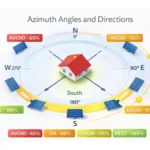
Experts say that the generation also depends on the tilt of the panels installed. The radiation available on a flat surface would be significantly lower than that on the tilted surface.
Jury is still out to understand what caused the poor performance of these projects. A high radiation with humid condition does not support high generation for example.
Year 2013 remained a year when Indian witnessed an extra-ordinary monsoon. PID problem of Indian solar panel manufacturers still remain and need to be resolved.
For the time being we can blame it on Sun! Sun was not kind enough to provide sufficient radiation. Hopefully we get better radiations and better generation in future years and for the two years that have already passed.
Suggested Articles

Solar Microgrids: All you need to know
Discover how solar batteries store excess energy, maximize your solar system’s efficiency, and provide reliable power during outages. Learn about the types, benefits, lifespan, and maintenance tips to make the most of your solar investment.

Solar Net Metering in Industrial Units: Opportunities and Risks
Solar net metering can help factories save on energy costs, but there are key pitfalls to consider. Learn the challenges and best practices for industrial adoption

Are Solar Panels 12V or 24V? Understanding Solar Panel Voltage Clearly
Solar panel wattage and ratings decide how much electricity you generate. This guide explains panel output, efficiency, and how to choose the right solar panel for your needs.

How DISCOMs Implement Net Metering for Solar Power Plants
Discover the process of net metering implementation by DISCOMs for solar power plants. Understand the benefits, billing mechanism, and how it maximizes solar energy utilization.

Introducing the ESS-2000-24V Hybrid Solar Inverter: Smart Power for Modern Homes & Businesses
The ESS-2000-24V Hybrid Solar Inverter delivers intelligent power management for homes and businesses. With advanced solar charging, lithium battery support, and seamless backup, it ensures uninterrupted, efficient, and clean energy for modern users.

EIB Green Hydrogen India: €1 Billion Investment to Boost Clean Energy Transition
The European Investment Bank (EIB), the bank of the European Union, has joined forces with the India Hydrogen Alliance (IH2A) to increase support for the development of green hydrogen projects across India.

Difference Between an On-Grid Inverter and a Hybrid Solar Inverter
Confused between an on-grid inverter and a hybrid solar inverter? This blog explains their differences, advantages, and which solar inverter is right for you.

Why Is Investing In Grade A Panels Important?
Investing in Grade A solar panels guarantees superior performance, safety, and maximum return on your solar investment.