
In a solar photovoltaic (PV) system, the way solar modules are interconnected plays a crucial role in determining overall system performance, voltage levels, and current output. Proper wiring ensures efficient solar electricity generation, safety, and optimal system design, while incorrect connections can lead to power losses, overheating, and increased solar installation charges.
Understanding series and parallel interconnections is fundamental for every installer and EPC professional. Correct electrical configuration is essential for reliable renewable solar installations.
This blog provides a complete step-by-step guide to solar module interconnection, covering both series and parallel wiring techniques.
Basics of Solar Module Interconnection
Solar panels can be connected in two main ways:
- Series connection
- Parallel connection
These configurations determine the system’s voltage and current output.
Series Connection of Solar Modules
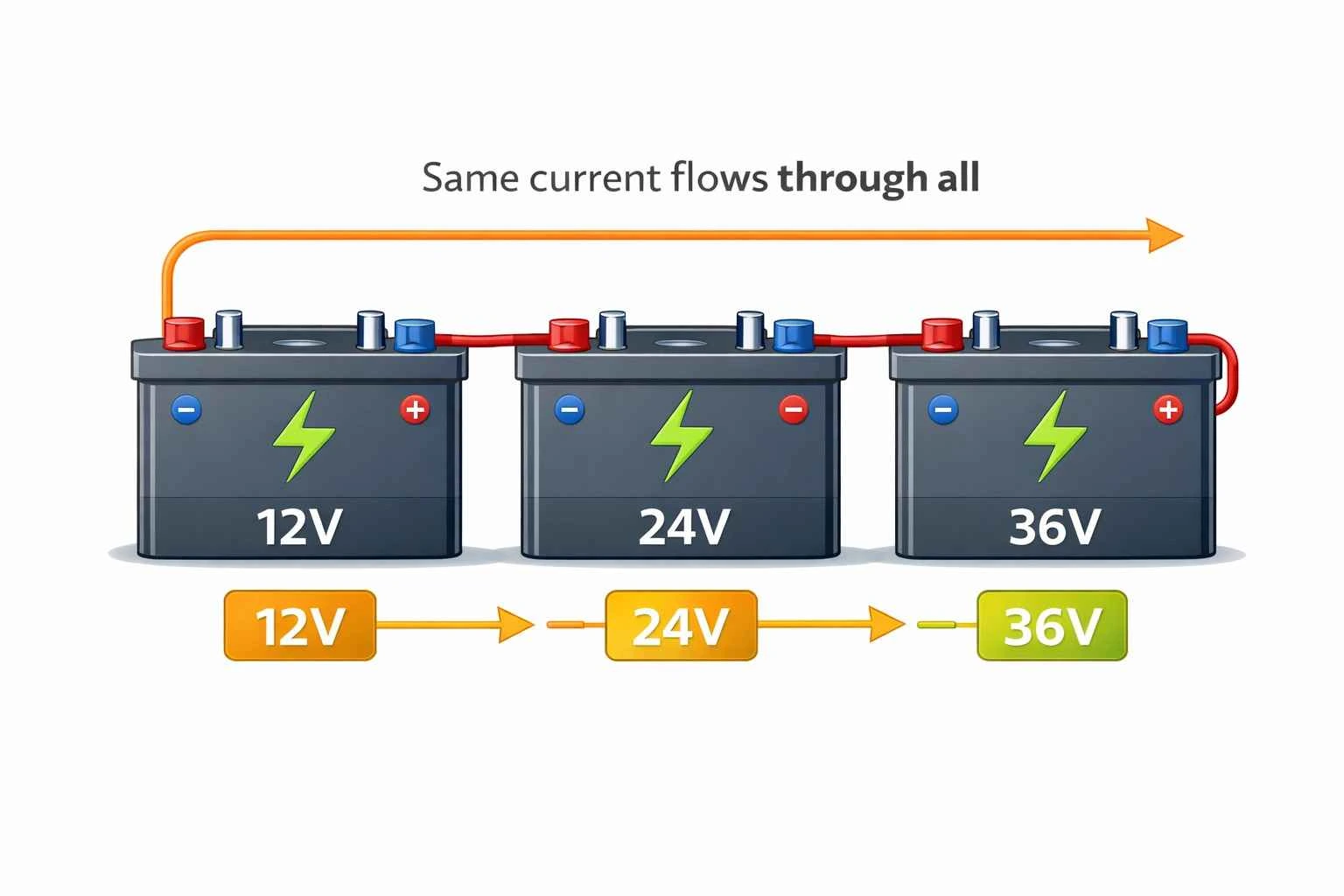
What is Series Connection?
In a series connection, the positive terminal of one module is connected to the negative terminal of the next module.
Effect on Electrical Parameters
- Voltage increases
- Current remains constant
Example
If each module has:
- Voltage = 40V; Current = 10A
For 5 modules in series:
Total Voltage = 200V; Current = 10A
Advantages
- Suitable for high-voltage systems
- Reduces cable losses
Disadvantages
- Shading on one module affects entire string
Parallel Connection of Solar Modules
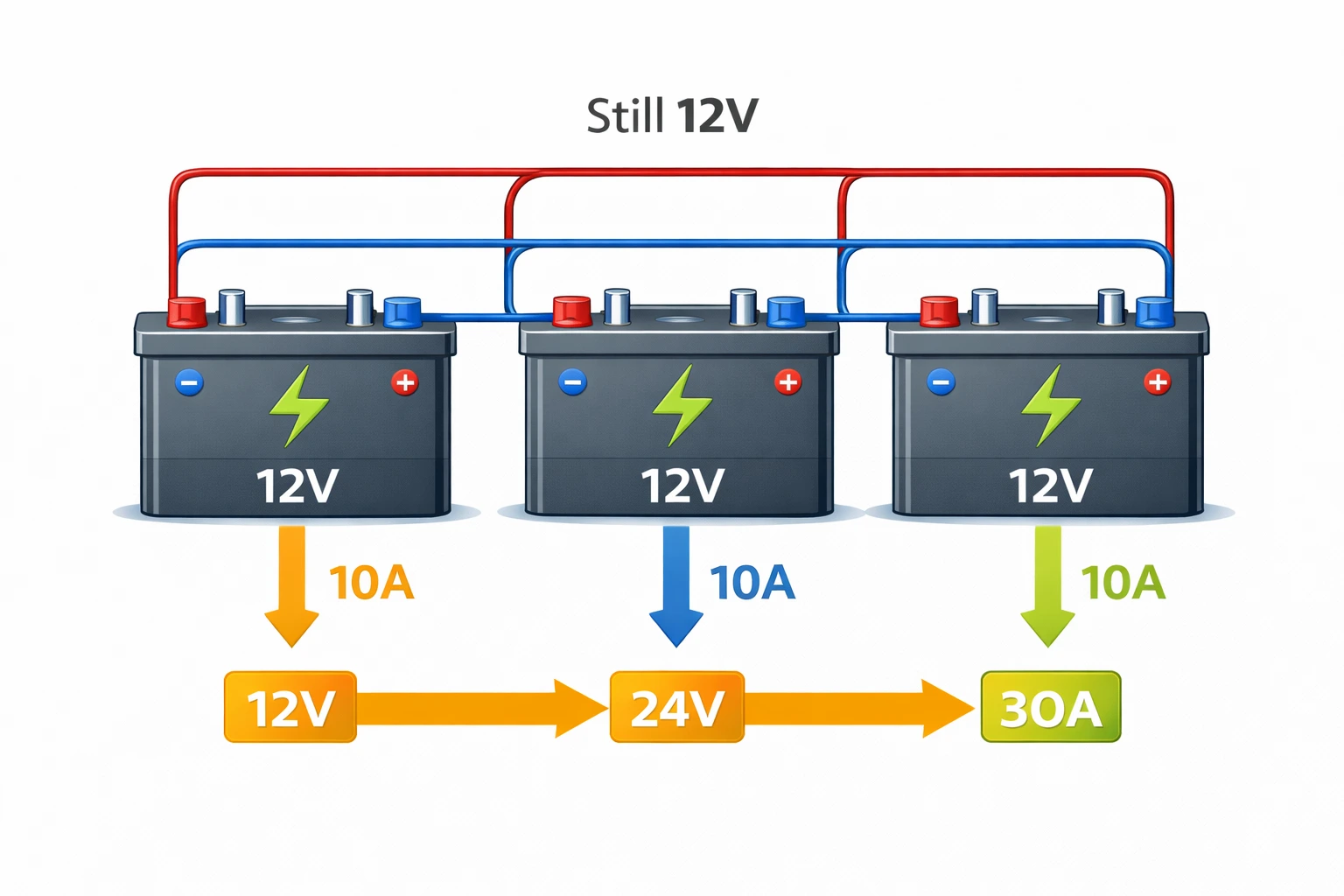
What is Parallel Connection?
In a parallel connection, all positive terminals are connected together and all negative terminals are connected together.
Effect on Electrical Parameters
- Current increases
- Voltage remains constant
Example
If each module has:
- Voltage = 40V; Current = 10A
For 5 modules in parallel:
- Voltage = 40V; Total Current = 50A
Advantages
- Better performance under partial shading
- Higher current output
Disadvantages
- Requires thicker cables
- Higher installation complexity
Series-Parallel Combination
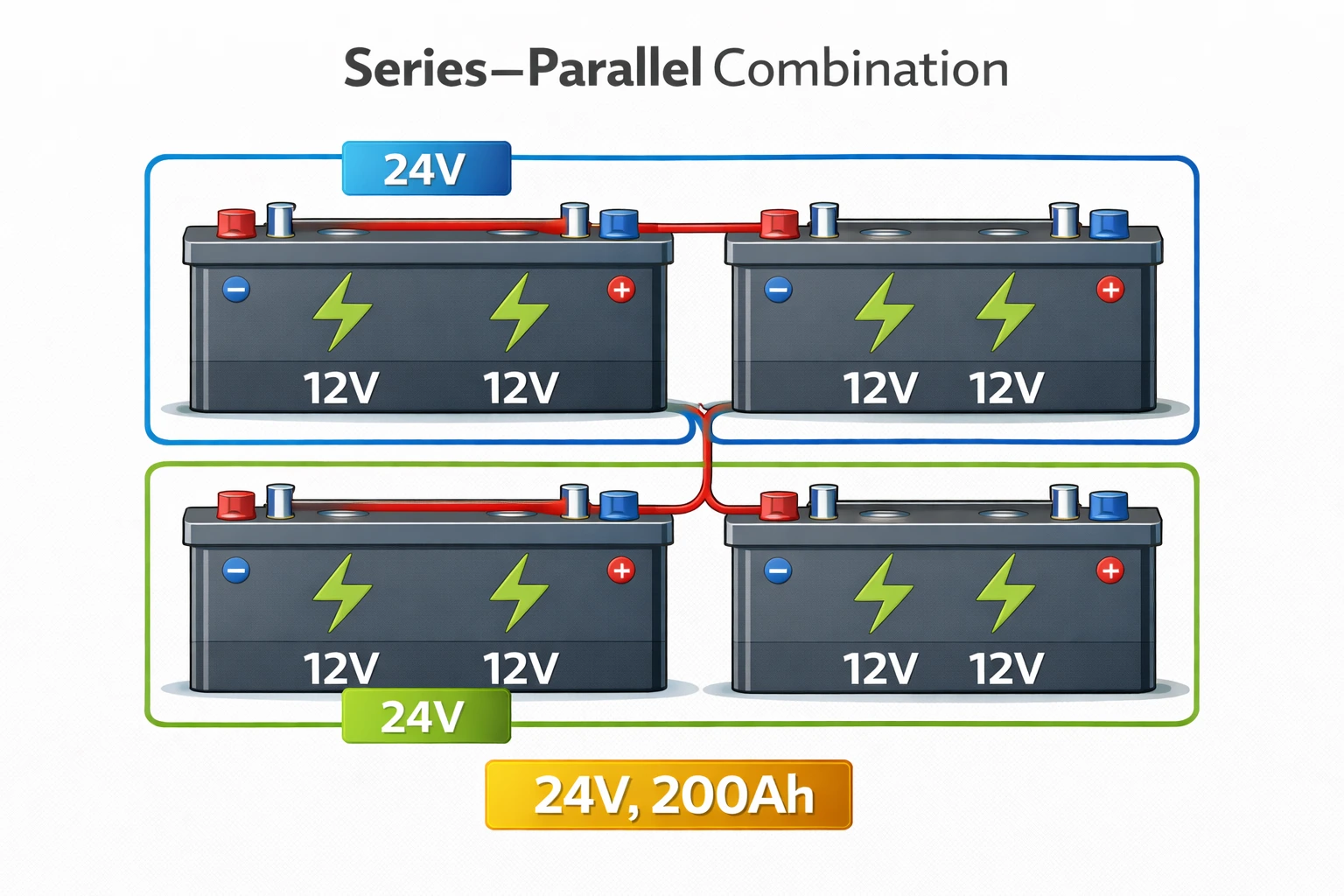
Most solar PV systems use a combination of series and parallel connections to achieve desired voltage and current levels.
Components Required for Interconnection
- Solar cables
- MC4 connectors
- String combiner box
- Junction boxes
Tools Required
- Crimping tools
- Wire strippers
- Multimeter
- Insulation tester
Step-by-Step Wiring Guide
Step 1 – Understand System Design
- Review system voltage and current requirements
- Study wiring diagrams
Step 2 – Arrange Modules
- Position modules as per layout
- Ensure proper spacing
Step 3 – Connect Modules in Series
- Connect positive of one module to negative of next
- Form strings
Step 4 – Connect Strings in Parallel
- Combine strings using combiner box
- Connect positive to positive, negative to negative
Step 5 – Use Proper Connectors
- Use MC4 connectors
- Ensure tight connections
Step 6 – Cable Management
- Route cables properly
- Avoid loose or hanging wires
Step 7 – Electrical Testing
- Measure voltage and current
- Verify connections
Step 8 – Final Inspection
- Check insulation
- Ensure secure connections
Conclusion
Proper solar module interconnection is essential for achieving efficient and reliable solar PV system performance. By following correct wiring techniques, ensuring proper connections, and conducting thorough testing, installers can maximize solar electricity generation and system efficiency.
Electrical configuration plays a key role in the success of renewable solar installations. Additionally, compliance with standards set by the Ministry of New and Renewable Energy ensures safety and quality.
With proper interconnection practices, solar professionals can optimize solar panel system cost, enhance solar electricity generation, and contribute to sustainable solar energy for home use and large-scale renewable solar solutions.
FAQs
Q1. What is the difference between series and parallel connection?
Ans: Series increases voltage, while parallel increases current.
Q2. Why are series connections used?
Ans: They are used to achieve higher voltage levels.
Q3. Why are parallel connections used?
Ans: They increase current and improve performance under shading.
Q4. What connectors are used in solar wiring?
Ans: MC4 connectors are commonly used.
Q5. Does wiring affect solar panel system cost?
Ans: Yes, proper wiring improves efficiency and reduces losses.
Understanding Solar Cells and Modules: A Complete Guide
Understand solar cells and modules, their functioning, and advantages for residential and commercial solar installations.
Solar Module Support & Racking Frame Installation
A practical guide to solar racking frame installation, covering module support structures, alignment, and best practices for reliable PV systems.

Safe Handling of Solar PV Components: Complete Guide for EPC & Installers
Proper material handling is crucial in solar PV projects to avoid damage, reduce losses, and ensure safety. This guide covers best practices for transporting, storing, and installing solar components efficiently.
Why Solar Energy Makes Sense for the Healthcare Industry
Explore how the healthcare industry can leverage solar energy to reduce electricity bills, enhance reliability, and support green initiatives.

Difference Between an On-Grid Inverter and a Hybrid Solar Inverter
Confused between an on-grid inverter and a hybrid solar inverter? This blog explains their differences, advantages, and which solar inverter is right for you.

Net Metering and Its Advantages Explained: How Solar Users Save More on Energy Bills
Learn what Net Metering and its advantages mean for you—cut electricity costs, earn energy credits, and boost solar efficiency easily.
India Solar Energy Policies: Key Updates and Government Initiatives
India is one of the leading countries in terms of solar energy development, having become the fastest-growing market for solar power globally.

Solar Panel Unpacking Guide: Do’s & Don’ts on Site
A practical solar panel unpacking guide covering safe handling, on-site precautions, and key do’s and don’ts to avoid module damage.