
Installation of solar systems on either home rooftops or C&I (Commercial and Industrial) requires a lot of capital. And there are many banks and financing companies that offer financing options at a lower interest rate.
Each option can be beneficial for different types of installation, depending on the type of feasibility the customer is looking for. Broad options like homeowners and businesses can choose bank/DFI loans, PSU financing, NBFC loans, or PPAs/RESCOs.
In 2025, the market is actively opting for alternative options rather than paying for it at once, and NBFCs and similar platforms have seen scaling up for quick loan disbursals. This has given users a better choice and options than what was available a few years ago.
Benefits For Home And Commercial Solar Installations
For house rooftop solar installations, loans and subsidies reduce a lot of the struggle. So it is easier for people to own their system and enjoy cost-cutting. Below are some of the advantages listed for opting for financing options in case of house solar rooftops:
1. Lower Monthly Electricity Bills
Homeowners get to save from day one, once financing for their rooftop solar systems. In many cases, it was observed that the EMI payments were either equal to or lower than the amount of power saved. This makes the investment financially neutral or even profitable.
2. Increased Property Value
Houses with solar panel installations are often perceived as premium properties in urban and suburban regions. A financing option will increase the demand price for the buyers, without even having to make the full payment for the setup.
3. Access to Subsidies Without Large Upfront Capital
Financing often opens doors for house owners to claim MNRE’s residential rooftop subsidy and state incentives, without heavy collateral. This makes the solar panel installation process seamless and affordable for middle-class families.
With cost-cutting being the major advantage for house owners, businessmen, and industrialists can get long-term loans, which are suitable for large rooftops. Below are some of the advantages of financing options for commercial setups.
1. Operational Cost Reduction
Businesses can reduce a big chunk of their monthly expenses by setting up solar panels themselves. With financing options, the monthly deposit/payments are often less as compared to monthly electricity bills that were previously paid. Additionally, savings on energy costs directly elevate profit margins over time.
2. Preserves Working Capital
Rather than spending a large sum on installation directly, financing allows businesses to distribute the cost over years. This way, the amount can be invested in other operational needs like expansion, inventory, or marketing.
3. Tax and Depreciation Benefits
Financing for commercial solar setups under a loan or lease model allows them to opt for accelerated depreciation benefits, which significantly reduce their taxable income over the entire life of the asset. This boosts the ROI and reduces the overall tax liabilities simultaneously.
Key Considerations: While Choosing a Financing Option
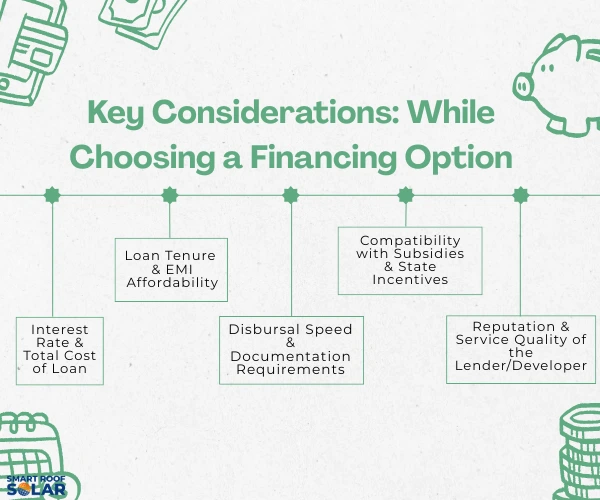
Different types of financial options can be advantageous to different people, based on the type of requirement and liability they are looking for. Some of the key considerations are listed below, which may help users who want to opt for financing and will help filter out their needs.
1. Interest Rate & Total Cost of Loan
Factors like processing fee, GST on charges, documentation costs, and any penalties should be considered, along with the interest rate. Even a 0.5% difference in rates can make a huge debt over a loan’s lifetime.
Make sure to confirm if the lender adjusts the principal amount before or after subsidy deduction. This may affect the EMI payments from the beginning.
2. Loan Tenure & EMI Affordability
Longer loan tenure increases the repayment over the months and reduces the EMI. This is helpful for housing societies, managing multiple expenses, or businesses with seasonal cash flow.
But in total, the longer tenure also means paying more in interest, so make sure to understand the financials to bridge the gap between monthly affordability and overall cost.
3. Disbursal Speed & Documentation Requirements
If the solar project needs quick installation, choose an option that releases loans quickly. NBFCs and fintech platforms often take a few days with minimal paperwork, while PSUs may take weeks.
Make sure to check the document list to shorten the process. Some options may ask for extensive property and income proofs, while others need basic KYC and some utility bills.
4. Compatibility with Subsidies & State Incentives
Not all financing companies handle MNRE or state subsidies in the same way. Some help in factoring it, which further reduces the principle before EMI calculation
While others may need you to claim it separately and then ask for the final principal amount. Clarify these things and coordinate with the agencies so that you are free of paperwork and any hassle later.
5. Reputation & Service Quality of the Lender/Developer
A low interest rate is of no use if there are any hidden clauses or poor services. For PPA or RESCO models, ensure their market reputation in maintenance, billing transparency, and that they follow their buyout clauses.
Read reviews about after-sales support, EMI management, and hidden policies, which may come up at a later time, affecting the loan repayment amount.
Popular Financing Options
1. SIDBI (Small Industries Development Bank of India)
- SIDBI has been a popular choice for MSMEs that want to choose solar as a renewable alternative.
- Offers like special green credit lines and SIDBI GIFT schemes provide concessional interest rates and interest subventions.
- This loan can cover up to 80-90% of the project cost, with repayment terms according to MSME cash flows.
2. PSU Financing (REC, PFC, and State-run Banks)
- Public Sector Undertakings (PSUs) like Rural Electrification Corporation (REC) and Power Finance Corporation (PFC), along with state banks, provide large-scale financing at comparatively lower interest rates.
- This option is ideal for big rooftop or ground-mounted projects like factories, malls, and institutional campuses.
- They offer longer repayment periods, going up to 15 years, making it attractive for larger projects. But the processing time is longer and the documentation is stricter.
3. PPA / RESCO Model
- In a Power Purchase Agreement (PPA) or Renewable Energy Service Company (RESCO) model, the customer pays nothing up front.
- Rather, a solar developer installs and owns the system and sells the generated electricity at a fixed per-unit rate.
- Usually, the rates are 20-40% lower than the grid tariff, and are perfect for people who don’t want to take a loan or invest capital.
- Many PPAs have buyout options after a period of time, allowing ownership later.
4. NBFC & Fintech Lenders
- Non-Banking Financial Companies (NBFCs) and fintechs offer quick loan approvals and flexible EMI plans that save on electricity bills.
- Many also provide pre-approved loan amounts for previous customers or partners within 48 hours.
- The interest rate is comparatively higher, which is often balanced by speed, flexibility, and low documentation burden.
Conclusion
Financing options for solar setups have grown massively in 2025, from SIDVI and PSUs to NBFCs and PPA models. Choose the option that matches your requirement and budget for savings.
For reference, you can talk to us at Smart Roof Solar, and we’ll help you choose the right finance path. With smart financing, solar can become a fast and reliable way for cost-cutting. Connect with us and install solar panels at reasonable rates and right financing option.
FAQs
Q1. Can I combine a subsidy and a bank loan?
Ans: Yes, many banks and lenders accept MNRE or state subsidy as part of the loan appraisal, but confirm with the lender first.
Q2. Do NBFC loans cost more than PSU loans?
Ans: Often, NBFCs are faster but slightly costlier. PSUs/DFIs usually offer lower rates with longer processing times.
Q3. What is PPA: Is ownership possible later?
Ans: Some PPAs include buyout clauses allowing the consumer to purchase the system after a period. Make sure to check the contract details.
Q4. Are there special loans for MSMEs?
Ans: Yes, SIDBI and some NBFCs have MSME-tailored green loan products with interest subventions and flexible tenors.
Q5. How quickly can loans be sanctioned?
Ans: NBFC/fintech loans can be released in days to weeks, depending on the type of lender. PSU/DFI loans may take longer, but can offer better rates and higher limits.
Role of PV Solar Installer in India – Responsibilities, Skills, and Industry Importance
PV solar installers play a critical role in India’s rapidly expanding solar energy sector. From rooftop systems to large-scale industrial projects, skilled installers ensure safe, efficient, and compliant solar plant deployment. This guide explains the responsibilities, technical skills, certifications, and career opportunities for PV solar installers in India, along with their growing importance in supporting the nation’s renewable energy transition.
India and IMT-GT JBC Sign MoU to Boost Energy Efficiency in Southeast Asia
The first meeting of the G20 Energy Transitions Working Group was held in Bengaluru, India, and was a success, with participants sharing a consensus on the priority areas of energy security and diversified supply chains.
What Does 1 kWp Mean in Solar Power Systems?
1 kWp is a standard unit used to measure the capacity of a solar power system under ideal conditions. This guide explains what 1 kWp means, how much energy it produces, and why it matters for system sizing.

6 Upcoming Renewable Energy Events in India You Should Attend
The World Environment Expo, 2022 is a business platform that allows national and international equipment
How to Maintain Solar Power System for Homes, Industries & Commercial Buildings
A solar power generating system converts sunlight into electricity for residential, industrial, and commercial use. This blog explains the components, working, and benefits of solar systems, helping you understand how to harness solar energy efficiently and sustainably.

Difference Between an On-Grid Inverter and a Hybrid Solar Inverter
Confused between an on-grid inverter and a hybrid solar inverter? This blog explains their differences, advantages, and which solar inverter is right for you.
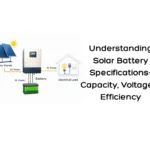
Understanding Solar Battery Specifications: Capacity, Voltage & Efficiency Explained
Solar batteries are essential for energy storage and backup in PV systems. This guide explains key specifications like capacity, voltage, efficiency, and depth of discharge to help you choose the right battery.

Basics of Electricity and Electric Terms and Laws Required for Renewable Energy – Complete Guide
Understanding the basics of electricity is essential for anyone working in renewable energy and solar power systems. From voltage and current to Ohm’s Law and power calculations, strong electrical fundamentals ensure safe and efficient solar installations. This complete guide explains key electrical terms, units, formulas, and laws required for renewable energy professionals, students, and solar PV installers.