
In solar photovoltaic (PV) systems, cables play a vital role in transmitting solar electricity safely and efficiently between different components such as solar modules, inverters, batteries, combiner boxes, and utility connections. Proper cable installation is essential for ensuring system reliability, minimizing energy losses, and maintaining long-term safety.
Incorrect cable installation can lead to voltage drop, overheating, insulation failure, short circuits, fire hazards, and increased solar installation charges. Therefore, installers and EPC professionals must follow proper cable installation procedures and safety standards during solar PV system deployment.
Correct electrical wiring and cable management are fundamental parts of renewable solar projects and solar energy for home use.
This blog provides a complete step-by-step guide to installing cables for solar modules, inverters, batteries, and other solar PV components, including cable types, routing methods, safety precautions, testing procedures, and best practices.
Importance of Proper Cable Installation in Solar PV Systems
Proper cable installation helps:
- Improve solar electricity generation efficiency
- Reduce voltage drop
- Prevent electrical faults
- Improve safety and reliability
- Simplify maintenance and troubleshooting
- Optimize solar panel system cost
Improper installation can increase:
- Power losses
- Maintenance costs
- Solar installation cost per kWh
Major Components Connected Through Cables
1. Solar Modules
- Generate DC electricity.
2. DC Combiner Box
- Combines solar panel strings.
3. Solar Inverter
- Converts DC power into AC electricity.
4. Battery Bank
- Stores electrical energy in off-grid and hybrid systems.
5. AC Combiner Box and Distribution Panel
- Manage AC power distribution.
6. Utility Grid Connection
- Exports or imports electricity.
Types of Cables Used in Solar PV Systems
1. DC Solar Cables
Used between:
- Solar modules
- Combiner boxes
- Inverters
Features:
- UV resistant
- Heat resistant
- Double insulated
2. AC Power Cables
Used between:
- Inverter output
- AC distribution systems
- Utility grid
3. Battery Cables
- Used for battery interconnections and inverter connections.
4. Earthing/Grounding Cables
- Provide electrical safety and lightning protection.
Tools and Materials Required
Tools
- Cable cutters
- Wire stripper
- Crimping tool
- Multimeter
- Insulation tester
- Torque wrench
Materials
- Solar cables
- Cable lugs and ferrules
- Cable trays
- Conduits
- Cable ties and clamps
- Cable glands
Pre-Installation Preparation
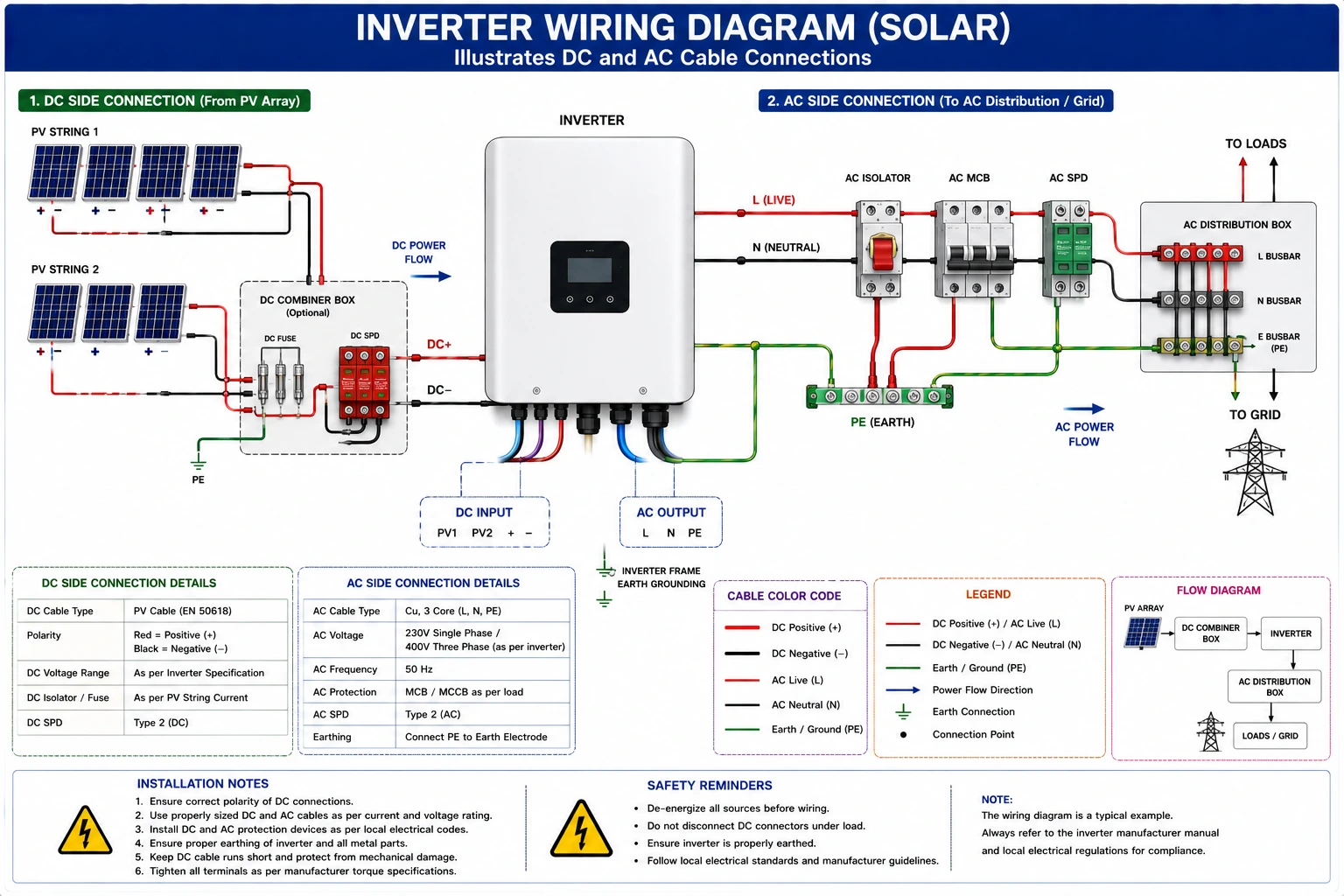
1. Review Electrical Drawings
Study:
- Single Line Diagram (SLD)
- Cable routing plans
- Electrical layouts
2. Verify Cable Specifications
Check:
- Voltage rating
- Current carrying capacity
- Cable insulation type
3. Inspect Installation Area
Ensure routing paths are:
- Clean
- Accessible
- Free from sharp edges and water accumulation
Step-by-Step Cable Installation Procedure
Step 1 – Plan Cable Routing
Select cable routes that:
- Minimize cable length
- Reduce voltage drop
- Avoid mechanical damage
Step 2 – Install Cable Trays and Conduits
- Provide proper support and protection for cables.
Step 3 – Separate AC and DC Cables
Maintain safe spacing between:
- DC solar cables
- AC power cables
- Communication cables
This reduces electrical interference and improves safety.
Step 4 – Measure and Cut Cables
- Ensure proper cable lengths without excessive slack.
Step 5 – Strip Cable Insulation
- Use proper stripping tools to avoid conductor damage.
Step 6 – Crimp Cable Lugs and Ferrules
- Ensure strong and reliable electrical connections.
Step 7 – Install Cables for Solar Modules
Connect:
- Solar module strings
- MC4 connectors
- DC combiner box inputs
Ensure correct polarity.
Step 8 – Install Inverter Input and Output Cables
DC Side:
- Connect solar panels or batteries to the inverter DC terminals.
AC Side:
- Connect the inverter AC output to the distribution panel or the grid.
Step 9 – Install Battery Cables (If Applicable)
Ensure:
- Correct polarity
- Proper cable sizing
- Tight terminal connections
Step 10 – Install Earthing Cables
- Connect all equipment to the grounding system.
Step 11 – Secure Cables Properly
Use:
- Cable ties
- Clamps
- Cable trays
Prevent hanging or loose cables.
Step 12 – Install Cable Labels and Markers
Clearly identify:
- DC cables
- AC cables
- Earthing conductors
Step 13 – Perform Electrical Testing
Check:
- Continuity
- Insulation resistance
- Voltage levels
- Polarity
Cable Installation Best Practices
1. Avoid Sharp Bends
- Protect cable insulation from damage.
2. Maintain Proper Cable Support
- Prevent cable sagging and stress.
3. Use UV-Resistant Cables Outdoors
- Improves cable lifespan.
4. Protect Cables from Water Ingress
- Use weatherproof conduits and glands.
5. Follow Manufacturer Recommendations
- Use approved cable sizes and connection methods.
Conclusion
Proper installation of cables for solar modules, inverters, batteries, and other solar PV components is a critical part of ensuring safe and efficient renewable solar systems. By following correct routing methods, using suitable cable types, maintaining organized cable management, and conducting proper testing, installers can significantly improve system performance and reliability.
Proper electrical wiring and cable management are fundamental aspects of solar energy for home use and renewable energy technology projects. Additionally, adherence to standards established by the Ministry of New and Renewable Energy ensures safe and standardized installation practices.
With proper cable installation techniques, solar professionals can optimize solar panel system cost, improve solar electricity generation efficiency, and support sustainable renewable energy technology adoption across residential, commercial, and industrial sectors.
FAQs
Q1. Why is proper cable installation important in solar PV systems?
Ans: It improves safety, efficiency, and system reliability.
Q2. Why should AC and DC cables be separated?
Ans: To reduce electrical interference and improve safety.
Q3. What type of cables are used for solar modules?
Ans: UV-resistant DC solar cables are commonly used.
Q4. Does cable installation affect solar panel system cost?
Ans: Yes, proper installation reduces energy losses and maintenance expenses.
Q5. What safety precautions should installers follow?
Ans: Use PPE, insulated tools, and isolate power sources before installation.
Solar PPA for Commercial Buildings: Cost, Benefits & Savings
Looking to cut electricity bills without investing in solar assets? Commercial Solar PPA providers offer zero-investment solar solutions where businesses pay only for the power generated—simple, risk-free, and cost-effective.
Solar for Manufacturing Units: Cost, Benefits, ROI & Installation in India
A detailed guide on 1 MW solar plant for industry covering installation cost, area requirement, power generation, ROI, and long-term savings in India.
Improve Your Power Factor After Solar Installation: Complete Guide
Power factor after solar installation often fluctuates due to system design and load patterns. Learn the key causes, challenges, and solutions for better efficiency.
Blame it on Sun! Average Solar PLFs not satisfactory
Explore the reasons behind low average Solar PLFs, from environmental factors to system design, and learn strategies to boost solar plant performance

Solar Power Set to Overtake Coal as World’s Largest Energy Source in Four Years
Solar power has come a long way in the past decade, moving from being an also-ran to one of the major players in the global energy race. According to the International Energy Agency, next year, solar photovoltaic capacity will surpass hydropower, followed by gas-fired generation in three years and coal in four years.
PPE Checklist for Solar Installations: Safety Gear Guide
A complete PPE checklist for solar installations covering essential safety gear required for safe and efficient on-site work.
Solar Inverter Specifications Explained: How to Read Datasheets & Choose the Right Inverter
Choosing the right solar inverter is critical for system performance and safety. This guide explains how to read inverter datasheets, understand key specifications, and select the best inverter for your solar project.
500 kW Solar System Price in Indore: Complete Industrial Guide
Planning to install a 500 kW solar power plant in Indore? Discover the complete cost details, government subsidy options, and potential savings for industries in 2025.