
In a solar photovoltaic (PV) system, the inverter is one of the most critical components. It acts as the bridge between solar panels and usable electricity, converting direct current (DC) into alternating current (AC) for household or grid use. Choosing the right inverter is essential for ensuring efficient solar electricity generation, system safety, and optimal solar panel system cost.
Every inverter comes with a datasheet that includes detailed technical specifications. For installers and EPC professionals, understanding these specifications is crucial for selecting the right inverter and designing efficient renewable solar systems. Proper knowledge of inverter parameters is essential for reliable solar system performance.
This blog provides a complete guide to solar inverter specifications, how to read inverter datasheets, and how to choose the right inverter for your solar plant.
What is a Solar Inverter Datasheet?
A solar inverter datasheet is a technical document that provides all performance, electrical, and operational details of the inverter.
It includes:
- Input and output parameters
- Efficiency ratings
- Protection features
- Environmental limits
Understanding these details is essential for efficient solar panel in rooftop installations.
Key Solar Inverter Specifications Explained
1. Rated Output Power
This indicates the maximum AC power the inverter can deliver.
Example:
- 3 kW inverter
- 5 kW inverter
The inverter capacity should match the solar plant size to ensure efficient operation.
2. Input Voltage Range (DC)
This defines the range of DC voltage the inverter can accept from solar panels.
Importance:
- Ensures compatibility with panel strings
- Prevents system failure due to voltage mismatch
3. Maximum DC Input Voltage
This is the highest voltage the inverter can safely handle. Exceeding this limit can damage the inverter.
4. MPPT Voltage Range
MPPT (Maximum Power Point Tracking) is a technology that optimizes power output from solar panels.
The MPPT voltage range indicates:
- Operating voltage range for maximum efficiency
A wider MPPT range improves performance under varying conditions.
5. Number of MPPT Trackers
Some inverters have multiple MPPTs.
Benefits:
- Better performance in partially shaded conditions
- Flexibility in panel layout
6. Efficiency (%)
Efficiency indicates how effectively the inverter converts DC to AC.
Typical efficiency:
- 95% to 99%
Higher efficiency reduces energy losses and improves solar electricity output.
7. Output Voltage and Frequency
Defines the AC output characteristics.
Example:
- 230 V / 50 Hz (India standard)
Must match grid or appliance requirements.
8. Protection Features
Modern inverters include safety features such as:
- Overvoltage protection
- Short circuit protection
- Anti-islanding protection
- Temperature protection
These features ensure safe operation of renewable energy technology systems.
9. Operating Temperature Range
Indicates the temperature range in which the inverter operates efficiently.
Important for hot climates to ensure durability.
10. Ingress Protection (IP Rating)
IP rating indicates protection against dust and water.
Examples:
- IP65 – suitable for outdoor installation
- IP21 – indoor use
- Communication and Monitoring Features
Modern inverters support:
- Wi-Fi or Bluetooth connectivity
- Mobile app monitoring
- Remote diagnostics
Monitoring helps track solar electricity generation and system performance.
12. Warranty and Certifications
Check:
- Warranty period (usually 5–10 years)
- Certifications (IEC, BIS)
Compliance with standards from the Ministry of New and Renewable Energy ensures reliability.
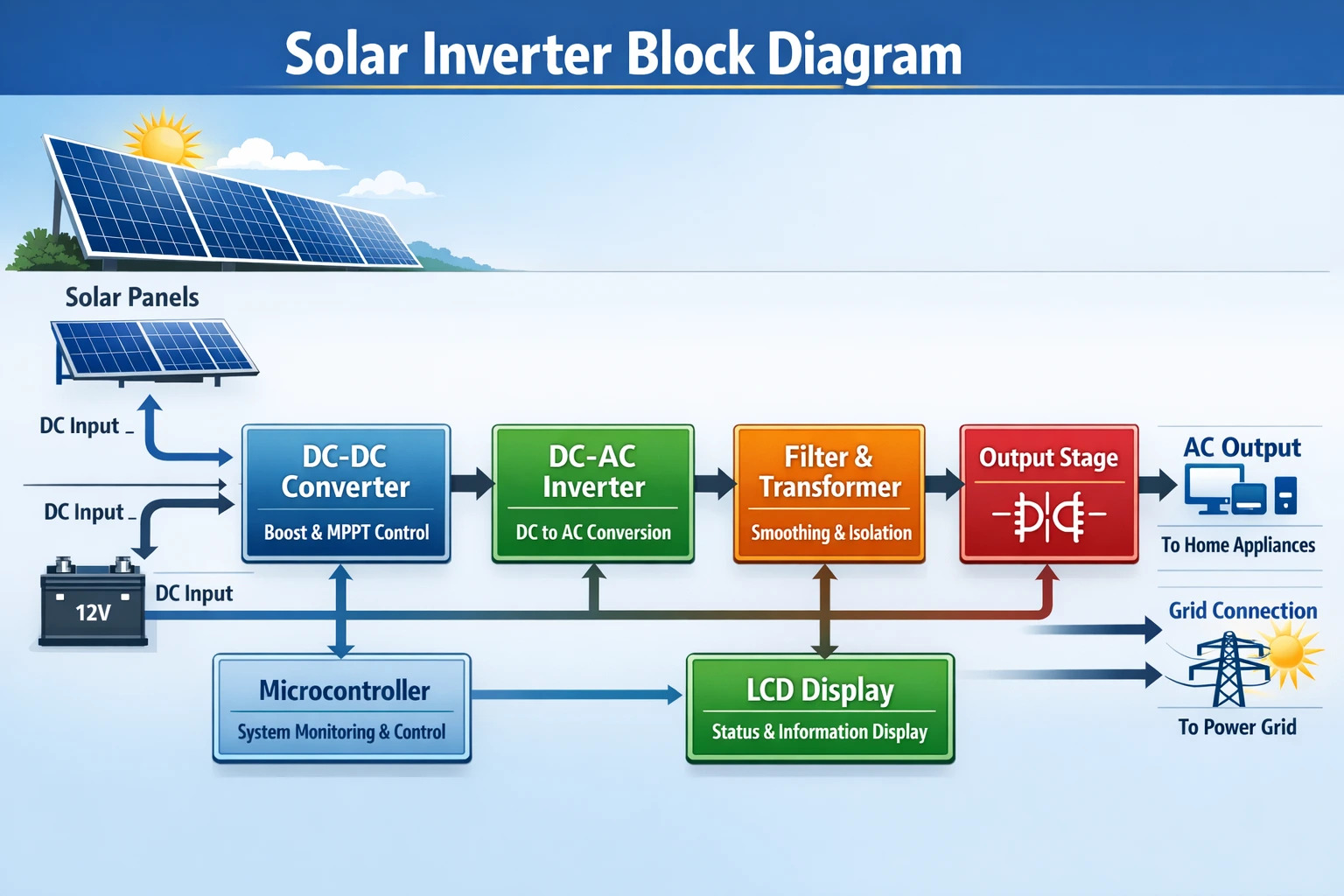
Types of Solar Inverters
1. String Inverter
- Commonly used in residential systems
- Cost-effective
2. Microinverter
- Installed on each panel
- Better performance in shaded conditions
3. Hybrid Inverter
- Supports battery storage
- Provides backup during power outages
Choosing the right type depends on system requirements and budget.
How to Read a Solar Inverter Datasheet
Step 1 – Check Power Rating
Ensure inverter capacity matches solar plant size.
Step 2 – Verify Input Voltage Range
Check compatibility with panel configuration.
Step 3 – Analyze MPPT Specifications
Choose inverters with suitable MPPT range and trackers.
Step 4 – Evaluate Efficiency
Select high-efficiency inverters for better performance.
Step 5 – Review Protection Features
Ensure safety features are included.
Step 6 – Check Environmental Ratings
Ensure inverter is suitable for installation conditions.
How to Choose the Right Solar Inverter
1. Based on System Size
Select an inverter capacity close to the system size.
2. Based on Application
- Residential
- Commercial
- Industrial
3. Based on the Budget
Higher efficiency and advanced features may increase cost but improve performance.
4. Based on Backup Requirement
Choose a hybrid inverter if battery backup is needed.
5. Based on Site Conditions
Consider temperature, dust, and installation location.
Impact of Inverter Selection on Solar Panel System Cost
The inverter significantly affects:
- Total solar installation charges
- System efficiency
- Cost of solar per kWh installed
Proper selection ensures long-term cost savings.
Common Mistakes to Avoid
- Choosing an incorrect inverter capacity
- Ignoring the MPPT range
- Overlooking protection features
- Selecting based only on price
- Not checking compatibility with panels
Avoiding these mistakes improves system reliability.
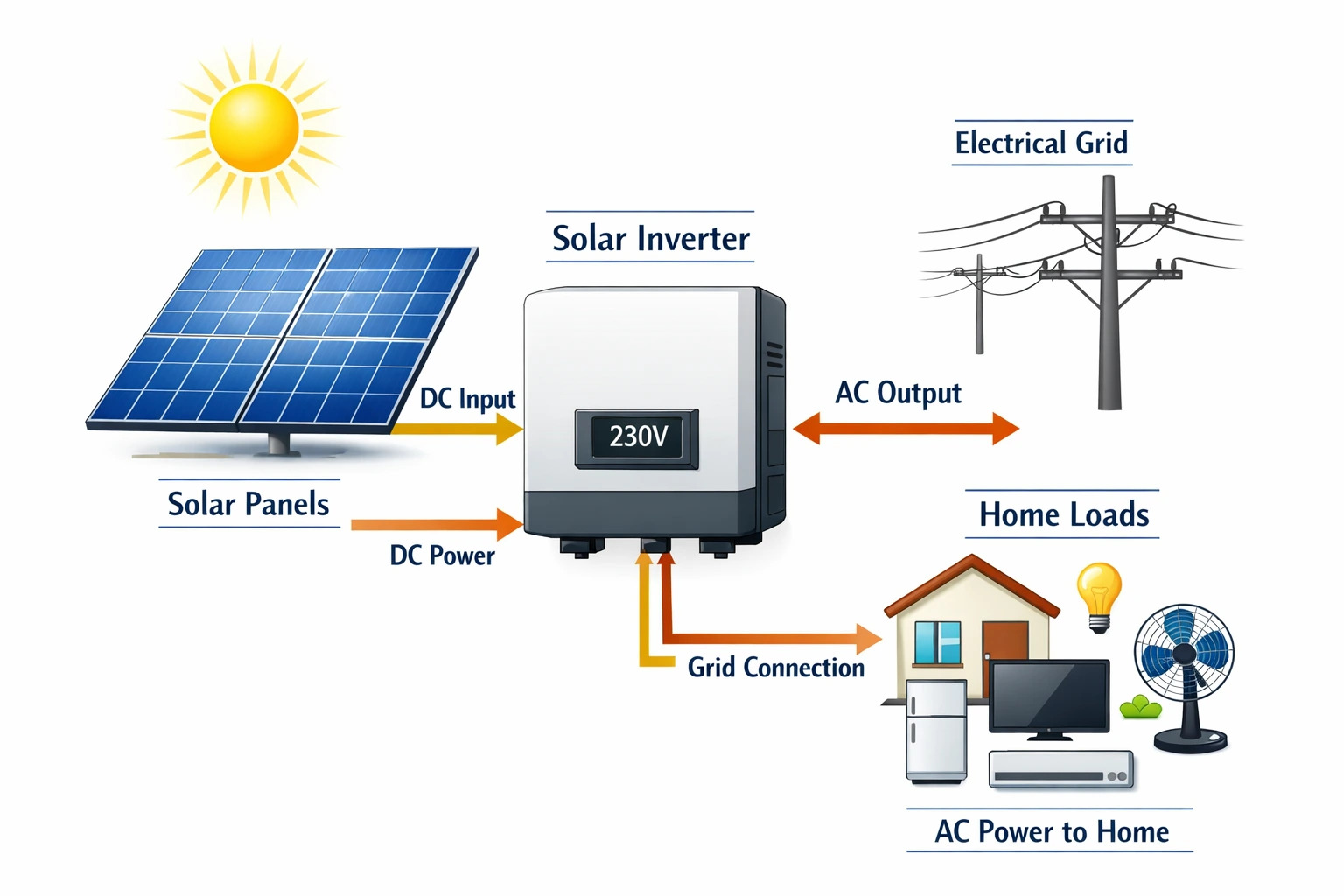
Conclusion
Understanding solar inverter specifications is essential for selecting the right inverter and designing efficient solar PV systems. By carefully analyzing datasheets, installers can ensure compatibility, optimize performance, and reduce solar energy installation cost. Key parameters such as power rating, MPPT range, efficiency, and protection features must be considered before making a decision.
Technical knowledge of inverters is fundamental for successful solar installations. Additionally, adherence to guidelines from the Ministry of New and Renewable Energy ensures quality and safety in renewable solar projects.
By choosing the right inverter, solar professionals can optimize solar panel system cost, improve solar electricity generation, and support sustainable solar energy for home use and large-scale renewable solar applications.
FAQs
Q1. What is the most important specification in a solar inverter?
Ans: Rated output power and input voltage range are the most critical specifications.
Q2. What is MPPT in a solar inverter?
Ans: MPPT is a technology that optimizes power output from solar panels.
Q3. How does inverter efficiency affect performance?
Ans: Higher efficiency reduces energy losses and increases electricity output.
Q4. Which inverter is best for home use?
Ans: String inverters are commonly used, while hybrid inverters are suitable for backup needs.
Q5. Why is IP rating important?
Ans: It ensures the inverter is protected from dust and water, especially for outdoor installations.

PM Surya Ghar Muft Bijli Yojana 2025: Online Registration Made Simple
PM Surya Ghar Muft Bijli Yojana 2025: Learn how to register online and get free electricity under this government scheme.

Yes, I Have Installed an Optimized Solar PV Rooftop System at My Premises
A solar power generating system converts sunlight into electricity for residential, industrial, and commercial use. This blog explains the components, working, and benefits of solar systems, helping you understand how to harness solar energy efficiently and sustainably.
Sequential Troubleshooting for Grid Power Interruptions in Solar PV Systems
A complete guide to sequential troubleshooting in solar PV systems, helping identify and resolve faults during grid power supply interruptions through systematic testing and diagnosis.
Solar for Manufacturing Units: Cost, Benefits, ROI & Installation in India
A detailed guide on 1 MW solar plant for industry covering installation cost, area requirement, power generation, ROI, and long-term savings in India.
Grid-Connected Solar PV System Startup Guide
A complete guide to starting up a grid-connected solar PV system, including commissioning, grid synchronization, electrical safety checks, and operational verification.

India’s Renewable Energy Revolution: The Role of Agrivoltaics
Agrivoltaics, the integration of solar panels with agricultural land, is emerging as a key driver in India’s renewable energy revolution. This blog explains how agrivoltaics supports sustainable farming, increases land efficiency, and contributes to clean energy production, helping India meet its solar energy targets while boosting rural economies.
Solar Cell Technology: Monocrystalline vs Polycrystalline vs Thin-Film
Explore the different types of solar cells, including monocrystalline, polycrystalline, and thin-film, and learn their efficiency, applications, and benefits for solar energy systems.
Battery Inspection in Solar PV Systems Guide
A complete guide to battery inspection in solar PV systems, helping identify performance issues, safety concerns, and maintenance requirements.