
Batteries are among the most critical components of solar photovoltaic (PV) systems, especially in off-grid, hybrid, and backup power applications. They store excess energy generated by solar panels and provide power when solar production is insufficient or unavailable. Because batteries directly impact energy availability, system reliability, and overall renewable solar system performance, regular battery condition inspections are essential.
Over time, batteries experience wear and degradation due to charging and discharging cycles, environmental conditions, aging, improper maintenance, and operational stresses. If battery issues go undetected, they can lead to reduced storage capacity, poor system performance, safety hazards, unexpected failures, and increased solar panel system cost. Therefore, inspecting the condition of batteries is a critical part of solar PV commissioning, preventive maintenance, troubleshooting, and quality assurance programs.
Battery inspections help identify physical damage, electrical abnormalities, corrosion, overheating, electrolyte issues, terminal problems, and performance degradation before they result in significant operational problems. Whether the project involves a residential rooftop solar system, commercial energy storage installation, industrial backup power solution, or utility-scale renewable solar project, routine battery condition assessment improves safety, extends battery life, and enhances system reliability.
Battery inspection and maintenance are essential practices for ensuring efficient solar electricity generation and long-term renewable energy technology performance.
This comprehensive guide explains battery inspection procedures, common battery defects, required tools, testing methods, documentation requirements, safety precautions, and industry best practices.
Why Battery Inspection is Important in Solar PV Systems
Solar batteries are continuously subjected to charging and discharging cycles.
Routine inspections help:
- Detect battery deterioration early
- Prevent unexpected failures
- Improve system reliability
- Enhance operational safety
- Extend battery service life
- Reduce maintenance costs
Regular inspections are essential for maintaining optimal battery performance.
Objectives of Battery Condition Inspection
The primary objectives include:
Safety Verification
- Identifying conditions that could cause fire, leakage, or electrical hazards.
Performance Assessment
- Evaluating battery capacity and operational condition.
Preventive Maintenance
- Addressing minor issues before major failures occur.
Reliability Improvement
- Ensuring consistent energy storage performance.
Warranty and Compliance Support
- Maintaining records required for manufacturer warranties and audits.
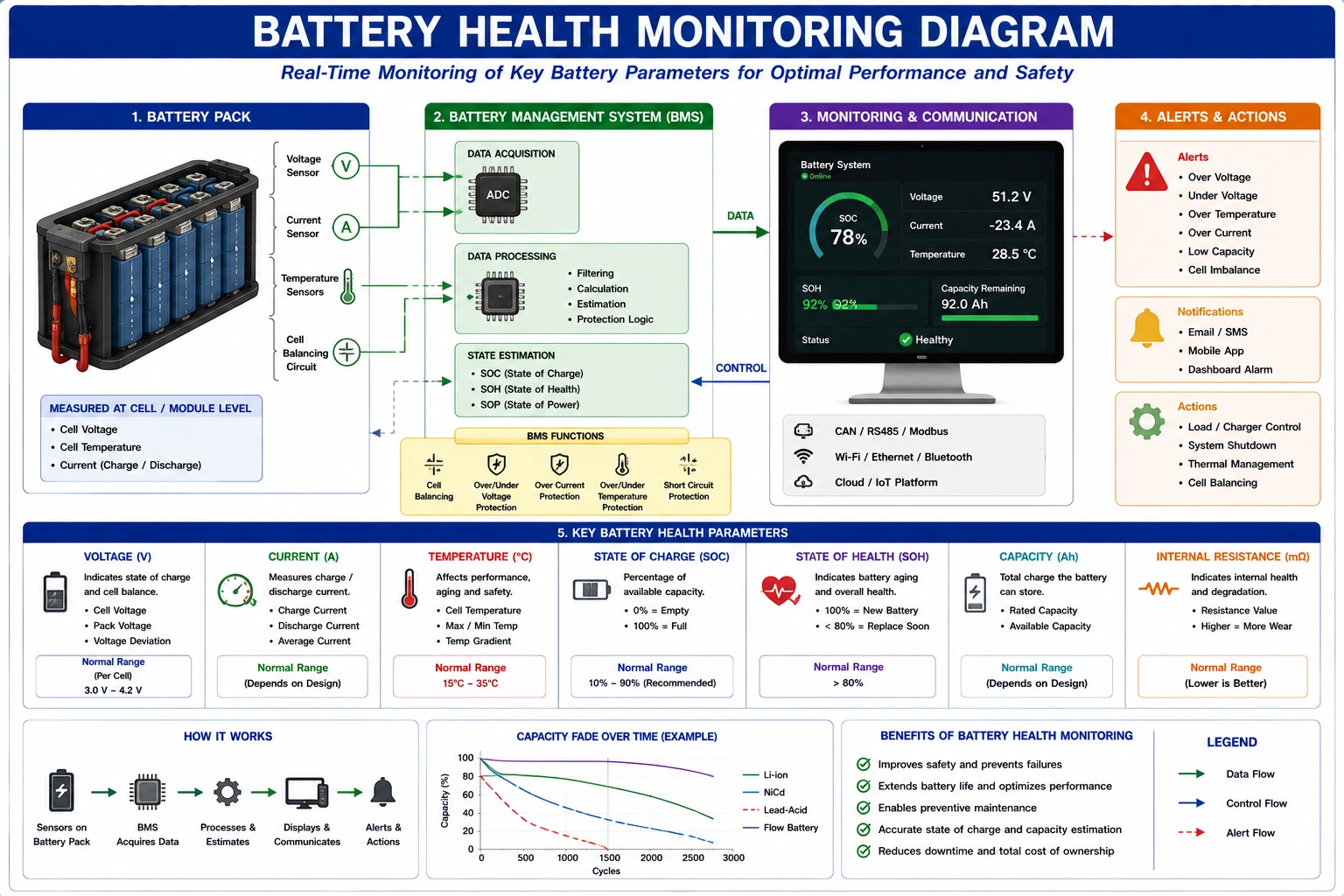
Types of Batteries Commonly Inspected in Solar Systems
Battery inspection procedures may vary depending on battery technology.
Common battery types include:
- Flooded Lead-Acid Batteries
- AGM Batteries
- Gel Batteries
- Lithium-Ion Batteries
- Lithium Iron Phosphate (LiFePO4) Batteries
- Nickel-Cadmium Batteries
- Nickel-Metal Hydride Batteries
Each technology has specific inspection requirements.
Common Causes of Battery Deterioration
Several factors can affect battery condition.
1. Aging
- Battery performance naturally declines over time.
2. Excessive Charging
Overcharging may cause:
- Overheating
- Electrolyte loss
- Internal damage
3. Deep Discharging
- Repeated deep discharge cycles can reduce battery lifespan.
4. High Temperatures
- Elevated temperatures accelerate battery degradation.
5. Poor Ventilation
- Insufficient airflow may increase operating temperatures.
6. Corrosion
- Corrosion can affect electrical connections and charging efficiency.
7. Improper Maintenance
- Neglected maintenance often leads to premature battery failure.
Key Components to Inspect
A comprehensive battery inspection should include several critical areas.
1. Battery Casing
Inspect for:
- Cracks
- Bulges
- Deformation
- Physical damage
Damaged battery casings may indicate internal problems.
2. Battery Terminals
Check for:
- Corrosion
- Loose connections
- Damage
- Discoloration
Terminal issues can increase resistance and reduce performance.
3. Interconnection Cables
Inspect cables for:
- Insulation damage
- Loose terminations
- Overheating signs
4. Battery Racks and Enclosures
Verify:
- Structural integrity
- Corrosion protection
- Proper support
5. Ventilation Systems
Ensure adequate airflow around battery installations.
Visual Inspection Procedure
Visual inspection is the first step in evaluating battery condition.
Step 1 – Inspect Battery Exterior
Look for:
- Cracks
- Leaks
- Swelling
- Burn marks
Any visible abnormalities should be documented.
Step 2 – Check for Electrolyte Leakage
Particularly important for lead-acid batteries.
Signs include:
- Moisture around battery tops
- Acid residue
- Corrosion deposits
Step 3 – Examine Battery Terminals
Inspect for:
- White or green corrosion deposits
- Loose connections
- Damaged terminals
Step 4 – Inspect Labels and Identification
Verify:
- Battery identification labels
- Safety markings
- Capacity ratings
Labels should remain legible.
Step 5 – Check Battery Enclosure Condition
Ensure enclosures remain:
- Clean
- Secure
- Properly ventilated
Electrical Inspection Procedure
Visual inspections should be supplemented with electrical testing.
Step 1 – Measure Battery Voltage
Using a digital multimeter:
- Measure individual battery voltage
- Compare with manufacturer specifications
Voltage deviations may indicate battery problems.
Step 2 – Verify Battery Bank Voltage
Measure total system voltage.
Examples:
- 12V systems
- 24V systems
- 48V systems
Abnormal readings require investigation.
Step 3 – Measure Charging Voltage
Verify that charging voltage remains within recommended limits. Improper charging can damage batteries.
Step 4 – Measure Charging Current
Check charging current using a clamp meter. Compare readings with design expectations.
Step 5 – Check Battery Balance
For battery banks:
- Compare individual battery voltages
- Identify imbalances between batteries
Imbalances may indicate aging or defective units.
Specific Inspection Requirements for Lead-Acid Batteries
Lead-acid batteries require additional checks.
Electrolyte Level Inspection
For flooded batteries:
- Verify electrolyte levels
- Refill with distilled water if required
Never use tap water.
Specific Gravity Testing
Using a hydrometer:
- Measure electrolyte specific gravity
- Assess battery state of charge
This test provides valuable information about battery health.
Specific Inspection Requirements for Lithium Batteries
Lithium batteries require different inspection methods.
Battery Management System (BMS) Verification
Check:
- Status indicators
- Communication functionality
- Fault alarms
The BMS provides important battery health information.
Temperature Monitoring
- Verify that battery temperatures remain within acceptable operating ranges.
Signs of Battery Failure
- Inspectors should be familiar with common warning signs.
Physical Swelling
May indicate:
- Internal damage
- Overcharging
- Thermal stress
Excessive Heat
Overheating may result from:
- Charging issues
- Internal faults
- Ventilation problems
Corrosion
Corrosion often indicates:
- Electrolyte leakage
- Moisture exposure
Reduced Capacity
Symptoms include:
- Short backup duration
- Rapid voltage drops
Frequent Fault Alarms
- Repeated alarms may indicate battery degradation.
Battery Capacity Testing
Capacity testing provides a more detailed assessment of battery condition.
The test evaluates:
- Actual energy storage capability
- Remaining battery life
- Performance degradation
Capacity testing is particularly useful for older battery banks.
Conclusion
Inspecting the condition of batteries is a fundamental maintenance practice that directly impacts the safety, performance, and longevity of solar PV systems. Regular inspections help identify physical defects, electrical abnormalities, corrosion, overheating, electrolyte issues, and other warning signs before they lead to major failures or costly downtime.
Battery inspection and preventive maintenance are essential elements of effective solar electricity generation and renewable energy technology management. Additionally, adhering to guidelines and quality practices promoted by the Ministry of New and Renewable Energy helps ensure safe, compliant, and efficient battery operation.
By conducting systematic inspections, monitoring battery performance, documenting findings accurately, implementing timely corrective actions, and following manufacturer recommendations, solar installers, EPC contractors, maintenance technicians, and project managers can optimize solar panel system cost, improve renewable solar system reliability, maximize battery lifespan, and ensure the long-term success of residential, commercial, industrial, and utility-scale solar energy projects.
FAQs
Q1. Why is battery inspection important in solar PV systems?
Ans: Battery inspections help identify deterioration, prevent failures, improve safety, extend battery life, and maintain system reliability.
Q2. What are the most common signs of battery damage?
Ans: Common signs include swelling, electrolyte leakage, corrosion, overheating, cracks, reduced capacity, and abnormal voltage readings.
Q3. How often should solar batteries be inspected?
Ans: Inspection frequency depends on battery type, operating conditions, and manufacturer recommendations. Routine inspections should be included in preventive maintenance programs.
Q4. What tools are commonly used during battery inspections?
Ans: Digital multimeters, clamp meters, hydrometers (for flooded batteries), battery analyzers, and thermal inspection devices are commonly used.
Q5. What should be done if a battery shows signs of damage?
Ans: The battery should be evaluated immediately, corrective actions should be taken, and severely damaged batteries should be replaced according to manufacturer guidelines.
Solar Microgrids: All you need to know
Discover how solar batteries store excess energy, maximize your solar system’s efficiency, and provide reliable power during outages. Learn about the types, benefits, lifespan, and maintenance tips to make the most of your solar investment.
Data Acquisition System Calibration in Solar PV Plants
A complete guide to solar PV data acquisition system calibration, ensuring accurate monitoring, reliable data collection, and effective performance analysis.

How to Identify the Type of Footing Required for Solar PV Installations: Complete Guide
Learn how to identify the right footing for solar PV installations based on soil conditions, load requirements, and site factors. This complete guide covers different foundation types, selection criteria, and practical insights for safe and efficient solar system design.
EIB Green Hydrogen India: €1 Billion Investment to Boost Clean Energy Transition
The European Investment Bank (EIB), the bank of the European Union, has joined forces with the India Hydrogen Alliance (IH2A) to increase support for the development of green hydrogen projects across India.

Net Metering and Its Advantages Explained: How Solar Users Save More on Energy Bills
Learn what Net Metering and its advantages mean for you—cut electricity costs, earn energy credits, and boost solar efficiency easily.
Earthing & Lightning Protection Testing for Solar PV Systems
A complete guide to earthing and lightning protection testing for solar PV systems, ensuring safety, regulatory compliance, and long-term system reliability.
How to Perform Cable Continuity Tests in Solar PV Systems
A complete guide to cable continuity testing for solar PV systems, ensuring safe, reliable, and properly connected electrical installations.

SmartRoof Solar Associate Program – Easy Way to Earn with Solar Referrals
Join the SmartRoof Solar Associate Program. Refer solar leads, earn rewards, and support clean energy growth in your community.