
When planning a solar installation, whether for a home, commercial building, or industrial facility, you will often come across the term 1 kWp. While it sounds technical, understanding what 1 kWp means is crucial to estimating solar electricity generation, solar installation cost, and long-term savings.
This blog explains what 1 kWp means, how it relates to power generation, space requirement, pricing, and why it matters when evaluating the total cost of solar installation in India.
What Is 1 kWp in Solar Energy?
kWp stands for kilowatt peak. 1 kWp represents the maximum power output a solar panel system can generate under standard test conditions (STC).
These conditions include:
- Solar irradiance of 1000 W/m²
- Cell temperature of 25°C
- Optimal sunlight and panel orientation
In simple terms, 1 kWp is the rated capacity of a solar panel system, not the actual energy it produces daily.
How Much Electricity Does 1 kWp Solar Generate?
While 1 kWp indicates peak capacity, actual solar electricity generation depends on location, sunlight hours, and system efficiency.
In India, on average:
System Size | Daily Generation | Annual Generation |
1kWp | 4-5 units/day | 1,400-1,600 units/year |
This makes solar energy for home use and commercial use highly economical, especially in high-sunlight states.
Solar Panel Area Required per kWp
One of the most common questions is about solar panel area per kW.
Typically:
- 1 kWp requires 80-100 sq. ft. of shadow-free area
- Depends on solar module price per watt, efficiency, and panel type
This makes rooftop installations ideal for homes and commercial buildings considering solar panel in rooftop solutions.
Solar Panel System Cost for 1 kWp
The solar panel system cost for 1 kWp varies based on:
- Type of system (on-grid, off-grid, hybrid)
- Quality of modules and inverter
- Installation location
Approximate costs in India:
- Home roof solar panels cost (on-grid): ₹55,000 – ₹75,000 per kWp
- Solar energy installation cost may reduce further with a government solar subsidy scheme
This directly impacts the cost of solar per kWh installed, making solar a smart long-term investment.
Is 1 kWp Enough for a House?
For residential usage:
- 1 kWp can power basic loads like lights, fans, TV, and charging points
- Ideal for small households or as a starting system
Most homes opt for 2-5 kWp based on:
- Average cost of solar panels on a house
- Electricity consumption
- Available roof space
With subsidised solar panels for home, installing higher capacity becomes even more affordable.
Difference Between kW and kWh Explained Simply
Understanding this difference helps calculate solar installation cost per kWh:
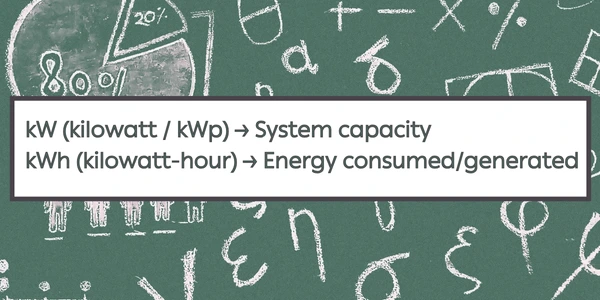
For example:
- A 1 kWp system generating 5 units/day = 5 kWh/day
This clarity helps estimate total cost of solar installation and savings on electricity bills.
Why kWp Matters When Choosing Solar
Knowing what 1 kWp means helps you:
- Compare the cost of solar panels
- Calculate expected generation
- Evaluate ROI
- Choose the right system size
It plays a key role in making solar energy economical for homes, businesses, and industries.
1 kWp and Renewable Energy Technology
Solar PV systems rated in kWp are a cornerstone of renewable solar solutions. They support:
- Clean power generation
- Reduced carbon footprint
- Long-term energy security
With advancements in renewable energy technology, even smaller kWp systems now deliver higher efficiency and reliability.
Final Thoughts
Understanding what 1 kWp means is the foundation of smart solar planning. Whether you are evaluating solar roof installation cost, checking smart solar panel price, or planning a larger system, kWp helps you align capacity with cost and generation.
Solar energy continues to be one of the most reliable forms of renewable energy and solar energy adoption in India, scalable, economical, and future-ready.
FAQs
Q1. Does roof direction affect 1 kWp solar performance?
Ans: Yes, south-facing roofs with minimal shading deliver the highest generation in India.
Q2. Is net metering available for 1 kWp systems?
Ans: Yes, most Indian states allow net metering even for small rooftop solar installations.
Q3. Does dust or pollution impact 1 kWp solar output?
Ans: Yes, accumulated dust can reduce output by 5-20%, making regular cleaning important.
Q4. How long does it take to install a 1 kWp solar system?
Ans: Installation typically takes 1-3 days once approvals and materials are ready.
Q5. Is financing or EMI available for 1 kWp solar installation?
Ans: Yes, many banks and solar providers offer loans and EMI options for rooftop solar systems. Refer to our blog to know more about financing – Solar Loans, Subsidies and EMI Plans – Smart Roof Solar
How to Calculate Battery Capacity for Solar Off-Grid Applications
Sizing a solar battery correctly is vital for off-grid performance and energy independence. This guide explains how to calculate battery capacity, choose the right type, and design a balanced off-grid system for uninterrupted power supply.

Researchers Propose New Way to Make Nuclear Power Plants Safer
Researchers propose innovative methods to enhance the safety of nuclear power plants, aiming to reduce risks and improve operational security.
Electrical Equipment Bonding in Solar PV Systems
A complete guide to electrical equipment bonding in solar PV systems, including anti-oxidant application, compliance requirements, and safety best practices.

Solar Farm Development: Overcoming the Rising Challenge of Wiring Costs
Wiring costs are soaring in solar farms, affecting project budgets and timelines. Learn why infrastructure is becoming a key challenge.
Delhi Government Pledges to Boost Renewable Energy Generation
Delhi, the capital city of India, is moving towards a greener future with an ambitious plan to generate an additional 6,000 MW of electricity using renewable energy sources.

How to Check Materials Received on Site for Solar PV Projects: Complete Inspection Checklist
Ensuring the quality of materials received at site is critical for successful solar PV installation. This guide provides a detailed inspection checklist to verify solar components before installation.
Civil Structural General Arrangement (GA) Drawing in Solar Projects: Complete Design & Layout Guide
A Civil Structural General Arrangement (GA) drawing in solar projects is a detailed layout that defines the placement of solar modules, mounting structures, inverters, and civil foundations. It plays a crucial role in ensuring accurate design, optimal space utilization, and smooth execution of both rooftop and ground-mounted solar installations. This guide explains the key components, design considerations, and best practices for creating effective GA drawings in solar EPC projects.
Flat Roof Solar Installation Guide: Design, Mounting Systems & Best Practices
A practical guide to flat roof solar installation covering key design considerations, mounting system types, and best practices for efficient and reliable performance.