
When planning a solar installation, whether for a home, commercial building, or industrial facility, you will often come across the term 1 kWp. While it sounds technical, understanding what 1 kWp means is crucial to estimating solar electricity generation, solar installation cost, and long-term savings.
This blog explains what 1 kWp means, how it relates to power generation, space requirement, pricing, and why it matters when evaluating the total cost of solar installation in India.
What Is 1 kWp in Solar Energy?
kWp stands for kilowatt peak. 1 kWp represents the maximum power output a solar panel system can generate under standard test conditions (STC).
These conditions include:
- Solar irradiance of 1000 W/m²
- Cell temperature of 25°C
- Optimal sunlight and panel orientation
In simple terms, 1 kWp is the rated capacity of a solar panel system, not the actual energy it produces daily.
How Much Electricity Does 1 kWp Solar Generate?
While 1 kWp indicates peak capacity, actual solar electricity generation depends on location, sunlight hours, and system efficiency.
In India, on average:
System Size | Daily Generation | Annual Generation |
1kWp | 4-5 units/day | 1,400-1,600 units/year |
This makes solar energy for home use and commercial use highly economical, especially in high-sunlight states.
Solar Panel Area Required per kWp
One of the most common questions is about solar panel area per kW.
Typically:
- 1 kWp requires 80-100 sq. ft. of shadow-free area
- Depends on solar module price per watt, efficiency, and panel type
This makes rooftop installations ideal for homes and commercial buildings considering solar panel in rooftop solutions.
Solar Panel System Cost for 1 kWp
The solar panel system cost for 1 kWp varies based on:
- Type of system (on-grid, off-grid, hybrid)
- Quality of modules and inverter
- Installation location
Approximate costs in India:
- Home roof solar panels cost (on-grid): ₹55,000 – ₹75,000 per kWp
- Solar energy installation cost may reduce further with a government solar subsidy scheme
This directly impacts the cost of solar per kWh installed, making solar a smart long-term investment.
Is 1 kWp Enough for a House?
For residential usage:
- 1 kWp can power basic loads like lights, fans, TV, and charging points
- Ideal for small households or as a starting system
Most homes opt for 2-5 kWp based on:
- Average cost of solar panels on a house
- Electricity consumption
- Available roof space
With subsidised solar panels for home, installing higher capacity becomes even more affordable.
Difference Between kW and kWh Explained Simply
Understanding this difference helps calculate solar installation cost per kWh:
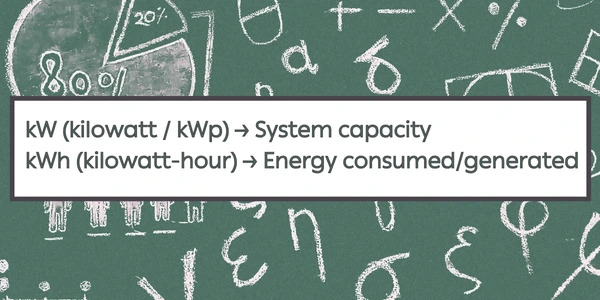
For example:
- A 1 kWp system generating 5 units/day = 5 kWh/day
This clarity helps estimate total cost of solar installation and savings on electricity bills.
Why kWp Matters When Choosing Solar
Knowing what 1 kWp means helps you:
- Compare the cost of solar panels
- Calculate expected generation
- Evaluate ROI
- Choose the right system size
It plays a key role in making solar energy economical for homes, businesses, and industries.
1 kWp and Renewable Energy Technology
Solar PV systems rated in kWp are a cornerstone of renewable solar solutions. They support:
- Clean power generation
- Reduced carbon footprint
- Long-term energy security
With advancements in renewable energy technology, even smaller kWp systems now deliver higher efficiency and reliability.
Final Thoughts
Understanding what 1 kWp means is the foundation of smart solar planning. Whether you are evaluating solar roof installation cost, checking smart solar panel price, or planning a larger system, kWp helps you align capacity with cost and generation.
Solar energy continues to be one of the most reliable forms of renewable energy and solar energy adoption in India, scalable, economical, and future-ready.
FAQs
Q1. Does roof direction affect 1 kWp solar performance?
Ans: Yes, south-facing roofs with minimal shading deliver the highest generation in India.
Q2. Is net metering available for 1 kWp systems?
Ans: Yes, most Indian states allow net metering even for small rooftop solar installations.
Q3. Does dust or pollution impact 1 kWp solar output?
Ans: Yes, accumulated dust can reduce output by 5-20%, making regular cleaning important.
Q4. How long does it take to install a 1 kWp solar system?
Ans: Installation typically takes 1-3 days once approvals and materials are ready.
Q5. Is financing or EMI available for 1 kWp solar installation?
Ans: Yes, many banks and solar providers offer loans and EMI options for rooftop solar systems. Refer to our blog to know more about financing – Solar Loans, Subsidies and EMI Plans – Smart Roof Solar
500 kW Rooftop Solar for Industries in India: Complete Guide 2026
A complete guide to 500 kW solar for industries covering installation cost, energy generation, ROI, savings, and why it is a smart business investment.

Go Off-Grid with Solar Energy: A Complete Guide
Living off-grid, more commonly defined as not having a dependence on public utilities such as electricity, sounds appealing for a lot of reasons. The idea of being self-sufficient, powering your own home with solar energy, and maybe even building that home with your own two hands can sound like a dream and a challenge for people who wish to live life on their terms.
Optimum Solar Plant Capacity for Industries
A complete guide to sizing a solar plant for an industrial facility, covering electricity consumption, peak demand, rooftop space, load patterns, grid export limits, and financial feasibility.
Electrical Measuring Instruments Every Solar Installer Must Know
Solar installers rely on accurate electrical measurements for safe and efficient system performance. This guide explains the role of voltmeters, ammeters, digital multimeters, and clamp meters in solar installations.
Developers fear unfair state-specific levies will make solar more expensive
Developers in India are concerned that state-specific levies on solar projects could increase costs, slow adoption, and impact the growth of renewable energy across residential, commercial, and industrial sectors.

Solar Roof Hook Installation: Step-by-Step Guide
A step-by-step guide to solar roof hook installation, covering positioning, alignment, and best practices for strong and reliable rooftop systems.
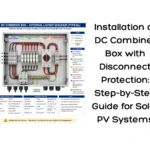
Installation of DC Combiner Box with Disconnect Protection: Step-by-Step Guide
A DC combiner box is an important protection component in solar PV systems. This guide explains its installation, disconnect protection, wiring, and safety requirements.
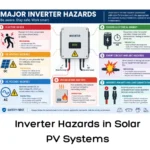
Solar Inverter Hazard Prevention Guide
A complete guide to identifying inverter hazards in solar PV systems and following safe work practices during installation, testing, operation, and maintenance.