
In solar photovoltaic (PV) systems, efficient electrical design is essential for ensuring safety, reliability, and long-term performance. One of the most important aspects of solar electrical installation is preparing a proper conduit and cable routing plan.
A well-designed cable routing plan ensures organized wiring, minimizes power losses, protects cables from environmental damage, and improves maintenance accessibility. Poor cable routing can lead to overheating, voltage drop, insulation damage, safety hazards, and increased solar installation charges.
Whether for residential rooftop systems, commercial solar plants, or utility-scale renewable solar projects, proper conduit and cable planning is critical for optimizing solar electricity generation and maintaining system safety.
Cable management and conduit planning are essential components of renewable energy technology and solar energy for home use.
This blog provides a complete guide to preparing conduit and cable routing plans for solar PV systems, including design considerations, routing methods, safety standards, and best practices.
Importance of Cable Routing in Solar PV Systems
Proper cable routing helps:
- Reduce voltage drop
- Prevent cable damage
- Improve safety
- Simplify maintenance
- Improve system aesthetics
- Optimize solar panel system cost
Poor routing can increase:
- Energy losses
- Maintenance expenses
- Solar installation cost per kWh
What is a Conduit and Cable Routing Plan?
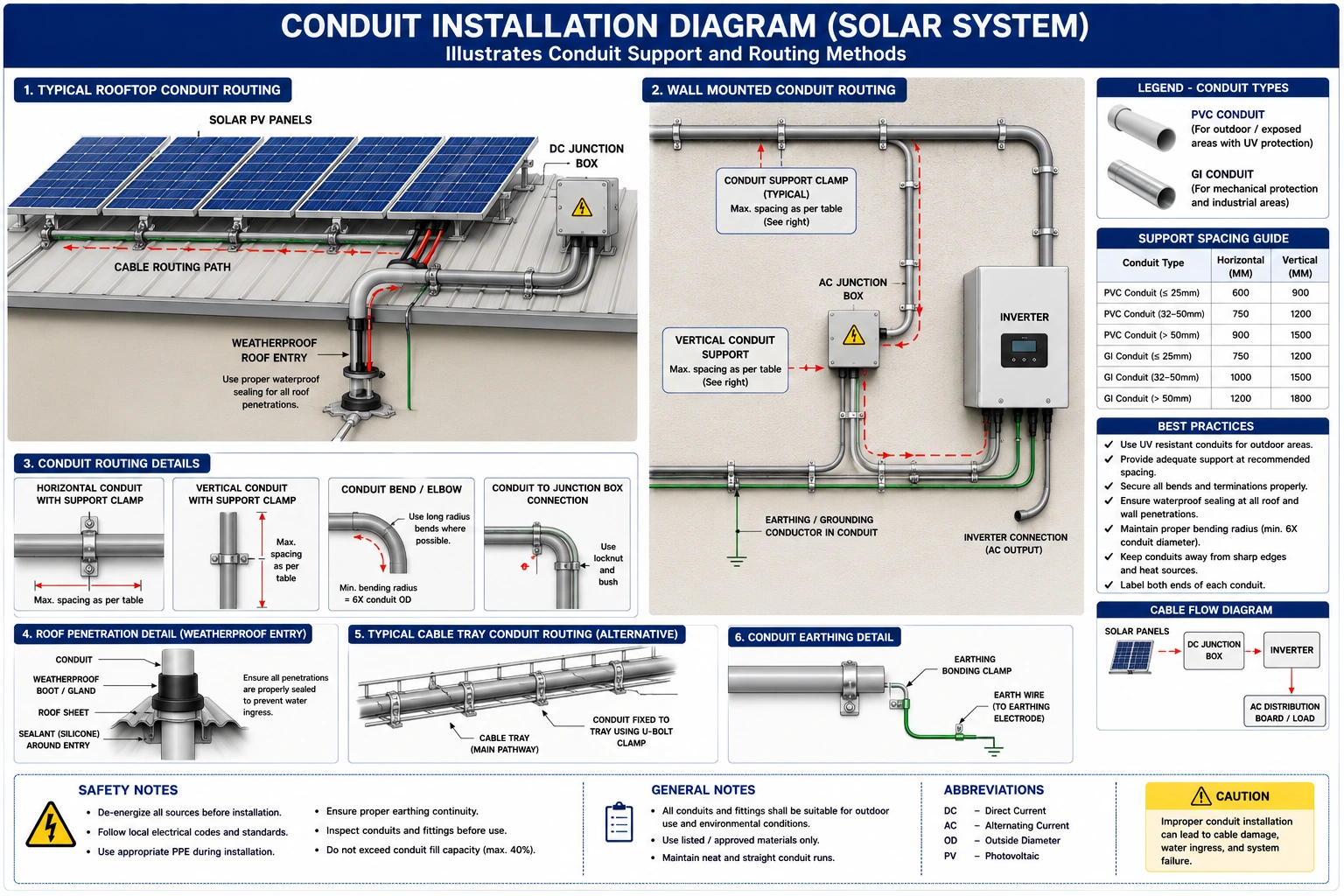
A conduit and cable routing plan is a detailed layout that defines:
- Cable paths
- Conduit locations
- Cable tray arrangements
- Entry and exit points
- Protection methods
It helps installers execute safe and organized electrical installations.
Types of Cables Used in Solar PV Systems
1. DC Solar Cables
Used between:
- Solar panels
- DC combiner box
- Inverter
Features:
- UV resistant
- Heat resistant
- Double insulated
2. AC Power Cables
Used between:
- Inverter output
- AC combiner box
- Utility grid
3. Earthing Cables
Used for grounding and safety protection.
Types of Conduits Used in Solar Installations
1. PVC Conduits
Suitable for indoor and concealed wiring.
2. HDPE Conduits
Used in underground cable routing.
3. GI (Galvanized Iron) Conduits
Used in industrial and outdoor installations.
4. Flexible Conduits
Used where movement or vibration exists.
Importance of Proper Conduit Selection
Correct conduit selection helps:
- Protect cables from mechanical damage
- Prevent moisture ingress
- Improve fire safety
- Increase cable lifespan
Key Factors to Consider While Preparing a Routing Plan
1. System Layout and Design
Understand:
- Solar panel arrangement
- Inverter location
- Combiner box positions
2. Cable Length Optimization
Shorter cable routes help reduce:
- Voltage drop
- Power loss
- Solar energy installation cost
3. Environmental Conditions
Consider:
- Sunlight exposure
- Rainwater
- Dust
- High temperature areas
4. Accessibility for Maintenance
Ensure easy access for:
- Inspection
- Troubleshooting
- Cable replacement
5. Safety Compliance
- Follow electrical standards and safety regulations.
6. Separation of AC and DC Cables
- Avoid electromagnetic interference and improve safety.
Components Required for Cable Routing
1. Cable Trays
Used for organized cable support.
2. Junction Boxes
Provide cable connection points.
3. Cable Glands
Protect cable entry points.
4. Cable Ties and Clamps
Secure cables properly.
5. Warning Labels and Markers
Improve identification and safety.
Step-by-Step Guide to Prepare Conduit and Cable Routing Plan
Step 1 – Study System Drawings
Review:
- Single Line Diagram (SLD)
- General Arrangement (GA) drawing
- Electrical layouts
Step 2 – Identify Equipment Locations
Locate:
- Solar panels
- Inverters
- Combiner boxes
- Battery bank
- Utility connection points
Step 3 – Determine Cable Types and Sizes
Calculate cable requirements based on:
- Current carrying capacity
- Voltage rating
- Distance
Step 4 – Plan Cable Routes
Select routes that:
- Minimize cable length
- Avoid sharp bends
- Prevent water accumulation
Step 5 – Select Suitable Conduit Type
Choose conduits according to:
- Installation environment
- Mechanical protection needs
- Fire resistance requirements
Step 6 – Separate AC and DC Cable Routes
Maintain proper spacing between:
- AC cables
- DC cables
- Communication cables
Step 7 – Plan Conduit Supports and Cable Trays
- Ensure proper support intervals.
Step 8 – Mark Cable Entry and Exit Points
Identify:
- Wall penetrations
- Roof entries
- Junction locations
Step 9 – Plan Earthing Cable Routing
- Ensure safe grounding paths.
Step 10 – Prepare Final Routing Drawing
Include:
- Cable sizes
- Conduit sizes
- Routing paths
- Equipment labels
Conclusion
Preparing a proper conduit and cable routing plan is a critical step in ensuring safe and efficient solar PV system installation. By carefully planning cable paths, selecting suitable conduits, maintaining proper separation, and following safety standards, installers can significantly improve system reliability and performance.
Organized cable management is fundamental to renewable solar systems and solar energy for home use. Additionally, adherence to standards established by the Ministry of New and Renewable Energy ensures safe and standardized installation practices.
With proper conduit and cable routing techniques, solar professionals can optimize solar panel system cost, improve solar electricity generation efficiency, and support sustainable renewable energy technology projects across residential, commercial, and industrial sectors.
FAQs
Q1. Why is cable routing important in solar PV systems?
Ans: It improves safety, reduces power losses, and protects cables.
Q2. Why should AC and DC cables be separated?
Ans: To reduce interference and improve safety.
Q3. Which conduit is commonly used for outdoor solar installations?
Ans: GI and HDPE conduits are commonly used outdoors.
Q4. Does proper cable routing affect solar panel system cost?
Ans: Yes, it reduces maintenance and energy losses.
Q5. What safety precautions should be followed during installation?
Ans: Use PPE, proper cable supports, and weatherproof protection.

How DISCOMs Implement Net Metering for Solar Power Plants
Discover the process of net metering implementation by DISCOMs for solar power plants. Understand the benefits, billing mechanism, and how it maximizes solar energy utilization.
India Solar Energy Policies: Key Updates and Government Initiatives
India is one of the leading countries in terms of solar energy development, having become the fastest-growing market for solar power globally.
How to Maintain Solar Power System for Homes, Industries & Commercial Buildings
A solar power generating system converts sunlight into electricity for residential, industrial, and commercial use. This blog explains the components, working, and benefits of solar systems, helping you understand how to harness solar energy efficiently and sustainably.

Law Change Makes It Hard to Receive Compensation for Solar Developers
A recent law change creates hurdles for solar developers seeking compensation, impacting project viability.
How Are Solar PV Modules Made? Complete Guide to the Manufacturing Process
Choosing the right solar panels can be confusing with so many options in the market. This guide simplifies solar panel selection by comparing types, efficiency ratings, and cost factors. Whether for your home, business, or industry, learn how to make an informed decision and maximize the return on your solar investment.

Solar ROI for Commercial & Industrial Projects in India: Cost, Payback & Profits
Learn how commercial and industrial solar projects deliver strong ROI for businesses in India through lower energy costs, faster payback, and long-term profit generation.
Safe Handling of Solar PV Components: Complete Guide for EPC & Installers
Proper material handling is crucial in solar PV projects to avoid damage, reduce losses, and ensure safety. This guide covers best practices for transporting, storing, and installing solar components efficiently.
Solar Rooftop Subsidy: Why It’s Time for a Change of Mindset
While solar rooftop subsidies help reduce upfront costs, true adoption requires a mindset shift. This guide discusses why businesses and homeowners should focus on long-term benefits, sustainability, and strategic planning beyond relying solely on incentives.