
Before installing a solar photovoltaic (PV) system, it is essential to perform a detailed site assessment. A site assessment helps solar installers evaluate the suitability of the location where the solar plant will be installed. It ensures that the system is designed efficiently to maximize solar electricity generation and maintain long-term reliability.
Site assessment involves inspecting the physical conditions of the building, analyzing shading, evaluating electrical infrastructure, and understanding customer energy requirements. Conducting a proper site survey is a fundamental step in designing safe and efficient solar PV installations.
This blog explains the important steps required for conducting a site assessment before solar installation, helping installers design systems that optimize performance, safety, and solar panel system cost.
What is a Site Assessment in Solar Installation?
A site assessment is the process of evaluating the location where a solar PV system will be installed to determine whether the site is suitable for solar power generation.
The assessment includes examining:
- Rooftop condition and available space
- Sunlight exposure and shading obstacles
- Electrical infrastructure and wiring
- Structural strength of the building
- Customer energy consumption
Proper site assessment ensures that the solar plant delivers optimal performance while maintaining safety and cost efficiency.
Why Site Assessment is Important Before Solar Installation
Conducting a site survey helps installers understand the technical and physical conditions of the installation site.
Benefits include:
- Designing the correct solar plant capacity
- Maximizing solar electricity generation
- Optimizing solar panel system cost
- Ensuring safe installation practices
Without proper site assessment, the system may face issues such as shading losses, wiring problems, or structural limitations.
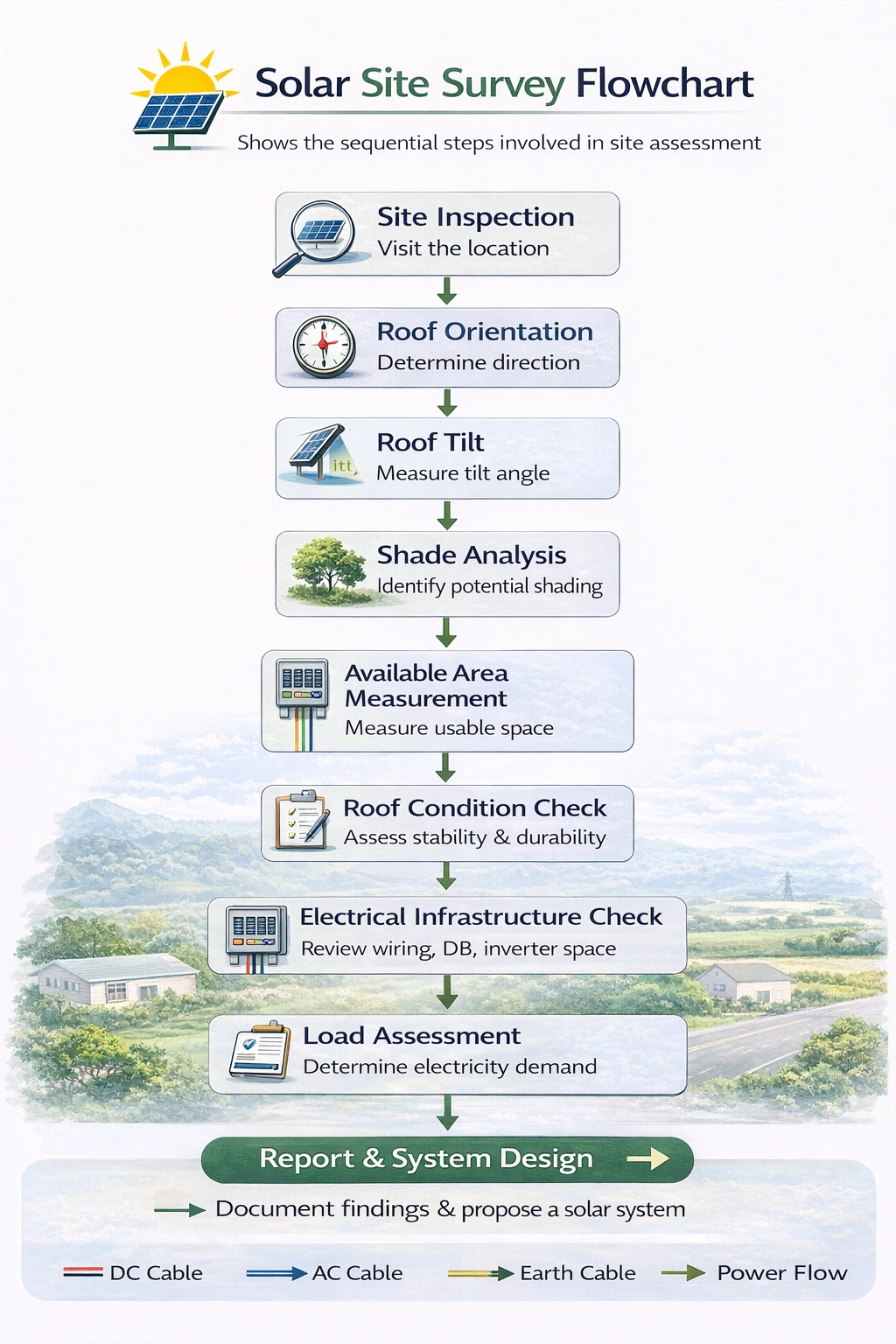
Steps for Conducting a Solar Site Assessment
Below are the key steps followed by solar professionals when conducting a site assessment.
Step 1 – Initial Customer Consultation
The first step in the site assessment process is understanding the customer’s energy needs and expectations.
Installers discuss:
- Current electricity consumption
- Future energy requirements
- Budget for solar installation
- Interest in renewable solar solutions
This discussion helps determine the preliminary solar system size and project feasibility.
Step 2 – Electricity Bill Analysis
Installers review the customer’s electricity bills to understand energy consumption patterns.
Important details examined include:
- Monthly electricity usage (kWh)
- Tariff rates
- Billing cycle
- Sanctioned load
This information helps determine the required solar plant capacity and optimize solar energy installation cost.
Step 3 – Load Assessment
Load assessment involves evaluating the electrical appliances used in the building.
Installers record:
- Appliance types
- Power ratings
- Daily usage hours
This helps calculate the total electrical load and peak demand, which are essential for designing the solar system.
Step 4 – Rooftop Inspection and Measurement
For solar panel in rooftop installations, the rooftop must be inspected carefully.
Installers evaluate:
- Total rooftop area available for installation
- Roof orientation (preferably south-facing in India)
- Roof tilt angle
- Accessibility for installation and maintenance
Accurate rooftop measurement helps determine how many panels can be installed.
Step 5 – Shadow Analysis
Shadow analysis is an important step in solar site assessment.
Installers identify potential shading sources such as:
- Trees
- Nearby buildings
- Water tanks
- Antennas
Shading reduces solar electricity generation, so panels should be installed in shadow-free areas whenever possible.
Step 6 – Structural Assessment of the Building
The structural strength of the roof must be evaluated to ensure it can support the weight of solar panels and mounting structures.
Factors considered include:
- Roof material
- Load-bearing capacity
- Structural condition
This assessment ensures safe installation of renewable energy technology systems.
Step 7 – Electrical Infrastructure Inspection
The building’s electrical system must be inspected to ensure compatibility with the solar PV system.
Installers check:
- Building wiring condition
- Distribution board capacity
- Earthing system
- Meter location
Proper electrical inspection ensures safe solar electricity integration with the building’s power system.
Step 8 – Grid Connection and Net Metering Evaluation
For grid-connected solar systems, installers verify:
- Grid availability
- Net metering eligibility
- Utility company regulations
This step is important for accessing benefits under the government solar subsidy scheme and installing subsidised solar panels for home projects.
Step 9 – Safety Assessment
Safety is a critical component of solar installations.
Installers evaluate:
- Fall protection requirements
- Electrical safety measures
- Lightning protection systems
Proper safety planning ensures long-term reliability of the solar plant.
Step 10 – Final System Design Planning
After completing the site assessment, installers use the collected data to design the solar system.
This includes:
- Determining solar plant capacity
- Selecting appropriate inverter and panels
- Estimating solar installation charges
- Calculating expected solar electricity generation
This step finalizes the solar proposal for the customer.
Impact of Site Assessment on Solar Panel System Cost
A detailed site assessment helps optimize overall project costs.
Benefits include:
- Accurate system sizing
- Reduced installation delays
- Improved equipment selection
- Better financial planning
This helps reduce the cost of solar per kWh installed and ensures better return on investment.
Best Practices for Conducting a Solar Site Assessment
Professional solar installers follow several best practices during site surveys.
- Conduct survey during daylight hours
- Measure rooftop dimensions accurately
- Perform detailed shadow analysis
- Verify electrical infrastructure and safety compliance
- Document all observations with photos and measurements
These practices ensure efficient planning for solar energy for home use systems.
FAQs
Q1. What is the purpose of conducting a site assessment before solar installation?
Ans: A site assessment evaluates the installation location to determine whether it is suitable for solar power generation.
Q2. What factors are evaluated during a solar site survey?
Ans: Installers evaluate rooftop space, shading obstacles, structural strength, electrical infrastructure, and energy consumption patterns.
Q3. How does site assessment affect solar panel system cost?
Ans: Proper assessment helps design an efficient system, preventing unnecessary equipment and reducing installation expenses.
Q4. Why is shadow analysis included in site assessment?
Ans: Shadow analysis helps identify obstacles that may block sunlight and reduce solar electricity generation.
Q5. Can solar panels be installed without conducting a site assessment?
Ans: Although possible, skipping site assessment may lead to poor system performance, safety issues, and higher solar installation charges.
Conclusion
Conducting a site assessment before solar installation is essential for designing efficient and reliable solar PV systems. By carefully evaluating the physical, structural, and electrical conditions of the installation site, installers can determine the most suitable solar system configuration. Proper site assessment helps maximize solar electricity generation, improve system safety, and optimize solar panel system cost.
A comprehensive site survey forms the foundation of successful solar installations. Accurate assessment ensures efficient renewable solar system performance, reduces solar energy installation cost, and enhances long-term reliability.
With proper planning and evaluation, solar installations can deliver sustainable renewable energy technology solutions and provide efficient solar energy for home use for many years.
Verify Grounding and Insulation Resistance in Solar PV Systems
A complete guide to solar PV grounding and insulation resistance testing, ensuring electrical safety, compliance, and reliable system performance.
Industrial Solar Power: 7 Reasons to Make the Switch
Top 7 benefits of solar energy for industries, including cost savings, environmental impact, and improved energy reliability.
How to Test Current Output of Solar PV Strings
A complete guide to solar PV string current testing, including current measurement, comparison of string outputs, fault identification, and troubleshooting techniques for optimal system performance.

Solar for Warehouses and Malls: Cost, Benefits, Installation & ROI in India
A complete guide on solar for warehouses and malls in India covering installation cost, benefits, ROI, system sizing, and installation process.
Faulty Solar PV Module Detection Using Shading Test
A complete guide to detecting faulty solar PV modules using the shading test and ammeter readings, helping installers quickly identify underperforming modules and restore system performance.
Unintentional Islanding Test for Solar PV Systems
A complete guide to performing the solar PV anti-islanding test, ensuring safe grid-connected operation, regulatory compliance, and reliable inverter performance.

6 Upcoming Renewable Energy Events in India You Should Attend
The World Environment Expo, 2022 is a business platform that allows national and international equipment
Solar Electrical Installation Toolkit: Inspection & Usage Guide
A complete guide to the electrical installation toolkit for solar installers, including inspection procedures, tool usage, and safety practices.