
In a solar photovoltaic (PV) system, the way solar modules are interconnected plays a crucial role in determining overall system performance, voltage levels, and current output. Proper wiring ensures efficient solar electricity generation, safety, and optimal system design, while incorrect connections can lead to power losses, overheating, and increased solar installation charges.
Understanding series and parallel interconnections is fundamental for every installer and EPC professional. Correct electrical configuration is essential for reliable renewable solar installations.
This blog provides a complete step-by-step guide to solar module interconnection, covering both series and parallel wiring techniques.
Basics of Solar Module Interconnection
Solar panels can be connected in two main ways:
- Series connection
- Parallel connection
These configurations determine the system’s voltage and current output.
Series Connection of Solar Modules
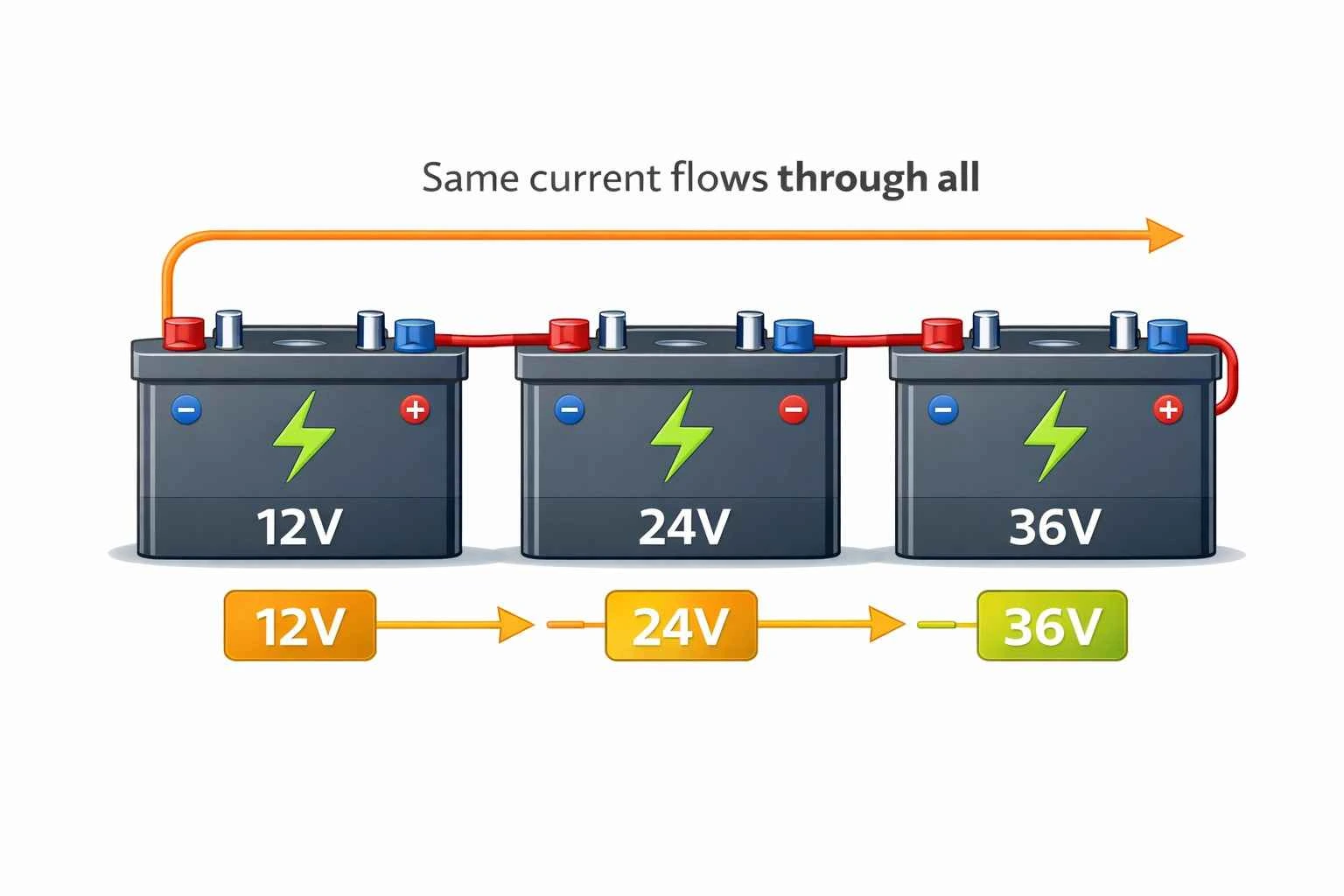
What is Series Connection?
In a series connection, the positive terminal of one module is connected to the negative terminal of the next module.
Effect on Electrical Parameters
- Voltage increases
- Current remains constant
Example
If each module has:
- Voltage = 40V; Current = 10A
For 5 modules in series:
Total Voltage = 200V; Current = 10A
Advantages
- Suitable for high-voltage systems
- Reduces cable losses
Disadvantages
- Shading on one module affects entire string
Parallel Connection of Solar Modules
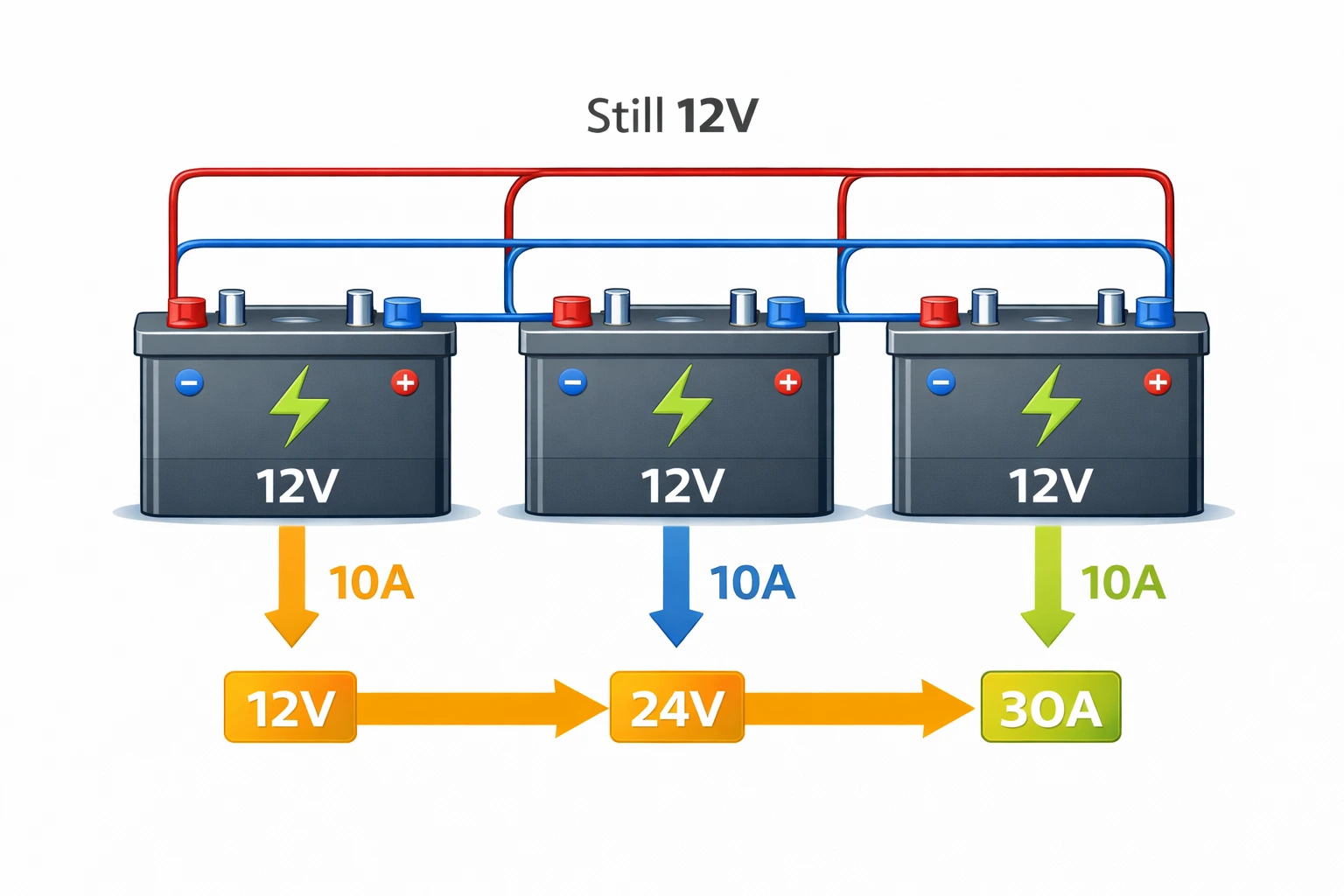
What is Parallel Connection?
In a parallel connection, all positive terminals are connected together and all negative terminals are connected together.
Effect on Electrical Parameters
- Current increases
- Voltage remains constant
Example
If each module has:
- Voltage = 40V; Current = 10A
For 5 modules in parallel:
- Voltage = 40V; Total Current = 50A
Advantages
- Better performance under partial shading
- Higher current output
Disadvantages
- Requires thicker cables
- Higher installation complexity
Series-Parallel Combination
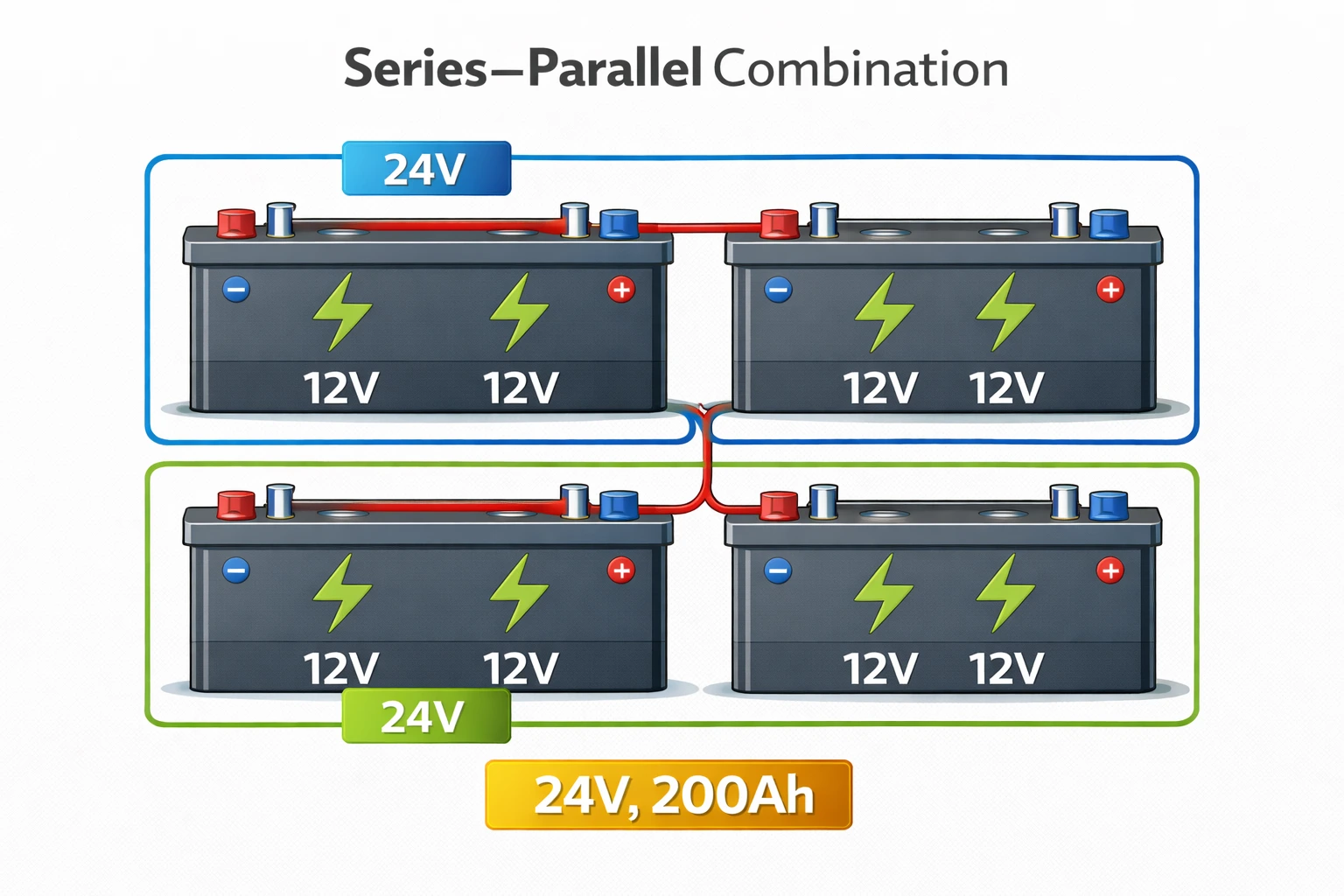
Most solar PV systems use a combination of series and parallel connections to achieve desired voltage and current levels.
Components Required for Interconnection
- Solar cables
- MC4 connectors
- String combiner box
- Junction boxes
Tools Required
- Crimping tools
- Wire strippers
- Multimeter
- Insulation tester
Step-by-Step Wiring Guide
Step 1 – Understand System Design
- Review system voltage and current requirements
- Study wiring diagrams
Step 2 – Arrange Modules
- Position modules as per layout
- Ensure proper spacing
Step 3 – Connect Modules in Series
- Connect positive of one module to negative of next
- Form strings
Step 4 – Connect Strings in Parallel
- Combine strings using combiner box
- Connect positive to positive, negative to negative
Step 5 – Use Proper Connectors
- Use MC4 connectors
- Ensure tight connections
Step 6 – Cable Management
- Route cables properly
- Avoid loose or hanging wires
Step 7 – Electrical Testing
- Measure voltage and current
- Verify connections
Step 8 – Final Inspection
- Check insulation
- Ensure secure connections
Conclusion
Proper solar module interconnection is essential for achieving efficient and reliable solar PV system performance. By following correct wiring techniques, ensuring proper connections, and conducting thorough testing, installers can maximize solar electricity generation and system efficiency.
Electrical configuration plays a key role in the success of renewable solar installations. Additionally, compliance with standards set by the Ministry of New and Renewable Energy ensures safety and quality.
With proper interconnection practices, solar professionals can optimize solar panel system cost, enhance solar electricity generation, and contribute to sustainable solar energy for home use and large-scale renewable solar solutions.
FAQs
Q1. What is the difference between series and parallel connection?
Ans: Series increases voltage, while parallel increases current.
Q2. Why are series connections used?
Ans: They are used to achieve higher voltage levels.
Q3. Why are parallel connections used?
Ans: They increase current and improve performance under shading.
Q4. What connectors are used in solar wiring?
Ans: MC4 connectors are commonly used.
Q5. Does wiring affect solar panel system cost?
Ans: Yes, proper wiring improves efficiency and reduces losses.

AVANCIS Pushes CIGS Thin-Film Solar Modules Beyond 20% Efficiency
AVANCIS achieves a breakthrough in solar technology, pushing CIGS thin-film modules beyond 20% efficiency for higher performance and energy output.

Solar Power System Efficiency: How to Calculate for Residential, Industrial & Commercial Use
Understand and measure your solar system’s performance. Maximize energy output at home, industrial units, and commercial buildings

Haryana and UP Face Delays in Solar Net Metering Approvals
Net metering for rooftop solar in Haryana and Uttar Pradesh faces procedural delays, affecting solar adoption and efficiency for residential and commercial consumers

Solar Microgrid Solutions: Smart, Reliable & Scalable Power Systems
Solar microgrid solutions provide smart, reliable, and scalable power by integrating solar energy, battery storage, and intelligent control systems. These systems ensure uninterrupted electricity for industries, campuses, communities, and remote locations while reducing grid dependency and energy costs.
India and IMT-GT JBC Sign MoU to Boost Energy Efficiency in Southeast Asia
The first meeting of the G20 Energy Transitions Working Group was held in Bengaluru, India, and was a success, with participants sharing a consensus on the priority areas of energy security and diversified supply chains.

SECI Sets Record in Renewable Energy Trading, Surpasses ₹100 Billion
SECI achieves record renewable power trading revenue surpassing ₹100 billion, marking a milestone in India’s clean energy growth and solar market expansion.
Solar PV Array Troubleshooting Guide: Diagnose & Fix Issues
Discover how to troubleshoot solar PV arrays with a step-by-step guide to diagnosing common faults, performing electrical tests, identifying damaged modules, and restoring optimal solar system performance.
7 Common Myths about Solar Energy in India
Solar power is not only less expensive, but it is also the most abundant source of clean energy.