SECI Sets Record in Renewable Energy Trading, Surpasses ₹100 Billion
Solar Energy Corporation of India (SECI), a central government-owned company, has reported its highest-ever renewable power trading revenue of more than ₹100 billion (~$1.22 billion) in the financial year (FY) 2022-23.
The company is involved in various government programs that traded over 35 billion units of renewable energy in the fiscal year ending March 31. This was a significant increase of 59% from the previous year’s power trading volume.
SECI’s main source of income is the ₹0.07 (~0.00085)/kWh trading fees it charges on electricity sold to mostly state-owned distribution companies (DISCOMs). As an intermediary procurer, the company signs back-to-back power purchase agreements with developers and DISCOMs.
The agency is likely to be the intermediary procurer for the government’s proposed price pooling mechanism for solar power.
Under this proposal, SECI would also be able to sell any surplus power to open access consumers at a price that is at least equal to the uniform renewable energy tariff.
This could indicate SECI’s entry into the commercial and industrial (C&I) segment, as the agency could act as both intermediary and implementing agency for central pooling.
The Ministry of Power amended the Electricity Rules to implement a uniform renewable energy tariff for the central pool of projects connected to interstate transmission systems.
The uniform renewable energy tariff and SECI’s involvement are expected to boost the wind sector, improve transmission infrastructure, and facilitate the development of more renewable energy ISTS projects.
SECI’s Entry into C&I Segment Could Benefit Consumers, But Private Developers Worry About Market Share
SECI has vast resources that could offer lower tariffs and easier access to round-the-clock RTC power to consumers in the C&I domain, but private developers fear that their market opportunities will reduce.
Ajay Kumar Sinha, Additional General Manager of SECI, said that SECI had discussions with large businesses to understand the C&I market during a panel discussion at Mercom India’s C&I Clean Energy Meet in Ahmedabad.
Suggested Articles

India and IMT-GT JBC Sign MoU to Boost Energy Efficiency in Southeast Asia
The first meeting of the G20 Energy Transitions Working Group was held in Bengaluru, India, and was a success, with participants sharing a consensus on the priority areas of energy security and diversified supply chains.

Selecting Solar Panels: Best Guide for Homes and Factories
Solar panels are a hot topic these days, as the cost of solar is finally approaching what the average family can afford.

Minimum Land Requirement for Solar Power Plants in India
Understanding the land requirement for solar plant projects in India is essential for accurate planning and approvals. This article explains minimum land needed per kW and MW, key influencing factors, and differences between rooftop and ground-mounted solar plants.

How to Check Materials Received on Site for Solar PV Projects: Complete Inspection Checklist
Ensuring the quality of materials received at site is critical for successful solar PV installation. This guide provides a detailed inspection checklist to verify solar components before installation.

PV Cable & Conduit Labeling Guide: Best Practices for Solar Installations
A complete guide to cable termination in solar installations, including tools, step-by-step methods, and best practices for safe connections.
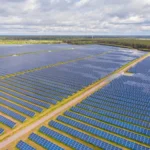
Steps Required for Conducting a Site Assessment Prior to Solar Installation
A solar site assessment helps installers evaluate location, shading, structure, and energy requirements before installation. This guide explains the essential steps for accurate solar system planning.

Solar Chankya: Complete Guide to Solar Systems and Components
Discover the key components of solar systems—from panels to inverters and batteries—and how they work together for efficient energy solutions

COP27: Harnessing Solar Energy for a Sustainable Future
COP27 is the latest in a long line of global climate conferences, which have been held regularly since 1994. The United Nations Framework Convention on Climate Change (UNFCCC) was created at the 1992 Rio Earth Summit.