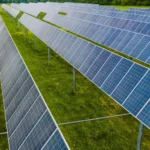
SECI Sets Record in Renewable Energy Trading, Surpasses ₹100 Billion
Solar Energy Corporation of India (SECI), a central government-owned company, has reported its highest-ever renewable power trading revenue of more than ₹100 billion (~$1.22 billion) in the financial year (FY) 2022-23.
The company is involved in various government programs that traded over 35 billion units of renewable energy in the fiscal year ending March 31. This was a significant increase of 59% from the previous year’s power trading volume.
SECI’s main source of income is the ₹0.07 (~0.00085)/kWh trading fees it charges on electricity sold to mostly state-owned distribution companies (DISCOMs). As an intermediary procurer, the company signs back-to-back power purchase agreements with developers and DISCOMs.
The agency is likely to be the intermediary procurer for the government’s proposed price pooling mechanism for solar power.
Under this proposal, SECI would also be able to sell any surplus power to open access consumers at a price that is at least equal to the uniform renewable energy tariff.
This could indicate SECI’s entry into the commercial and industrial (C&I) segment, as the agency could act as both intermediary and implementing agency for central pooling.
The Ministry of Power amended the Electricity Rules to implement a uniform renewable energy tariff for the central pool of projects connected to interstate transmission systems.
The uniform renewable energy tariff and SECI’s involvement are expected to boost the wind sector, improve transmission infrastructure, and facilitate the development of more renewable energy ISTS projects.
SECI’s Entry into C&I Segment Could Benefit Consumers, But Private Developers Worry About Market Share
SECI has vast resources that could offer lower tariffs and easier access to round-the-clock RTC power to consumers in the C&I domain, but private developers fear that their market opportunities will reduce.
Ajay Kumar Sinha, Additional General Manager of SECI, said that SECI had discussions with large businesses to understand the C&I market during a panel discussion at Mercom India’s C&I Clean Energy Meet in Ahmedabad.
Suggested Articles

Difference Between an On-Grid Inverter and a Hybrid Solar Inverter
Confused between an on-grid inverter and a hybrid solar inverter? This blog explains their differences, advantages, and which solar inverter is right for you.
CAPEX or OPEX? How to Choose the Best Solar Ownership Model
Choosing between the CAPEX and OPEX models can greatly impact your solar savings and ownership benefits. This guide explains both models to help you make the right decision.
Solar Installation on Sloped Roofs: Design, Mounting Systems & Best Practices
A practical guide to flat roof solar installation covering key design considerations, mounting system types, and best practices for efficient and reliable performance.

Steps for Conducting a Load Assessment Before Solar Installation and Its Requirements
Load assessment is an essential step before installing a solar PV system. It helps determine electricity consumption and ensures accurate system sizing for optimal solar performance.
Solar PV Procurement Process Guide for EPC & Installers | Step-by-Step
A well-planned procurement process is critical for the success of any solar PV project. This guide explains step-by-step how EPC companies and installers can efficiently source solar panels, inverters, and balance of system components while ensuring quality, cost-effectiveness, and timely delivery.

Personal Safety Hazards in Solar PV Installations
A complete guide to personal safety hazards in solar PV installations, covering common workplace risks and practical measures to protect solar workers.
Demystifying Battery Backup: Everything You Need to Know
Battery backup is essential for uninterrupted power at home and in industries. This guide explains different types of battery backup systems, how they work, their benefits, and tips to choose the right one for reliable energy storage.
Solar Energy for Industries Explained: Everything You Need to Know
Solar energy can greatly benefit industrial and factory owners as they require a constant and substantial source of electricity 24/7.