As solar energy adoption picks up across India, more consumers want to switch to solar without worrying about high solar installation charges, long payback periods, or system maintenance. This is where the RESCO Model in solar, one of India’s most popular solar financing models, comes into play.
The RESCO (Renewable Energy Service Company) Model is widely used in government buildings, industries, institutions, commercial spaces, schools, hospitals and large residential societies. It offers zero upfront investment, predictable energy costs, and guaranteed savings.
Let’s break down everything you need to know about the RESCO Model in Solar in simple, clear language.
What is the RESCO Model in Solar?
The RESCO Model in Solar is a solar arrangement where a solar developer invests, installs, owns, operates, and maintains the solar plant.
The consumer does not buy the solar system.
Instead, the consumer buys only the electricity generated at a pre-decided tariff (usually lower than the grid rate).
This makes solar adoption easier for users who want clean energy without taking ownership responsibility or paying the total cost of solar installation upfront.
Key characteristics of the RESCO Model in Solar
- ₹0 upfront cost for the consumer
- Developer owns the solar plant for the contract period
- Consumer pays only per-unit tariff (₹/kWh)
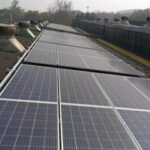
- Supply is through rooftop or ground-mounted solar plant
- All O&M, repairs, cleaning, and performance guaranteed by developer
- Long-term contract (10-25 years)
The RESCO model in Solaris essentially an advanced OPEX model, tailored specifically for large users who want solar electricity without owning the plant.
How Does the RESCO Model in Solar Works?
The RESCO mode is simple and structured. Here’s how it typically operates:
1. Site Assessment & Agreement
The developer surveys the rooftop/land and signs a long-term PPA (Power Purchase Agreement) with the consumer.
2. Developer Invests 100% CAPEX
The consumer does not pay for:
- Solar panels
- Inverters
- Mounting structures
- Earthing
- Cable trays
- Labour
- Commissioning
This drastically reduces their solar energy installation cost.
3. Installation, Testing & Commissioning
The plant is installed as per MNRE and BIS standards, ensuring optimal solar panel system cost utilisation and performance.
4. Consumer Pays for Power Only
You don’t buy “solar panels”; you buy solar power.
Tariffs are usually 30-50% lower than the grid.
5. Full O&M by Developer
Developer handles all:
- Module cleaning
- Preventive maintenance
- Real-time monitoring
- Fault resolution
- Replacement of components
This eliminates ongoing solar installation cost per kWh for the consumer.
6. End-of-Term Options
After 15-25 years, consumers may:
Take ownership,
OR
Extend the PPA,
OR
Let the developer remove the system
Price & Tariff Structure in RESCO Model in Solar
RESCO tariffs vary based on location, solar irradiation, scale, and PPA duration. Generally:
- Large rooftop C&I tariff: ₹3.5 – ₹5.0 per unit
- Ground-mounted utility-scale: ₹2.5 – ₹3.5 per unit
Compared to regular grid tariffs (₹7-₹12/unit), RESCO offers immediate savings and reduces the cost of solar per kWh installed.
Benefits of RESCO Model in Solar
1. Zero Investment
No home roof solar panels cost, no EPC cost, and no solar module price per watt to worry about.
2. Guaranteed Savings
Electricity is cheaper than the grid, making solar energy economical from day one.
3. Hassle-Free Operations
All maintenance and performance management handled by the developer.
4. No Technical Knowledge Required
Perfect for institutions and corporations without an internal solar team.
5. ESG & Sustainability Benefits
Clean renewable energy and solar energy reduces carbon footprint and improves compliance.
6. Ideal for High-Load Consumers
Industries, malls, cold storage, hospitals, campuses, anyone with high daytime load benefits the most.
Who Should Choose the RESCO Model in Solar ?
The RESCO model in Solar is ideal for:
- Large industries
- Manufacturing & production units
- Industrial clusters or parks
- Government buildings
- Schools, colleges, universities
- Malls & commercial complexes
- Hospitals & institutions
- Housing societies (≥100 kW)
- Cold storage and agro units
- Users with high daytime load get the best returns.
RESCO vs CAPEX vs OPEX (Quick Comparison)
Factor | RESCO | CAPEX | OPEX |
Upfront Cost | ₹0 | High | ₹0 |
Ownership | Developer | Consumer | Developer |
O&M Responsibility | Developer | Consumer | Developer |
Tariff | Fixed per unit | No tariff (self-owned) | Fixed per unit |
Ideal for | Large C&I, govt | Homeowners, long-term users | Large C&I |
Both RESCO and OPEX reduce the solar roof installation cost, but RESCO is usually preferred for bigger systems needing long-term PPAs.
Key Advantages for Businesses
- Predictable long-term energy pricing
- Lower solar electricity bills
- No risk of system degradation
- Zero burden of solar installation charges
- No need to manage solar panel area per kW or technical design
- Compliance with sustainability reporting (ESG / CSR)
Conclusion
The RESCO model in Solar is one of the smartest and most economical ways for large power consumers to adopt solar. With zero upfront cost, fully managed operations, predictable tariff, and guaranteed savings, RESCO makes solar adoption easier than ever.
If you want to reduce your energy bills, adopt renewable energy technology, and secure long-term sustainability, RESCO is the perfect choice.
Switch to Smart Roof Solar and unlock cost-effective clean energy, without any upfront investment!
FAQs
Q1. What happens at the end of the PPA period?
Ans: The consumer can take ownership, extend the contract, or ask the developer to remove the system.
Q2. How long does a RESCO PPA typically last?
Ans: RESCO contracts generally range from 10 to 25 years.
Q3. Can RESCO help improve sustainability goals?
Ans: Absolutely, RESCO enables clean energy adoption without investment, supporting ESG and CSR commitments.
Q4. Is maintenance cost included in the RESCO tariff?
Ans: Yes, all O&M costs are covered by the developer and included in the per-unit tariff.
Q5. What is the minimum system size ideal for RESCO?
Ans: Generally, systems above 100 kW are most suitable due to economies of scale.