
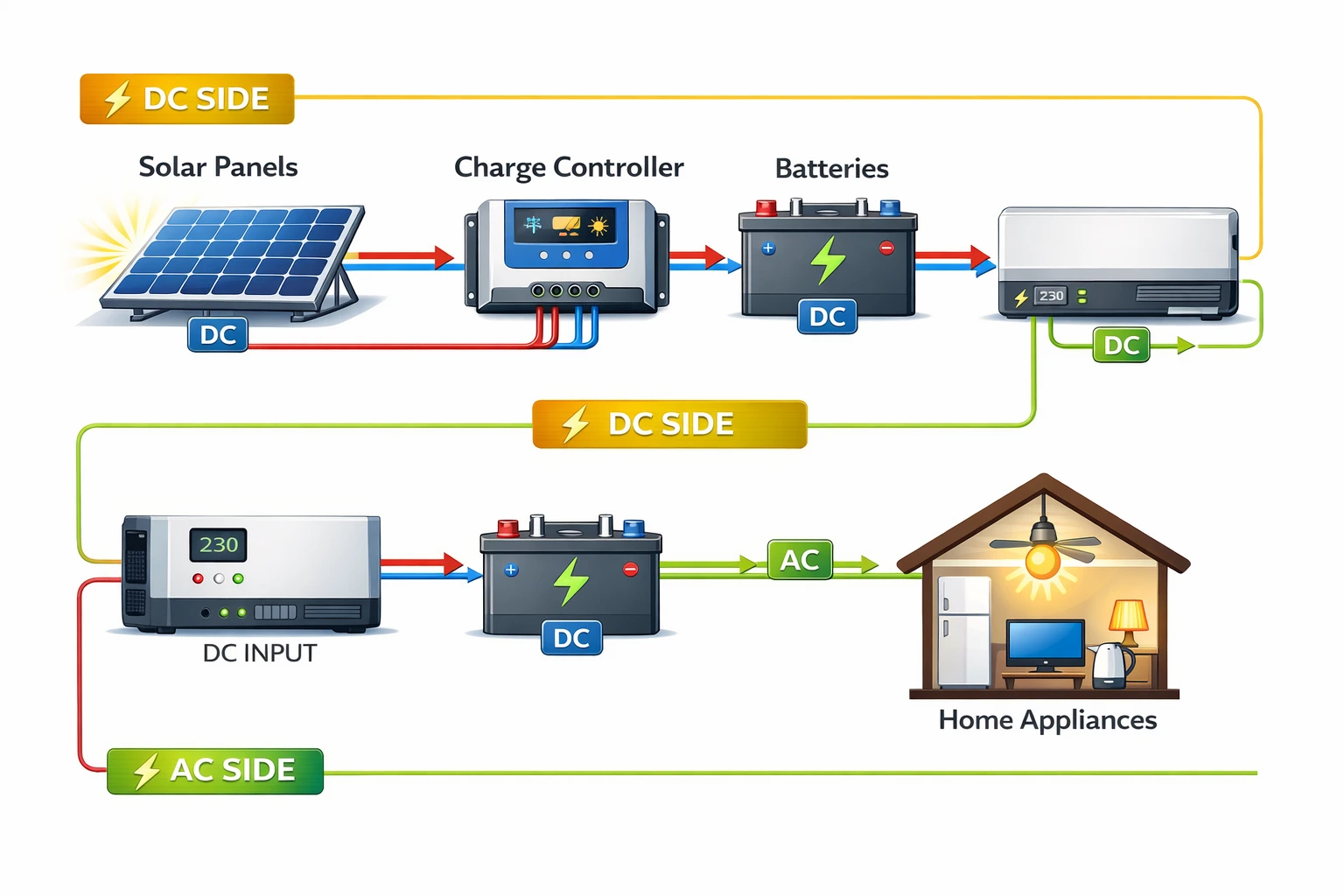
Solar inverters are one of the most critical components of any solar photovoltaic (PV) system. They convert the DC power generated by solar panels into usable AC electricity for homes, businesses, and industries. Whether it is an on-grid, off-grid, or hybrid solar plant, proper inverter installation is essential for ensuring system safety, efficiency, and long-term performance.
Incorrect inverter installation can result in energy losses, equipment failure, safety hazards, and increased solar installation charges. Therefore, solar installers and EPC professionals must understand the installation process, system requirements, and safety standards for different inverter types.
Inverter installation and configuration are fundamental aspects of renewable solar projects and solar energy for home use.
This blog provides a complete step-by-step guide for installing on-grid, off-grid, and hybrid solar inverters, including installation procedures, safety precautions, quality checks, and best practices.
What is a Solar Inverter?
A solar inverter converts:
- DC electricity from solar panels into
- AC electricity for electrical loads and grid usage
It also helps with:
- System monitoring
- Safety protection
- Energy management
- Grid synchronization
Types of Solar Inverters
1. On-Grid Solar Inverter
Connected directly to the utility grid.
Features:
- No battery backup
- Exports excess power to the grid
- Common in residential and commercial rooftop systems
2. Off-Grid Solar Inverter
Operates independently of the utility grid.
Features:
- Uses battery storage
- Suitable for remote areas
- Provides backup power
3. Hybrid Solar Inverter
Combines grid connection and battery backup.
Features:
- Supports battery charging
- Grid interaction
- Backup during outages
Importance of Proper Inverter Installation
Correct installation helps:
- Improve solar electricity generation
- Reduce power losses
- Ensure system safety
- Increase equipment lifespan
- Reduce solar installation cost per kWh
Improper installation can increase:
- Maintenance expenses
- Downtime
- Total cost of solar installation
Pre-Installation Planning
1. Review System Design Documents
Understand:
- Electrical layout
- Cable routing
- Inverter capacity
- Battery configuration
2. Verify Inverter Specifications
Check:
- Voltage range
- Current rating
- MPPT range
- Grid compatibility
3. Select Installation Location
The inverter location should be:
- Well ventilated
- Dry and dust-free
- Easily accessible
- Away from direct sunlight
General Inverter Installation Procedure
Step 1 – Confirm Mounting Surface
Ensure the wall or structure is:
- Strong
- Stable
- Properly aligned
Step 2 – Mount the Inverter
- Install the mounting bracket
- Secure the inverter firmly
Maintain proper clearance for airflow.
Step 3 – Install Earthing Connection
Proper grounding improves safety and equipment protection.
Step 4 – Route DC Cables
Connect cables from:
- Solar panels
- DC combiner box
Ensure correct polarity.
Step 5 – Route AC Output Cables
Connect the inverter output to:
- Distribution board
- Grid connection point
- Electrical loads
Step 6 – Install Protection Devices
Include:
- DC isolators
- AC breakers
- Surge Protection Devices (SPDs)
Step 7 – Tighten All Connections
Use the torque wrench according to specifications.
Step 8 – Perform Electrical Testing
Check:
- Voltage
- Continuity
- Insulation resistance
- Polarity
On-Grid Solar Inverter Installation
Step 1 – Connect Solar PV Input
Connect solar panel strings to the inverter DC input.
Step 2 – Connect AC Grid Output
Connect the inverter AC output to the utility grid panel.
Step 3 – Configure Grid Parameters
Set:
- Grid voltage
- Frequency
- Protection settings
Step 4 – Synchronize with Grid
Verify proper synchronization before commissioning.
Off-Grid Solar Inverter Installation
Step 1 – Install Battery Bank
Connect the battery system according to design.
Step 2 – Connect Solar Panels
Connect PV strings to the inverter input.
Step 3 – Connect Load Output
Connect critical electrical loads.
Step 4 – Configure Charging Settings
Set battery charging parameters.
Hybrid Solar Inverter Installation
Step 1 – Connect Solar Panels
Connect PV strings properly.
Step 2 – Connect Battery Bank
Ensure correct voltage and polarity.
Step 3 – Connect Utility Grid
Connect AC input/output connections.
Step 4 – Configure Energy Management Settings
Set:
- Battery priority
- Grid export limits
- Backup settings
Conclusion
Proper installation of on-grid, off-grid, and hybrid solar inverters is essential for ensuring the safety, efficiency, and reliability of solar PV systems. By following correct installation procedures, maintaining electrical safety, and conducting proper testing, installers can significantly improve system performance and longevity.
Inverter installation and configuration are critical aspects of renewable solar systems and solar energy for home use. Additionally, adherence to standards established by the Ministry of New and Renewable Energy ensures safe and standardized solar installations.
With proper installation practices, solar professionals can optimize solar panel system cost, improve solar electricity generation efficiency, and support sustainable renewable energy technology adoption across residential, commercial, and industrial sectors.
FAQs
Q1. What is the difference between on-grid and off-grid inverters?
Ans: On-grid inverters connect to the utility grid, while off-grid inverters operate independently with batteries.
Q2. What is a hybrid inverter?
Ans: A hybrid inverter supports both battery backup and grid connection.
Q3. Why is proper inverter ventilation important?
Ans: It prevents overheating and improves lifespan.
Q4. Does proper inverter installation affect solar panel system cost?
Ans: Yes, it reduces maintenance and improves efficiency.
Q5. What safety precautions should installers follow?
Ans: Use PPE, insulated tools, and proper grounding procedures.

Improve Your Power Factor After Solar Installation: Complete Guide
Power factor after solar installation often fluctuates due to system design and load patterns. Learn the key causes, challenges, and solutions for better efficiency.
Developers fear unfair state-specific levies will make solar more expensive
Developers in India are concerned that state-specific levies on solar projects could increase costs, slow adoption, and impact the growth of renewable energy across residential, commercial, and industrial sectors.

How MPPT Works in an Inverter: A Simple Guide for Solar Users
This simple guide explains how MPPT works in a solar inverter, helping users understand how it maximizes power output and improves system efficiency.
UP Electricity Tariff Increase 2015-16: Rates Rise by Rs 0.40–1.00 per Unit – What Consumers need to know
Uttar Pradesh has increased electricity tariffs for 2015-16, ranging from Rs 0.40 to 1.00 per unit. This update explains the revised rates, the sectors affected, and what consumers need to know about the tariff hike.

What Is Solar Performance Ratio (PR)? Meaning, Formula & Importance
Solar Performance Ratio (PR) is a key indicator of how efficiently a solar power system converts available sunlight into usable electricity. This guide explains what PR is, how it is calculated, why it matters, and how it directly impacts your solar system’s actual energy output.
Solar Panel Cleaning Guide for Maximum Performance
A complete guide on how to clean solar PV modules, including safe cleaning techniques, recommended tools, maintenance schedules, and best practices to maximize energy output.

Solar PPA for Commercial Buildings: Cost, Benefits & Savings
Looking to cut electricity bills without investing in solar assets? Commercial Solar PPA providers offer zero-investment solar solutions where businesses pay only for the power generated—simple, risk-free, and cost-effective.
Stop Losing Power: The Ultimate Guide to Solar DC & AC Cable Sizing for Max Efficiency
DC and AC cabling are the lifelines of any Solar PV Rooftop System. Learn how proper cable selection, connection design, and installation can help achieve optimum power output and long-term safety.