
Solar inverters are one of the most critical components of any solar photovoltaic (PV) system. They convert the DC power generated by solar panels into usable AC electricity for homes, businesses, and industries. Whether it is an on-grid, off-grid, or hybrid solar plant, proper inverter installation is essential for ensuring system safety, efficiency, and long-term performance.
Incorrect inverter installation can result in energy losses, equipment failure, safety hazards, and increased solar installation charges. Therefore, solar installers and EPC professionals must understand the installation process, system requirements, and safety standards for different inverter types.
Inverter installation and configuration are fundamental aspects of renewable solar projects and solar energy for home use.
This blog provides a complete step-by-step guide for installing on-grid, off-grid, and hybrid solar inverters, including installation procedures, safety precautions, quality checks, and best practices.
What is a Solar Inverter?
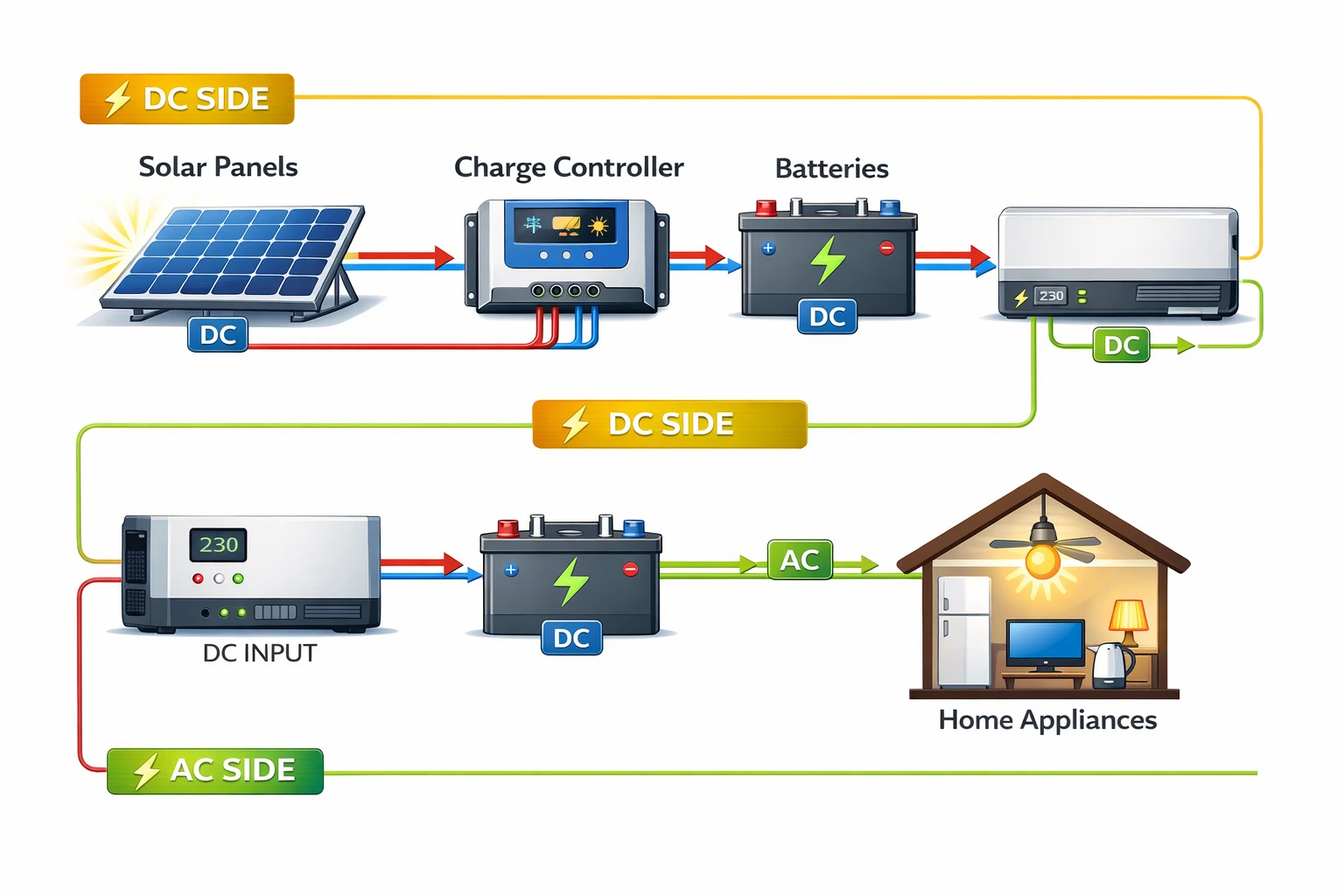
A solar inverter converts:
- DC electricity from solar panels into
- AC electricity for electrical loads and grid usage
It also helps with:
- System monitoring
- Safety protection
- Energy management
- Grid synchronization
Types of Solar Inverters
1. On-Grid Solar Inverter
Connected directly to the utility grid.
Features:
- No battery backup
- Exports excess power to the grid
- Common in residential and commercial rooftop systems
2. Off-Grid Solar Inverter
Operates independently of the utility grid.
Features:
- Uses battery storage
- Suitable for remote areas
- Provides backup power
3. Hybrid Solar Inverter
Combines grid connection and battery backup.
Features:
- Supports battery charging
- Grid interaction
- Backup during outages
Importance of Proper Inverter Installation
Correct installation helps:
- Improve solar electricity generation
- Reduce power losses
- Ensure system safety
- Increase equipment lifespan
- Reduce solar installation cost per kWh
Improper installation can increase:
- Maintenance expenses
- Downtime
- Total cost of solar installation
Pre-Installation Planning
1. Review System Design Documents
Understand:
- Electrical layout
- Cable routing
- Inverter capacity
- Battery configuration
2. Verify Inverter Specifications
Check:
- Voltage range
- Current rating
- MPPT range
- Grid compatibility
3. Select Installation Location
The inverter location should be:
- Well ventilated
- Dry and dust-free
- Easily accessible
- Away from direct sunlight
General Inverter Installation Procedure
Step 1 – Confirm Mounting Surface
Ensure the wall or structure is:
- Strong
- Stable
- Properly aligned
Step 2 – Mount the Inverter
- Install the mounting bracket
- Secure the inverter firmly
Maintain proper clearance for airflow.
Step 3 – Install Earthing Connection
Proper grounding improves safety and equipment protection.
Step 4 – Route DC Cables
Connect cables from:
- Solar panels
- DC combiner box
Ensure correct polarity.
Step 5 – Route AC Output Cables
Connect the inverter output to:
- Distribution board
- Grid connection point
- Electrical loads
Step 6 – Install Protection Devices
Include:
- DC isolators
- AC breakers
- Surge Protection Devices (SPDs)
Step 7 – Tighten All Connections
Use the torque wrench according to specifications.
Step 8 – Perform Electrical Testing
Check:
- Voltage
- Continuity
- Insulation resistance
- Polarity
On-Grid Solar Inverter Installation
Step 1 – Connect Solar PV Input
Connect solar panel strings to the inverter DC input.
Step 2 – Connect AC Grid Output
Connect the inverter AC output to the utility grid panel.
Step 3 – Configure Grid Parameters
Set:
- Grid voltage
- Frequency
- Protection settings
Step 4 – Synchronize with Grid
Verify proper synchronization before commissioning.
Off-Grid Solar Inverter Installation
Step 1 – Install Battery Bank
Connect the battery system according to design.
Step 2 – Connect Solar Panels
Connect PV strings to the inverter input.
Step 3 – Connect Load Output
Connect critical electrical loads.
Step 4 – Configure Charging Settings
Set battery charging parameters.
Hybrid Solar Inverter Installation
Step 1 – Connect Solar Panels
Connect PV strings properly.
Step 2 – Connect Battery Bank
Ensure correct voltage and polarity.
Step 3 – Connect Utility Grid
Connect AC input/output connections.
Step 4 – Configure Energy Management Settings
Set:
- Battery priority
- Grid export limits
- Backup settings
Conclusion
Proper installation of on-grid, off-grid, and hybrid solar inverters is essential for ensuring the safety, efficiency, and reliability of solar PV systems. By following correct installation procedures, maintaining electrical safety, and conducting proper testing, installers can significantly improve system performance and longevity.
Inverter installation and configuration are critical aspects of renewable solar systems and solar energy for home use. Additionally, adherence to standards established by the Ministry of New and Renewable Energy ensures safe and standardized solar installations.
With proper installation practices, solar professionals can optimize solar panel system cost, improve solar electricity generation efficiency, and support sustainable renewable energy technology adoption across residential, commercial, and industrial sectors.
FAQs
Q1. What is the difference between on-grid and off-grid inverters?
Ans: On-grid inverters connect to the utility grid, while off-grid inverters operate independently with batteries.
Q2. What is a hybrid inverter?
Ans: A hybrid inverter supports both battery backup and grid connection.
Q3. Why is proper inverter ventilation important?
Ans: It prevents overheating and improves lifespan.
Q4. Does proper inverter installation affect solar panel system cost?
Ans: Yes, it reduces maintenance and improves efficiency.
Q5. What safety precautions should installers follow?
Ans: Use PPE, insulated tools, and proper grounding procedures.
Solar Chankya: Complete Guide to Solar Systems and Components
Discover the key components of solar systems—from panels to inverters and batteries—and how they work together for efficient energy solutions
Choosing the Right Solar Panel: Complete Guide for India
Solar is among the fastest-growing industries in India. This is mainly because solar energy is not only renewable but is also attractive from a financial point of view.
India’s Solar Capacity Growth Slows Down in Q1 2023
India’s solar capacity growth slowed in Q1 2023. Explore the factors behind the slowdown and its impact on the country’s renewable energy progress.
Are Colleges and Schools ready to take up Solar challenge?
Adopting solar energy can help schools and colleges reduce electricity costs and promote sustainability. This guide explores how educational institutions can implement rooftop solar projects, the benefits, and what steps are needed to take on the solar challenge effectively.
How to Prepare Battery Terminals and Install Interconnection Cables
Proper battery terminal preparation and cable installation are essential for safe and efficient battery bank operation. This guide explains the complete installation process for solar projects.
How to Calculate Savings from Rooftop Solar Solutions: A Complete Guide
Calculating savings from rooftop solar solutions is essential for planning your investment. This guide explains how to estimate cost reduction, return on investment, and long-term financial benefits for residential, commercial, and industrial solar projects.

New Loan Scheme for solar rooftop projects by IREDA
Solar installation for petrol pumps offers huge savings and energy independence. This 2025 guide explains system cost, subsidy, ROI, and installation process.
Poor vs Good Solar Installation: Key Differences Explained
A solar system’s performance depends heavily on installation quality. This blog explains the clear differences between a poor and good solar installation — from wiring practices and panel alignment to mounting structures and system safety — helping you make an informed choice and ensure long-term efficiency.