Poor vs Good Solar Installation: Key Differences Explained
Good Solar Installation
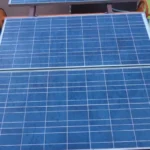
Solar Panels:
A lot of duplicate panels , used in solar power plant for generating solar energy for home/industrial/commercial roof top or ground mounted ,are available in the market and cheaper solutions use the same. In absence of customer knowledge on the subject they are taken for a ride . To avoid malpractice , customers should insist on seeing the panel sl no via a RFID reader , which we are sure the vendor should have . And if some vendor says that he does not have a RFID reader then please avoid getting systems installed by such vendors.
Design based on proper survey:
Avoiding inter row shadows and other shadows , even if size of the plant reduces.It is observed that in many cases the owner decides that he wants XXX KWp solar plant and at actual site XXX installation is not feasible but even then a lot of installers install XXX by reducing inter row gap resulting in lower generation of power.
Array Design:
Arrays should be designed taking into consideration the max and min voltage expected and input voltage permissible for the particular inverter used at site.
Cables:
Proper cables should be used tinned cu solar cables for DC side and Cu cables for AC side. If vendor uses Cu cables on DC side also then there may be no immediate effect but in due course of time generation will be effected.
Structure:
Now a days a lot of vendors are using pre galvanized sheets for fabrication of structure, which is not desirable. In fact the structure should be fabricated with MS and then hot dip galvanization should be resorted to for longevity of structure life. Even with pre Gal sheet there will be no immediate impact on performance but 5-7 yrs down the line it will get rusted and may break leading to accident.
Earthings:
There should be minimum two earthings , separately for DC and AC networks.
LA:
LA is must because solar panels are prone to attract lightening.
Protections:
Unless otherwise AC and DC side protections are installed either in ACDB/AJB/Inverters , one should not commission the solar plant. There are various models of inverters of the same capacity. Cheaper ones do not have protections and they need to be provided in AJB/ACDB’s . One needs to be careful .Cost of SPD’s are significant and vendors tend to avoid the same either out of ignorance or for cost considerations.
Data Monitoring:
Generation from your plant needs to be monitored and vendors are supposed to be monitoring the same. Customer before placing order should insist on seeing the control centers of the vendors and if the vendors does not have such a control center then avoid doing business with such players.
Suggested Articles

Battery Bank Installation Guide for Solar PV Systems
A step-by-step guide to battery bank installation for solar PV systems, covering location planning, battery setup, and safety requirements.

India and Japan Strengthen Renewable Energy Cooperation
India and Japan have initiated a partnership under the Asia Energy Transition Initiative (AETI) to support India’s clean energy transition. India has set an ambitious target of achieving net-zero by 2070, while Japan aims to achieve the same by 2050.

Solar Panel Orientation and Angles: Guide for Solar PV Installers
Earthing and lightning protection are critical safety components in solar PV installations. This guide explains their importance, types, components, and best practices for solar installers.

What Is Renewable Energy? What Is the Best Source of Renewable Energy and Why? – Complete Guide
Renewable energy comes from natural sources like sunlight, wind, water, and biomass that are constantly replenished. As India accelerates its transition toward clean energy, understanding different renewable energy sources and identifying the most efficient and cost-effective option is crucial. This complete guide explains renewable energy types, their advantages, and compares them to determine the best source based on sustainability, scalability, and long-term benefits.

Solar PPA for Commercial Buildings: Cost, Benefits & Savings
Looking to cut electricity bills without investing in solar assets? Commercial Solar PPA providers offer zero-investment solar solutions where businesses pay only for the power generated—simple, risk-free, and cost-effective.

Solar Energy for Petrol Pumps: Benefits, Savings, and Implementation
Petrol pumps can significantly reduce energy costs and carbon footprint by adopting solar power. This guide explains the benefits, types of solar installations, and how fuel stations can leverage renewable energy for sustainable and efficient operations.

Important Factors Deciding the Type of Solar PV System to be Installed
A solar site assessment helps installers evaluate location, shading, structure, and energy requirements before installation. This guide explains the essential steps for accurate solar system planning.

Benefits of Site Survey in Solar PV Installation
Shadow analysis is a critical step in solar site assessment. It helps solar installers identify shading obstacles and optimize panel placement for maximum energy generation.