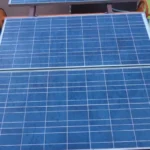
Best Solar Panels for Rooftop Projects: How to Choose the Right One
Crystalline silicon photo voltaic (PV) technology has given consistent performances in Indian conditions over the years. Limited experience with thin film technology has provided good performance in Rajasthan but slightly lower in other Indian Northern States compared to crystalline technology.
Selection of best solar panel
The reported annual degradation in performance of crystalline silicon panels is in the range of 0.8-1.0 % being slightly higher for thin film panels and at high temperature and humidity locations. It could also be slightly higher in the beginning, then steadies out. Best solar panel can provide over 90% performance after 10 years and 80% performance after 20 years over its life of 25 years. A few modules may need replacement at high voltage terminal end but limited to about 2 kW in a 100 kW array at the end of 10 years.
However, caution may need to be exercised as few domestic panel manufacturers have been facing the problem of PID (potential induced degradation) which can lead to much lower performance than expected.
The performance of best solar panel also depends on the system voltage apart from the temperature and the humidity. Higher the voltage, lower are the losses. Up to 5 kW systems, one should go for a voltage of 48 volts; up to 10 kW for 96 volts; and, for other rooftop systems 240 volts or higher.
Ask for the performance test certification of the modules from the manufacturers. NISE (National Institute of Solar Energy) under MNRE, Government of India, and other private sector agencies like UL (Underwriters Labs) and TUV are the key agencies providing certification. If you are going for a larger installation, ask for the random testing of say 5% of the modules. For example, a 100 kW system would require around 400 modules of 250 watts. So, the manufacturers should provide the test results at the factory premises for, say, 20 randomly selected modules.
Most of the PV modules available in the market today provide an efficiency of 14 – 15% though the peak performing panels are reported to have efficiency of over 18%. However, efficiency is not very critical as the module will provide its rated power output but the size of the module will be larger and occupy more roof space if the efficiency is lower.
A 250 watt module of 14% efficiency will occupy a roof space of around 1.8 square meters. The total roof space required for, say, a 10 kW installation comprising 40 modules of 250 watts, allowing for spacing between the arrays, will vary from 80-100 square meters, depending on the roof.
Check out the number of units generated by the solar power plants that may have been set up near your location. It would provide a broad indication of the solar radiation available as well as the observed solar generation in your area.
Suggested Articles

Series Connection of PV Modules – Effect on Voltage and Current
Connecting PV modules in series is a common practice in solar installations. This guide explains how series connections affect voltage and current and why they are used in solar PV systems.

Developers fear unfair state-specific levies will make solar more expensive
Developers in India are concerned that state-specific levies on solar projects could increase costs, slow adoption, and impact the growth of renewable energy across residential, commercial, and industrial sectors.

Solar PV String Voltage and Current Measurement Guide
A complete guide to DC voltage and current testing for solar PV strings and arrays, ensuring accurate performance verification during commissioning.

Fixed Structure – Solar Mounting Post Installation Guide
A step-by-step guide to solar mounting post installation for fixed structures, covering alignment, positioning, and best practices for durable solar foundations.

Everything You Need to Know About Net Metering
Discover everything about net metering – how it works, benefits, installation process, and how it helps you save on electricity bills.

Solar Power System Efficiency: How to Calculate for Residential, Industrial & Commercial Use
Understand and measure your solar system’s performance. Maximize energy output at home, industrial units, and commercial buildings
New IREDA Loan Scheme for Solar Rooftop Projects: Benefits, Eligibility & Interest Rates
India’s renewable energy push gets a major boost with the new IREDA loan scheme for solar rooftop projects. This scheme offers low-interest financing, simplified approvals, and better support for residential, commercial, and industrial consumers. Here’s a detailed look at its benefits, eligibility, interest rates, and how to apply for funding.

Standalone Solar PV System Startup Guide
A complete guide to identifying, recording, and repairing anomalous conditions in solar PV systems to improve reliability, performance, and safety.