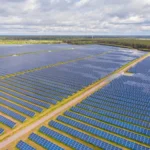
Solar Industry Faces Growing Losses from Underperforming Equipment
According to the Raptor Maps’ Global Solar Report, the amount of power loss due to equipment anomalies has nearly doubled from 1.61% in 2019 to 3.13% in 2022. This trend is expected to continue, with anomaly-driven power loss potentially growing to almost 6% by 2025.
The report also found that for sites larger than 200 MW, average underperformance due to anomalies has more than tripled since 2019, resulting in an estimated annual revenue loss of $82M for the 24.5 GW of assets analyzed in 2022, translating to an average loss of $3,350 per MW. Extrapolating these findings to the total global installed PV capacity (excluding residential) as of the end of 2021, the report estimates that the industry is facing a $2.5B annual revenue loss.
Furthermore, the report revealed that polycrystalline modules are more likely to show module-level and submodule-level anomalies on inspection compared to thin film and monocrystalline modules. Asset owners are increasingly looking for more granular data, with 32% of Raptor Maps customers requesting IEC-compliant Comprehensive Inspections in 2022, up from 23% in 2021.
The report emphasizes the need for asset owners and managers to monitor equipment performance over time and proactively identify maintenance issues and warranty claim opportunities.
Overall, the Raptor Maps Global Solar Report emphasizes the importance of proactive monitoring and maintenance to ensure the long-term health and profitability of solar assets. With the use of innovative technologies solar stakeholders can take steps to address the growing issue of equipment anomalies and underperformance, and help solar installations flourish for decades to come.
In conclusion, the solar industry needs to take proactive steps to address the growing problem of underperformance due to equipment anomalies. Raptor Maps’ Global Solar Report provides valuable insights and benchmarks to help asset owners and managers monitor their solar assets’ health and identify issues before they become costly problems.
Suggested Articles

Improve Your Power Factor After Solar Installation: Complete Guide
Power factor after solar installation often fluctuates due to system design and load patterns. Learn the key causes, challenges, and solutions for better efficiency.

C&I Solar Installation Company: Complete Guide for Commercial & Industrial Solar Projects in India
Ground mounted solar systems are ideal for commercial and industrial projects with available land. This guide explains cost, land requirement, installation process, and ROI in India.

Why Go Solar: A Complete Guide to Solar Power for Homes and Industries
Switching to solar energy offers significant savings and environmental benefits. This guide explains why going solar is a smart choice, covering financial incentives, reduced electricity bills, and positive impacts on the planet.

Complete Guide to Solar Panel Subsidy Scheme in Haryana
Solar power is not only less expensive, but it is also the most abundant source of clean energy.

Solar EPC Installation Tools & Consumables Guide for Civil & Mechanical Work
A complete Solar EPC guide covering essential tools and consumables required for civil and mechanical installation to ensure smooth and efficient project execution.

Solar Energy Gadgets in India: 9 Cool Devices to Explore
Explore 9 innovative solar-powered gadgets in India that make daily life more sustainable, energy-efficient, and eco-friendly.

Earthing and Lightning Protection Required for Solar Installation – Complete Guide for Solar Installers
Earthing and lightning protection are critical safety components in solar PV installations. This guide explains their importance, types, components, and best practices for solar installers.
Researchers Propose New Way to Make Nuclear Power Plants Safer
Researchers propose innovative methods to enhance the safety of nuclear power plants, aiming to reduce risks and improve operational security.