How to Safely Install Solar Panels on Metal and Asbestos Rooftops
Factories in Delhi and NCR regions have a variety of roofs ranging from flat concrete roofs, metal sheds which are mostly inclined and even the asbestos sheets laid over the top.
Solar on Metal & Asbestos Roofs
The Solar Plant can be installed on any roof that has sufficient strength.
Solar on Concrete Roofs
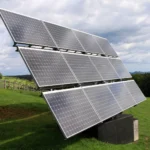
On flat concrete roofs, it is quite easy to lay the solar panels. The civil foundations need to be laid in a way that the water should not seep into the roof. Over the foundations, the structure made up of hot dipped galvanized steel needs to be built of sufficient strength. The structure should preferably give a tilt of 20 degree around in Delhi and NCR to get the best solar irradiation. The panels should face to the South side to the extent possible.
Solar on Metal Sheds
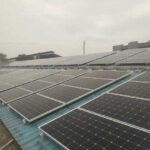
The Metal sheds can be facing east-west or north-south. If the metal structure has sufficient strength, the solar panels can be easily laid. The solar panel structure should be such that it is light and strong enough to hold panels. In typical sheds, the purlins and associated structures are designed to take weights of more than 100 kg per square meter. Solar plant will weight around 20-25 kgs per square meter, hence the weight of plant is never a problem unless the purlins are not strong enough.
However, the factory owners should be careful while allowing the puncture in the roof. Water leakages would tend to happen from the punctured holes in the roof. Over time, the screws put on these punctured roofs will have movement due to the pressure from strong winds and the puncture size will increase. So, while installing panels or building pathways or side rails, these punctures need to be reduced to the maximum.
Solar on Asbestos Sheets
Similarly, panels can be installed on asbestos sheets. The old sheets need to be replaced in such installations. Typical asbestos sheet has a life of 10 years. Again, it is not the sheet but the purlin structure that has to take the weight of the solar panels and structures. Asbestos sheets should have enough strength that the man power for plant installation can freely walk and do their work.
Suggested Articles

Latest MNRE List: Approved Solar Module Manufacturers
Check the latest MNRE-approved list of solar module manufacturers to ensure quality and compliance for your solar projects in India.

Solar O&M Services: How to Ensure Peak Performance & Maximum Power for Solar System
Discover how Solar O&M services keep your solar system running at its best. From routine maintenance to performance monitoring, ensure maximum power and efficiency.

Benefits of Site Survey in Solar PV Installation
Shadow analysis is a critical step in solar site assessment. It helps solar installers identify shading obstacles and optimize panel placement for maximum energy generation.

PPE Checklist for Solar Installations: Safety Gear Guide
A complete PPE checklist for solar installations covering essential safety gear required for safe and efficient on-site work.

Solar Cell Technology: Monocrystalline vs Polycrystalline vs Thin-Film
Explore the different types of solar cells, including monocrystalline, polycrystalline, and thin-film, and learn their efficiency, applications, and benefits for solar energy systems.

Complete Guide to Rooftop Solar Components for Industries
A rooftop solar system for factories typically includes solar panels, inverters, mounting structures, wiring, and monitoring systems. Additional components like net meters and energy storage may also be installed to optimize energy usage and track performance

Solar for Commercial Buildings in India: Costs, Benefits & ROI Explained
Solar for commercial buildings in India is becoming the smartest way to cut electricity bills and increase energy independence. This guide explains system costs, benefits, ROI, and how solar power helps offices, malls, hotels, and commercial complexes become more sustainable and profitable.

India and Japan Strengthen Renewable Energy Cooperation
India and Japan have initiated a partnership under the Asia Energy Transition Initiative (AETI) to support India’s clean energy transition. India has set an ambitious target of achieving net-zero by 2070, while Japan aims to achieve the same by 2050.