AVANCIS Pushes CIGS Thin-Film Solar Modules Beyond 20% Efficiency
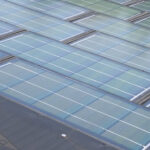
A team of researchers from AVANCIS, a solar module manufacturer in Munich, Germany, has broken the 20% efficiency barrier for CIGS thin-film modules measuring 30 cm x 30 cm. The previous record, also set by AVANCIS, was 19.8%. The new efficiency of 20.3% was independently certified by the National Renewable Energy Lab.
The company’s researchers made essential improvements to the materials used in the solar panels, including optimizing a material called Ga-rich Cu (In, Ga) (S, Se)2 through a special chemical process. They also treated the material with sodium after it was deposited and used a special zinc-based buffer that did not contain cadmium.
The advancements in the manufacturing process can be applied to AVANCIS’ ongoing product series, which means they can make more solar panels with these improvements. The company said these large solar panels give architects much freedom to design solar facades. Its color technology allows the panels to have dynamic colors, creating an interplay of light and color in architectural designs.
In March, Midsummer, a Swedish developer, in collaboration with researchers at the University of California, Los Angeles, developed a four-terminal perovskite-CIGS tandem solar cell that has demonstrated an efficiency of 24.9%. This is the highest efficiency ever achieved for a CIGS solar cell.
The development of more efficient CIGS solar cells is a major step forward for the solar industry. CIGS solar cells are thin, flexible, and lightweight, making them ideal for a variety of applications, including building-integrated photovoltaics (BIPV) and rooftop solar systems. The higher efficiency of these new cells will make them more cost-competitive with other types of solar cells, such as crystalline silicon cells. This could help to accelerate the adoption of solar energy and contribute to a cleaner, more sustainable future.
Suggested Articles

Solar Inverter Inspection & Maintenance Guide
A complete guide to battery maintenance for solar PV systems, including inspection, cleaning, testing, charging, and preventive maintenance to ensure long battery life and reliable performance.

GHI vs DNI Explained: Understanding Solar Radiation for Better Solar System Design
GHI and DNI are two critical solar radiation parameters used in designing efficient solar power systems. This guide explains the difference between GHI vs DNI, how each is measured, and why understanding them is essential for accurate solar system design and performance estimation.

Photovoltaic Power Output Explained: A Practical Guide for Homes & Businesses
Photovoltaic power output determines how much electricity a solar system can generate. This simple guide explains PV output, how it is calculated, and what it means for homes and businesses planning to go solar.

Sloped Roof Solar Anchors & Attachments Installation Guide
A step-by-step guide to sloped roof solar anchors installation, covering roof attachments, fixing techniques, and best practices for durable and leak-proof systems.

Everything You Need to Know About Solar System Earthing
Power factor after solar installation often fluctuates due to system design and load patterns. Learn the key causes, challenges, and solutions for better efficiency.

Can Solar Systems Support Industrial Motors and Machines? A Complete Guide
Discover how using solar for heavy machines can power industrial equipment reliably and cost-effectively for greener operations.

Battery Polarity & Voltage Testing Guide for Safe Installation
A complete guide to battery polarity and voltage testing, ensuring safe battery installation and reliable performance in solar PV systems.

Fixed Structure – Solar Mounting Post Installation Guide
A step-by-step guide to solar mounting post installation for fixed structures, covering alignment, positioning, and best practices for durable solar foundations.