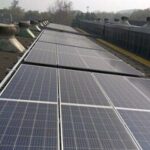
AVANCIS Pushes CIGS Thin-Film Solar Modules Beyond 20% Efficiency
A team of researchers from AVANCIS, a solar module manufacturer in Munich, Germany, has broken the 20% efficiency barrier for CIGS thin-film modules measuring 30 cm x 30 cm. The previous record, also set by AVANCIS, was 19.8%. The new efficiency of 20.3% was independently certified by the National Renewable Energy Lab.
The company’s researchers made essential improvements to the materials used in the solar panels, including optimizing a material called Ga-rich Cu (In, Ga) (S, Se)2 through a special chemical process. They also treated the material with sodium after it was deposited and used a special zinc-based buffer that did not contain cadmium.
The advancements in the manufacturing process can be applied to AVANCIS’ ongoing product series, which means they can make more solar panels with these improvements. The company said these large solar panels give architects much freedom to design solar facades. Its color technology allows the panels to have dynamic colors, creating an interplay of light and color in architectural designs.
In March, Midsummer, a Swedish developer, in collaboration with researchers at the University of California, Los Angeles, developed a four-terminal perovskite-CIGS tandem solar cell that has demonstrated an efficiency of 24.9%. This is the highest efficiency ever achieved for a CIGS solar cell.
The development of more efficient CIGS solar cells is a major step forward for the solar industry. CIGS solar cells are thin, flexible, and lightweight, making them ideal for a variety of applications, including building-integrated photovoltaics (BIPV) and rooftop solar systems. The higher efficiency of these new cells will make them more cost-competitive with other types of solar cells, such as crystalline silicon cells. This could help to accelerate the adoption of solar energy and contribute to a cleaner, more sustainable future.
Suggested Articles

How to Improve Solar Panel Performance for Optimal Energy Output
Performance degradation in solar panels reduces energy output over time. This guide explains how to factor in degradation when calculating annual yields, ensuring accurate estimates for residential, commercial, and industrial solar installations.

Net Metering and Its Advantages Explained: How Solar Users Save More on Energy Bills
Learn what Net Metering and its advantages mean for you—cut electricity costs, earn energy credits, and boost solar efficiency easily.
PM Surya Ghar Muft Bijli Yojana 2025: Online Registration Made Simple
PM Surya Ghar Muft Bijli Yojana 2025: Learn how to register online and get free electricity under this government scheme.

Why Is Investing In Grade A Panels Important?
Investing in Grade A solar panels guarantees superior performance, safety, and maximum return on your solar investment.

Sun Path Diagram for a Specific Location and Time: Solar Installer Guide
Earthing and lightning protection are critical safety components in solar PV installations. This guide explains their importance, types, components, and best practices for solar installers.
Hydrometer Testing for Solar Battery State of Charge
A complete guide to hydrometer testing for solar battery state of charge, helping assess battery health, performance, and maintenance needs.

Everything You Need to Know About Net Metering
Discover everything about net metering – how it works, benefits, installation process, and how it helps you save on electricity bills.

Choosing the Right Solar Panel: Complete Guide for India
Solar is among the fastest-growing industries in India. This is mainly because solar energy is not only renewable but is also attractive from a financial point of view.