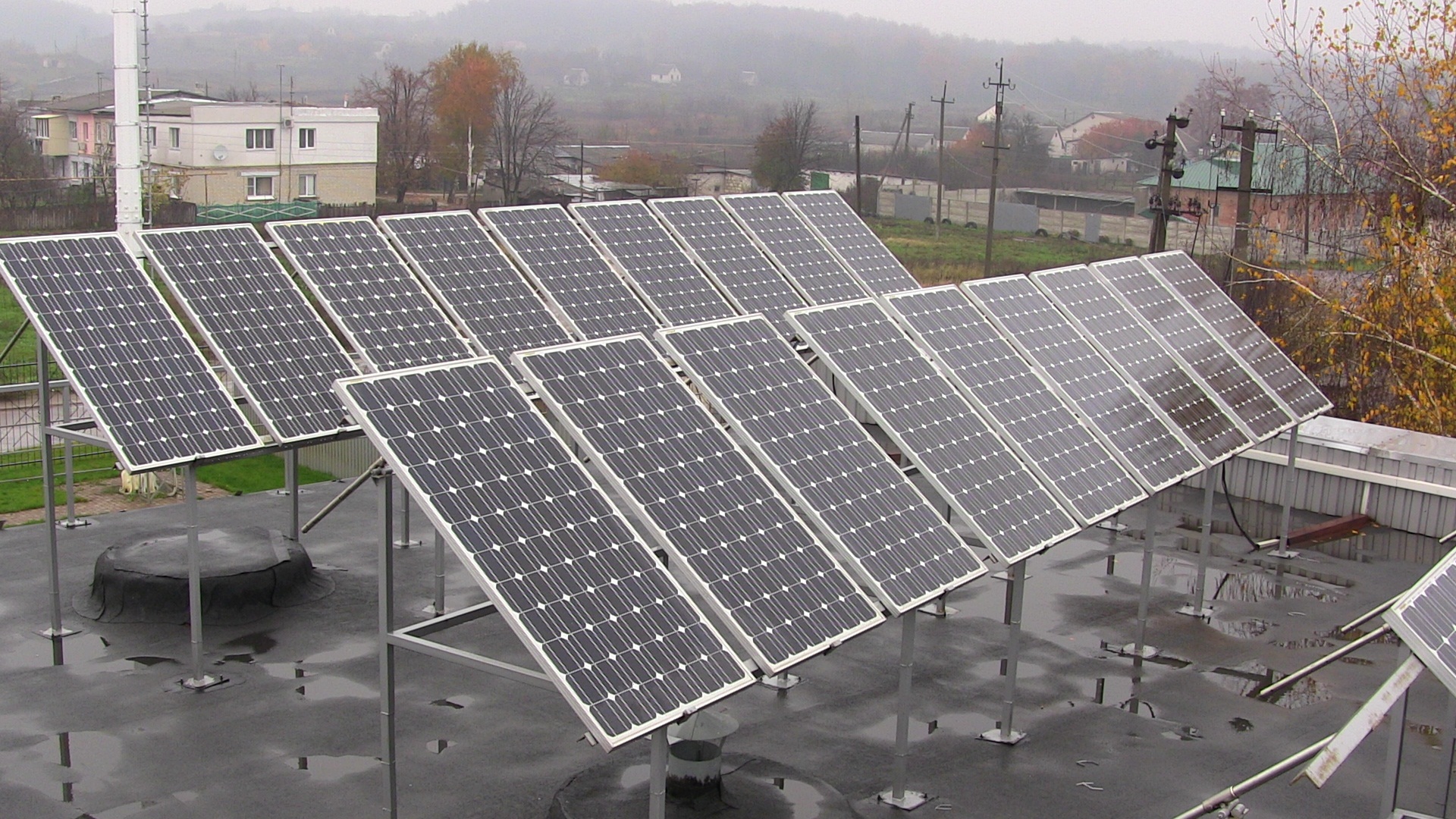
Rajasthan, known for its vast desert landscapes and abundant sunlight, has emerged as India’s solar powerhouse. With some of the country’s largest solar parks already operational, it continues to lead the way in renewable energy technology.
A 500 kW solar power plant is a utility-scale setup that transforms open land into a long-term, profitable, and sustainable power source. At Smart Roof Solar, we specialize in building such high-capacity systems, balancing cost, efficiency, and compliance while making solar energy economical for both developers and industries.
This guide explains the solar installation charges, total project cost, subsidy structure, generation potential, and the benefits of investing in large-scale solar in Rajasthan.
What Is a 500 kW Solar Power Plant?
A 500 kW solar project system can produce between 7-8 lakh units of solar electricity annually. It’s a large-scale installation designed for commercial sale, grid supply, or captive consumption.
In Rajasthan’s climate, that means excellent generation performance almost year-round.
These projects are typically undertaken by power producers, industrial clusters, or government agencies under long-term power purchase agreements (PPAs).
500 kW Solar Power Plant cost in Rajasthan
Rajasthan’s solar sector benefits from economies of scale and favorable policy support. Here’s a typical cost breakdown for a project of this magnitude, you can fill in your organization’s actual figures later:
Capacity | Estimated Cost (excluding GST) |
500 kW in Rajasthan | Starting from ₹1,25,00,000* |
600 kW in Rajasthan | Starting from ₹1,44,00,000* |
700 kW in Rajasthan | Starting from ₹1,64,50,000* |
800 kW in Rajasthan | Starting from ₹1,88,00,000* |
*Prices quoted are indicative starting rates for the above mentioned solar installations may vary based on project-specific requirements, including ground mount or tin-shed structures, RC installation types, additional accessories like DG sync, safety rails, etc. Final pricing will be confirmed upon detailed site evaluation and project scope assessment.
The average solar energy installation cost for a 500 kW plant ranges between ₹36,000 – ₹48,000 per kW in 2025, depending on the location, quality of materials, and land cost.
This brings the total cost of solar installation to approximately ₹1.8 – ₹2,4 crore, making it one of the most cost-efficient renewable energy investments in India.
Power Generation & Financial Returns
With Rajasthan’s strong solar potential, a 500 kW solar power plant can generate 7,00,000 – 8,00,000 units (kWh).
The payback period for such projects typically falls between 3.5 – 4.5 years, with 20 – 25 years of stable operation thereafter.
The cost of solar per kWh installed reduces dramatically as the system size grows, ensuring higher returns and lower maintenance costs per unit of energy produced.
Key Factors Influencing a 500 kW Solar Power Plant Cost in Rajasthan
Land Location & Evacuation Point
Land closer to substations reduces transmission cost.
Technology Choice
Bifacial, PERC, or TOPCon modules improve efficiency but raise solar installation charges.
Cabling & Distance
Long transmission lines increase solar installation cost per kWh.
Tracking System
Single-axis trackers enhance yield by 15–20% but increase solar panel system cost.
O&M Costs
Routine cleaning, inverter maintenance, and vegetation control influence total LCOE. Proper planning and site engineering minimize these expenses while maximizing annual yield.
Ideal Use Cases for 500kW Solar System
A 500kW system is perfect for:
- Manufacturing units with continuous operation.
- Cold storages, data centres, and hospitals.
- Hotels, universities and corporate campuses.
- Commercial complexes and business parks.
With these advantages, Rajasthan continues to attract developers seeking long-term, stable, and renewable solar investments.
Why Choose Smart Roof Solar
At Smart Roof Solar, we bring extensive expertise in both rooftop and utility-scale solar projects, ensuring every rupee spent on solar energy installation cost delivers the highest return.
We provide:
- Transparent quotations for solar module price per watt and total EPC charges
- Turnkey design, engineering, and commissioning
- Regulatory and policy assistance through RREC and DISCOMs
- Post-installation monitoring and O&M services to optimize generation
From start to finish, our focus is on making solar energy economical, efficient, and sustainable.
Conclusion
A 500 kW solar power plant in Rajasthan symbolizes the future of India’s clean energy transition. With strong sunlight, state-backed incentives, and rapidly falling module prices, the economics have never been better.
Though household subsidies under PM Surya Ghar don’t apply to such large-scale projects, developers benefit immensely from policy relaxations, open access, and long-term power purchase contracts.
Partner with Smart Roof Solar today to explore land assessment, project planning, and complete EPC solutions for your 500 kW solar power venture. Let’s build a future powered by renewable energy and solar energy, clean, efficient, and economically smart.
FAQs
Q1. Can industries set up a 500 kW plant for captive use?
Ans: Yes, industries can establish large-scale captive solar projects under open access regulations.
Q2. How long does it take to commission a 500 kW solar plant?
Ans: The project typically takes 3-6 months from planning to commissioning.
Q3. What is the expected plant load factor (PLF) in Rajasthan?
Ans: The PLF usually ranges between 20%-23% due to excellent solar radiation.
Q4. What makes Rajasthan more favorable than other states for solar projects?
Ans: Its high sunlight availability, low land costs, and clear policy framework make it ideal for large-scale solar investments.
Q5. Is water availability an issue for cleaning solar panels in Rajasthan?
Ans: Yes, hence dry-cleaning or robotic cleaning technologies are increasingly adopted.