
Commercial Solar Power Plant Subsidy in India: What Businesses Need to Know
Businesses in India can reduce their solar installation costs through various MNRE-backed subsidies and state incentives. Learn eligibility, benefits, and the application process for commercial solar plants.
Solar Sector Growth in India Slows as Investments Decline in Q1 2023
India’s solar sector experiences an investment slowdown in Q1 2023, reflecting challenges in funding and growth for renewable energy projects.
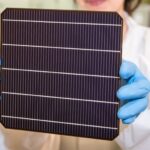
Perovskite: Future of Solar Cells
Discover how solar batteries store excess energy, maximize your solar system’s efficiency, and provide reliable power during outages. Learn about the types, benefits, lifespan, and maintenance tips to make the most of your solar investment.
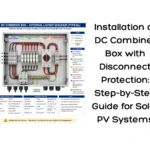
Installation of DC Combiner Box with Disconnect Protection: Step-by-Step Guide
A DC combiner box is an important protection component in solar PV systems. This guide explains its installation, disconnect protection, wiring, and safety requirements.
GHI vs DNI Explained: Understanding Solar Radiation for Better Solar System Design
GHI and DNI are two critical solar radiation parameters used in designing efficient solar power systems. This guide explains the difference between GHI vs DNI, how each is measured, and why understanding them is essential for accurate solar system design and performance estimation.
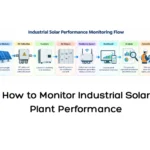
Inverter-Wise Solar Generation for C&I Plants
Discover how inverter-wise solar generation monitoring helps commercial and industrial (C&I) solar plants identify underperforming inverters, detect faults early, compare performance, and improve overall energy generation.
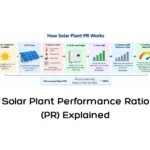
Solar Plant Performance Ratio (PR) Explained
A complete guide to solar plant performance ratio (PR), explaining its calculation, key influencing factors, industry benchmarks, and role in evaluating the performance of commercial and industrial solar plants.
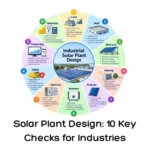
Solar Plant Design: 10 Key Checks for Industries
A practical guide to 10 essential factors industries should check when designing a solar plant, including structural suitability, electricity consumption, panel layout, inverter selection, safety, and long-term performance.