UP Government Incentive: Stamp Duty Exemption for Solar Land
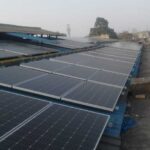
Solar developers will be exempted from paying any Stamp Duty for land acquired or leased for solar projects and solar parks in Uttar Pradesh.
The Uttar Pradesh government has announced the 100% exemption on stamp duty as per the state’s Solar Energy Policy 2022.
The stamp duty exemption could help solar capacity additions in the state where land acquisition has been a major challenge.
Solar parks need large areas of continuous land. Several cases of land acquisition have faced problems with local authorities, landowners, and government agencies, which lead to higher costs for developers and make projects unfeasible.
The stamp duty exemption will be applicable after the district magistrate or the Deputy Commissioner of Industries confirmation. They have to confirm that the deed is being executed under the Uttar Pradesh Solar Policy 2022.
At the time of registering the land deed, developers are required to present the irrevocable bank guarantee of the amount equivalent to the remission of the stamp duty in favor of the Uttar Pradesh New and Renewable Energy Development Agency (UPNEDA).
The validity of the bank guarantee must be at least the time prescribed to complete the project.
However, units that have obtained the stamp duty exemption benefit under any other policy will not be eligible for a similar exemption under the Solar Policy.
Last November, the Uttar Pradesh government approved the ‘Solar Energy Policy, 2022,’ revising its target upwards to 22 GW of solar capacity by FY 2026-27.
The state had proposed a 16 GW solar capacity target in its draft policy earlier last year. The approved target capacity includes 14 GW of utility-scale power projects, 6 GW of rooftop solar projects, and 2 GW of distributed solar projects.
UPNEDA has been designated the nodal agency for implementing the policy.
Suggested Articles

How MPPT Works in an Inverter: A Simple Guide for Solar Users
This simple guide explains how MPPT works in a solar inverter, helping users understand how it maximizes power output and improves system efficiency.

Solar Chankya: Complete Guide to Solar Systems and Components
Discover the key components of solar systems—from panels to inverters and batteries—and how they work together for efficient energy solutions

Faulty Solar PV Module Detection Using Shading Test
A complete guide to detecting faulty solar PV modules using the shading test and ammeter readings, helping installers quickly identify underperforming modules and restore system performance.

Solar Sector Growth in India Slows as Investments Decline in Q1 2023
India’s solar sector experiences an investment slowdown in Q1 2023, reflecting challenges in funding and growth for renewable energy projects.

How to Identify the Type of Footing Required for Solar PV Installations: Complete Guide
Learn how to identify the right footing for solar PV installations based on soil conditions, load requirements, and site factors. This complete guide covers different foundation types, selection criteria, and practical insights for safe and efficient solar system design.

Solar for Metal & Fabrication Units: Cost, Benefits and Installation in India
A practical guide on solar for metal and fabrication units in India covering installation cost, benefits, system options, and the installation process.

Commercial Solar Power Plant Subsidy in India: What Businesses Need to Know
Businesses in India can reduce their solar installation costs through various MNRE-backed subsidies and state incentives. Learn eligibility, benefits, and the application process for commercial solar plants.

Optimizing Solar Layout for DC Combiner Box Placement
A complete guide to choosing the best location for DC combiner box placement to improve safety, cable routing, and solar system efficiency.