
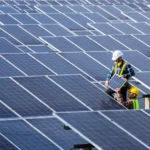
US Lawmakers Approve Tariffs on Solar Imports from Southeast Asia
A committee of the United States House of Representatives has voted to reinstate tariffs on solar imports from four Southeast Asian countries. Committee overturned the Biden administration’s decision to allow more unfair solar imports from China into the U.S.
The Ways and Means Committee said that China was clearly bypassing American tariffs. This was meant to ensure fair competition for American workers by exporting solar products through Cambodia, Malaysia, Thailand, and Vietnam.
It noted that the Department of Commerce had also found that Chinese solar manufacturers were avoiding antidumping and countervailing duties. They assembled solar cells and modules in Southeast Asia before shipping them to the U.S.
“For years, China has been evading American tariffs on solar products by sending them to the United States through Southeast Asia. Thus harming American energy jobs and leaving our supply chain under the control of the Chinese Communist Party,” the committee said. They called the decision to suspend tariffs on solar imports from these countries for two years as misguided.
In January, seven months after President Biden announced a two-year duty exemption on solar modules and cells imported from the four Southeast Asian countries, a bipartisan group of Congressmen had introduced a resolution of disapproval. They were demanding a reversal of the suspension of solar import tariffs.
The Congressional Review Act Resolution on Solar Tariffs stops the Commerce Department from implementing the Final Rule. It affected the proclamation suspending the import tariffs and preventing the issuance of any similar rule.
Last December, the Department of Commerce said that solar cells made in any of the four countries under investigation, even with wafers from China, that are then sent to another country and made into modules or other products, would not count as exports from these four countries.
Industry groups in the U.S. had opposed the investigation arguing that the pipeline projects in the country would be negatively affected, As domestic manufacturing capacity was not able to meet the increasing demand.
The ban on imports of Chinese-made panels has benefited Indian manufacturers. India’s solar module exports witnessed an unprecedented 321% hike year-over-year. Totaling $561.6 million, driven by U.S. demand, accounting for over 95% of the shipments.
Suggested Articles

Renewable Energy Hits New Heights: 440 GW Capacity in 2023
Learn how global renewable energy capacity is set to surpass 440 GW in 2023, marking record growth and a major shift toward clean, sustainable power.
पीएम सूर्य घर योजना 2025 – मुफ्त बिजली पाने के लिए ऐसे करें आवेदन
पीएम सूर्य घर योजना ऑनलाइन आवेदन 2025: मुफ्त बिजली पाने की आसान स्टेप-बाय-स्टेप प्रक्रिया यहाँ पढ़ें।
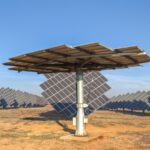
6 Innovative Applications of Solar Energy You Should Know About
Explore how solar energy is revolutionizing daily life and industries. From solar-powered transport to smart cities, discover six groundbreaking solar applications shaping a cleaner, smarter future.
Solar Projects Challenges in India: Module Supply Shortages and Policy Delays Slow Growth
India’s utility-scale solar projects face delays due to module supply shortages and policy challenges, impacting the growth of renewable energy.
Civil Structural General Arrangement (GA) Drawing in Solar Projects: Complete Design & Layout Guide
A Civil Structural General Arrangement (GA) drawing in solar projects is a detailed layout that defines the placement of solar modules, mounting structures, inverters, and civil foundations. It plays a crucial role in ensuring accurate design, optimal space utilization, and smooth execution of both rooftop and ground-mounted solar installations. This guide explains the key components, design considerations, and best practices for creating effective GA drawings in solar EPC projects.
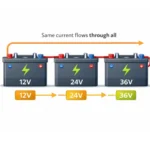
Series Connection of PV Modules – Effect on Voltage and Current
Connecting PV modules in series is a common practice in solar installations. This guide explains how series connections affect voltage and current and why they are used in solar PV systems.
Everything You Need to Know About Solar System Earthing
Power factor after solar installation often fluctuates due to system design and load patterns. Learn the key causes, challenges, and solutions for better efficiency.
How to Improve Solar Panel Performance for Optimal Energy Output
Performance degradation in solar panels reduces energy output over time. This guide explains how to factor in degradation when calculating annual yields, ensuring accurate estimates for residential, commercial, and industrial solar installations.