
When planning a solar system, you may often hear terms like PV power, system capacity, or total solar PV power. While these sound technical, understanding total solar PV power is actually very simple, and extremely important if you want to estimate electricity generation, savings, and the total cost of solar installation.
In this blog, we explain what total solar PV power means, how it is calculated, and why it plays a key role in deciding your solar panel system cost, savings, and long-term returns.
What Is Total Solar PV Power?
Total Solar PV power refers to the combined rated power output of all solar panels installed in a system. It is usually expressed in kilowatts (kW) or megawatts (MW).
For example:
If you install 10 solar panels of 550W each,
your total solar PV power = 5.5 kW
This value represents the maximum power your solar system can generate under standard test conditions. It helps define how much solar electricity the system is capable of producing during peak sunlight hours.
Why Is Total Solar PV Power Important?
Total Solar PV power directly impacts:
- Daily and monthly energy generation
- Electricity bill savings
- System sizing and roof space planning
- Payback period and ROI
- Solar installation charges and budgeting
Higher total solar PV power generally means higher energy production, but it must be matched correctly with your usage, roof area, and budget to keep solar energy installation cost efficient.
How Total Solar PV Power Is Calculated
The calculation is simple:
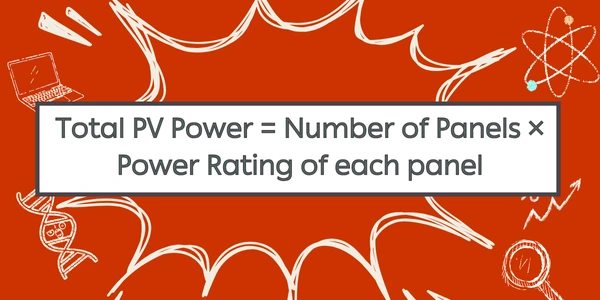
Example:
- 8 panels × 540W = 4.32 kW total solar PV power
This number is used by installers to estimate:
- Required solar panel area per kW
- Inverter capacity
- Expected generation
- Cost of solar per kWh installed
Total Solar PV Power vs Actual Energy Generation
It’s important to understand that total solar PV power is not the same as daily energy output.
- Total Solar PV power = Installed capacity (kW)
- Energy generated = Units produced (kWh)
For instance:
- A 5 kW system does not produce 5 units all day
- It may produce 20-25 units per day, depending on sunlight
This distinction helps users set realistic expectations when comparing average cost of solar panels on a house versus real savings.
How Total Solar PV Power Affects Solar Installation Cost
Your solar panel system cost increases with higher total Solar PV power because:
- More panels are required
- Larger inverter is needed
- More mounting structures and cables are used
However, higher PV power also:
- Reduces grid dependency
- Lowers long-term electricity bills
- Improves ROI
This balance is crucial when deciding home roof solar panels cost or planning large commercial plants.
Roof Space Required Based on Total Solar PV Power
Total PV power determines how much roof or land area you need.
Typical requirement:
- 1 kW = 80-100 sq. ft.
- 5 kW = 400-500 sq. ft.
- 10 kW = 800-1,000 sq. ft.
High-efficiency panels can reduce the required area, making solar panel in rooftop installations more flexible for urban homes.
Total Solar PV Power for Homes vs Commercial Systems
Residential Systems
- Usually range from 1 kW to 10 kW
- Designed to offset household electricity usage
- Eligible for government solar subsidy scheme
Commercial & Industrial Systems
- Range from 10 kW to several MW
- Focused on reducing operational costs
- Offer higher savings through bulk generation
In both cases, correct PV sizing ensures making solar energy economical.
Does Higher Total Solar PV Power Always Mean Better?
Not necessarily. Oversizing a system can lead to:
- Higher upfront solar roof installation cost
- Unused energy if net metering limits apply
- Longer payback period
The ideal approach is to size the system based on:
- Electricity consumption
- Available space
- Budget
- Future expansion plans
How to Choose the Right Total Solar PV Power
To select the right capacity:
- Check your monthly electricity usage
- Consider roof area and shading
- Compare solar module price per watt
- Evaluate future power needs
This ensures you get the best balance between cost, performance, and long-term savings from renewable energy and solar energy.
Conclusion: Total Solar PV Power Defines Your Solar Potential
Total Solar PV power is the foundation of every solar system. It defines how much electricity your system can generate, how much you save, and how quickly your investment pays back. Understanding this concept helps you make smarter decisions about system size, budget, and performance.
At Smart Roof Solar, we help customers choose the right total solar PV power based on real usage, roof space, and local conditions, ensuring reliable performance and long-term value from renewable solar solutions.
FAQs
Q1. Can total solar PV power be increased later?
Ans: Yes, systems can be expanded if roof space, inverter capacity, and local regulations allow it.
Q2. Does panel orientation affect total solar PV power output?
Ans: Orientation doesn’t change installed PV power, but it significantly impacts actual energy generation.
Q3. What happens if my inverter is smaller than total solar PV power?
Ans: A slightly smaller inverter can reduce costs but may clip peak power during high sunlight hours.
Q4. Does total solar PV power affect net metering approval?
Ans: Yes, utilities often cap net-metering eligibility based on installed PV capacity.
Q5. Can different panel wattages be combined to reach total solar PV power?
Ans: Yes, but mixing panels should be done carefully to avoid mismatch losses.

Developers fear unfair state-specific levies will make solar more expensive
Developers in India are concerned that state-specific levies on solar projects could increase costs, slow adoption, and impact the growth of renewable energy across residential, commercial, and industrial sectors.
Solar Microgrids: All you need to know
Discover how solar batteries store excess energy, maximize your solar system’s efficiency, and provide reliable power during outages. Learn about the types, benefits, lifespan, and maintenance tips to make the most of your solar investment.
1 MW Solar Plant Cost in Haryana | A Complete Guide
Planning a 1 MW solar power plant in Haryana? This guide covers complete 2025 cost details, subsidy schemes, ROI, and savings potential for industrial users.
How to Improve Solar Panel Performance for Optimal Energy Output
Performance degradation in solar panels reduces energy output over time. This guide explains how to factor in degradation when calculating annual yields, ensuring accurate estimates for residential, commercial, and industrial solar installations.
How to Choose Solar Panel Mounting Structures for Home, Industry & Commercial Installations
Choosing the right mounting structure is crucial for solar panel efficiency and durability. This blog explains various types of mounting structures for residential, industrial, and commercial solar installations, including rooftop, ground-mounted, and hybrid systems, to help you make an informed decision.

Sanctioned Load & Rooftop Solar: Everything You Need to Know
Learn why sanctioned load is crucial before rooftop solar installation. Understand its role, process, and impact on solar panel efficiency and subsidy eligibility.

Solar Farm Development: Overcoming the Rising Challenge of Wiring Costs
Wiring costs are soaring in solar farms, affecting project budgets and timelines. Learn why infrastructure is becoming a key challenge.
Complete Guide to Rooftop Solar Components for Industries
A rooftop solar system for factories typically includes solar panels, inverters, mounting structures, wiring, and monitoring systems. Additional components like net meters and energy storage may also be installed to optimize energy usage and track performance