What Is Sustainable Building?
Sustainable buildings minimize energy and water consumption and are vital to sustainable urban development that seeks to combat climate change. It refers to creating structures that complement rather than negatively impact the environment. The benefits of green building should last throughout the structure’s life cycle, i.e., right from its design and blueprints to its demolition. This practice addresses comfort, economy, durability, and cost, which are traditional building design concerns.
What Are Some Sustainable Building Practices to Consider?
There are several sustainable practices to consider when constructing a new building or renovating an existing one. These practices can help reduce the environmental impact of a construction project and save time and money in the long run.
1. Standardized Processes
Your clients have unique needs, and each new building project and site create a new architectural adventure. Even so, some processes remain the same. Standardization can reduce misused materials and time because employees know what procedure to follow. It might take some time, but it is worth the investment.
2. Prefabricated Building Materials
Construction companies often overlook using prefabricated building materials. It reduces some of the work and, consequently, some of the labor you could otherwise charge for. However, it speeds up the construction process and makes it possible to take on more jobs each year than you otherwise could. Manufacturers create prefabricated materials in a factory setting and ship them to construction sites. Upon arrival, construction crews might only need to assemble the pieces. Building with prefabricated materials is more sustainable than traditional construction. It reduces waste and condenses transportation emissions into one or two large shipments.
3. Passive Solar Design
This design takes advantage of the Sun’s natural heat and light to help keep a space warm or cool, depending on the season. You can use passive solar designs in both new construction and renovation projects. There are three main types of passive solar design:
Direct gain: This sustainable building design includes south-facing windows letting sunlight heat a space. The heat distributes by either convection or radiation.
Trombe wall: This thick wall is usually made of masonry and placed on the south side of a building. It absorbs heat from the Sun during the day and releases it at night, helping keep the building warm.
Isolated gain: This passive solar design uses sunspaces or greenhouses to collect heat. The air in the sunspace is circulated into the rest of the building using fans or natural convection currents.
Passive solar design is sustainable because it doesn’t require energy to heat or cool a space, and is also a cost-effective way to improve energy efficiency.
4. Daylighting
Daylighting is the practice of using natural light to illuminate a space and can be achieved by using skylights and windows. Daylighting can also involve the use of reflective surfaces that bounce light around. Skylights and clerestory windows are two sustainable building tools for adding natural light. When choosing daylighting to light spaces, remember that this can also contribute to passive heating. It is a sustainable method because it doesn’t require any energy to light a space. Natural lighting also reduces the risk of eye strain and headaches.
5. Natural Ventilation
Natural ventilation is the process of using air movement to cool or heat a space. You can choose appropriate windows or door placements and use fans to circulate air, such as:
Cross-breeze: Open windows on opposite sides of a room to create a cross-flow of air.
Stack effect: Occurs when hot air rises and vents out of the top of a building. Cool air is then drawn in from the bottom to replace it.
Windcatcher: Builders place this device in a window to catch the wind and funnel it into a room.
It is sustainable because it doesn’t require energy to cool or heat a space. It’s also a healthy way to ventilate buildings because it improves indoor air quality.
6. Lean Manufacturing
Lean Manufacturing streamlines the construction process to waste less material and eliminate unnecessary steps. Automakers often use this to speed up production times without sacrificing quality and safety. However, it can also have phenomenal results when applied to construction. Lean manufacturing is sustainable because it reduces the amount of material wasted during the construction process. It’s also a more efficient building, saving time and money.
7. Water Conservation
Water conservation is another sustainable building practice to consider. There are many ways to conserve water in a building:
Using low-flow fixtures: These use less water than traditional fixtures.
Employing automation: Some clients prefer automated faucets, for example, that turn on and off via motion sensors to detect hands or other items.
Collecting rainwater: This reduces the amount of water taken from municipal sources.
Reusing greywater: This system recycles water that would otherwise end up in sewers.
Water conservation is vital for two reasons. First, it’s a sustainable way to reduce your water usage. Second, it can help you save money on your water bill.
8. Natural Material Choices
Natural building materials such as wood, cob, bamboo, cordwood, straw bale, etc. are just some of the things used in construction. Choosing natural building materials helps reduce the use of man-made materials. Additionally, it minimizes the use of products that require a great deal of energy during manufacture and transport.
The focus is on simple construction methods that do no further damage to the environment, do not consume fossil fuels, and are sustainable.
9. Solar Power
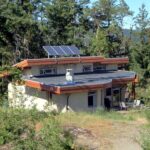
You can generate green energy from renewable sources like solar, wind, or hydropower. Solar energy often has a higher cost than traditional forms of energy due to all the technological requirements. However, the cost is dropping as technology improves and becomes more efficient. Now, the government has also started providing subsidies and incentives for going solar. These sustainable building incentives can help offset the initial cost of installation. Additional cost offsets come from the fact that you eliminate or significantly reduce an existing bill.
HOW CAN WE, AT SRS HELP YOU WITH THIS?
Smart Roof Solar is a team of highly skilled and professional experts with more than a decade of experience in providing solar energy solutions to the industrial and manufacturing sectors. Our specialization in the industrial solar segment along with our commitment to the latest technologies, excellent quality, value-for-money design approach, and long-term ownership of power generation efficiency sets us apart from any other solar energy player in the market.
Sustainability has always been one of our main goals and we aim to provide you with everything necessary to help you achieve your goals of sustainability and sustainable living.