Affordable Solar Systems and Plants for Small and Medium Enterprises
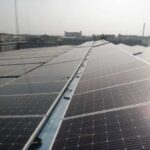
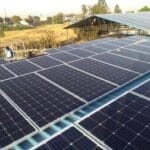
The industries should opt for rooftop solar today as there are a number of commercial advantages apart from environmental benefits. Industries can opt for solar system size ranging from few KWs to few MWs.
Solar Plants for SMEs
Typically, an on grid solar system is preferable which directly connects to the LT panel of the Discom Meter.
- Power generated from solar will directly reduce the electricity bill.
- Any surplus power generated at any time will be fed back to the Grid and stored with the Discom.
- These solar plants run through Net Metering facility provided by the Discom in which the billing and settlement happens at the end of each month. Any surplus power generated from solar plant will be carried forward to the next month. However, if there is any solar plant left unused at the end of the financial year, it will typically lapse.
- Having said that there are very slim chances that the solar power will lapse as the power generated from solar plant will not be more than 30% of the electricity bill for any industry.
As the solar system directly connects to the LT panel, the solar power gets used to run all the heavy machineries, air conditioners, motor loads etc. No batteries are used in such On-Grid systems which means that the solar system will only run when the Discom power is available.
Subsidies for solar plants for SMEs
There are no subsides available for setting up solar system in industries now which were there till 2016 as the cost of solar was high during that time. However, now the solar prices have become very affordable. For example, for the industries located in and nearby Delhi/National Capital Region (NCR) where the solar radiation levels are good, the pay backs of solar will be typically in 3-4 years.
Hence, many industries located in Okhla, Noida, Gurgaon, Faridbad, Ghaziabad, Kundali, Manesar, Neemrana, Palwal, Bawal, Bahadurgarh etc have opted for the rooftop solar plants.
Also, the Accelerated Depreciation (AD) benefit is available for installing solar plants. Factories can depreciate 40% of the solar plant capital cost in the 1st year itself. So, for a company paying 34% income tax, the cost of solar plant reduces by 13.6% in the very first year itself. 40% AD is available on the reducing balance in the next subsequent years.
Suggested Articles

CAPEX or OPEX? How to Choose the Best Solar Ownership Model
Choosing between the CAPEX and OPEX models can greatly impact your solar savings and ownership benefits. This guide explains both models to help you make the right decision.

Latest MNRE List: Approved Solar Module Manufacturers
Check the latest MNRE-approved list of solar module manufacturers to ensure quality and compliance for your solar projects in India.

Haryana and UP Face Delays in Solar Net Metering Approvals
Net metering for rooftop solar in Haryana and Uttar Pradesh faces procedural delays, affecting solar adoption and efficiency for residential and commercial consumers

New IREDA Loan Scheme for Solar Rooftop Projects: Benefits, Eligibility & Interest Rates
India’s renewable energy push gets a major boost with the new IREDA loan scheme for solar rooftop projects. This scheme offers low-interest financing, simplified approvals, and better support for residential, commercial, and industrial consumers. Here’s a detailed look at its benefits, eligibility, interest rates, and how to apply for funding.

Minimum Land Requirement for Solar Power Plants in India
Understanding the land requirement for solar plant projects in India is essential for accurate planning and approvals. This article explains minimum land needed per kW and MW, key influencing factors, and differences between rooftop and ground-mounted solar plants.

What Does 1 kWp Mean in Solar Power Systems?
1 kWp is a standard unit used to measure the capacity of a solar power system under ideal conditions. This guide explains what 1 kWp means, how much energy it produces, and why it matters for system sizing.

PWM vs MPPT Charge Controllers: Specifications and Key Differences
Choosing the right charge controller is essential for battery performance and system efficiency. This guide compares PWM and MPPT charge controllers, explaining their specifications, working principles, and key differences to help you select the best option.

Solar Radiation on a Tilted Surface: Importance & Impact on Solar Output
Solar radiation on a tilted surface directly affects how much energy a solar panel produces. Learn why tilt angle matters and how it impacts solar output.