
A well-structured site survey questionnaire is an essential tool for solar installers to gather accurate and complete information before designing a solar photovoltaic (PV) system. It ensures that all technical, structural, electrical, and customer-related factors are considered, leading to efficient system design and optimal performance.
A questionnaire helps standardize the data collection process, reduces errors, and ensures that no critical detail is overlooked. A systematic approach to site assessment using questionnaires improves the quality and reliability of solar installations.
This blog provides a comprehensive questionnaire for conducting a site survey before solar installation, along with explanations of each section to help installers design efficient renewable solar systems.
What is a Site Survey Questionnaire?
A site survey questionnaire is a structured set of questions used by solar installers to collect essential information about the installation site and customer requirements.
It includes questions related to:
- Customer details
- Electricity consumption
- Rooftop and structural conditions
- Electrical infrastructure
- Shading and environmental factors
The information collected helps design an efficient and cost-effective solar PV system.
Importance of Using a Questionnaire in Solar Site Assessment
Using a questionnaire during site surveys offers several advantages:
- Ensures complete and accurate data collection
- Reduces chances of missing critical information
- Helps in proper system sizing
- Improves solar electricity generation efficiency
- Optimizes solar panel system cost
A well-prepared questionnaire is crucial for successful renewable energy technology implementation.
Comprehensive Questionnaire for Solar Site Survey
Below is a detailed questionnaire divided into key sections.
1. Customer Information
This section collects basic details about the customer.
- Name of the customer
- Contact details (phone number, email)
- Installation address
- Type of consumer (residential/commercial/industrial)
- Preferred type of solar system (grid-connected/off-grid/hybrid)
This information helps in communication and project planning.
2. Electricity Consumption Details
Understanding electricity usage is critical for system design.
- What is the average monthly electricity consumption (kWh)?
- What is the highest electricity bill amount?
- What is the sanctioned load (kW)?
- What is the tariff category?
- Is net metering available at the location?
These details help determine the appropriate system capacity and reduce solar energy installation cost.
3. Load Assessment Questions
Load assessment helps identify energy requirements.
- List of major electrical appliances
- Power rating of appliances
- Daily usage hours
- Peak load demand
- Any future increase in load expected?
This ensures proper system sizing and efficient solar electricity generation.
4. Rooftop and Site Details
This section evaluates the physical installation site.
- Type of roof (flat/sloped/metal/concrete)
- Total available rooftop area
- Roof orientation (direction)
- Roof tilt angle
- Accessibility for installation
- Any obstacles on the roof?
These details are crucial for solar panel in rooftop installations.
5. Shadow Analysis Questions
Shading significantly affects solar system performance.
- Are there trees near the installation site?
- Are there nearby buildings causing shading?
- Are there rooftop obstructions like tanks or antennas?
- At what time of day does shading occur?
These questions help identify areas suitable for maximum sunlight exposure.
6. Structural Assessment Questions
Ensuring the building can support the solar system is essential.
- What is the type of building structure?
- Is the roof strong enough to support solar panels?
- Any visible damage or cracks in the structure?
- Is reinforcement required?
This helps ensure safe installation of renewable solar systems.
7. Electrical Infrastructure Details
This section evaluates the building’s electrical system.
- Condition of internal wiring
- Location of distribution board (DB)
- Type of earthing system available
- Distance between rooftop and inverter location
- Availability of space for inverter and battery
Proper electrical assessment ensures safe solar electricity integration.
8. Grid and Policy-Related Questions
These questions help determine system feasibility.
- Is grid electricity available at the site?
- Are there frequent power outages?
- Is net metering permitted by the utility?
- Eligibility for government subsidy schemes
In India, policies by the Ministry of New and Renewable Energy influence system design and cost.
9. Safety and Installation Considerations
Safety is a critical factor in solar installation.
- Is safe access available to the rooftop?
- Are safety measures required for working at height?
- Any electrical hazards present?
- Is lightning protection available?
These questions ensure safe and reliable installation practices.
10. Customer Preferences and Expectations
Understanding customer expectations is important.
- Budget for solar installation
- Expected return on investment
- Preference for branded equipment
- Interest in battery backup
- Timeline for installation
This helps tailor the solar proposal to the customer’s needs.
How Questionnaire Data Helps in System Design
The collected data is used to:
- Determine solar plant capacity
- Select appropriate system type
- Optimize panel placement
- Estimate solar installation charges
- Improve renewable solar system efficiency
Accurate data collection ensures better performance and cost efficiency.
Impact on Solar Panel System Cost
A well-conducted site survey using a questionnaire helps:
- Avoid design errors
- Reduce installation delays
- Optimize equipment selection
- Lower the cost of solar per kWh installed
This improves the financial viability of solar projects.
Best Practices for Using a Site Survey Questionnaire
- Use a standardized questionnaire format
- Verify all collected data on-site
- Take photographs for reference
- Cross-check electricity bills and load details
- Update questionnaire based on project requirements
These practices improve the accuracy and efficiency of solar site assessments.
—
Diagram Ideas for Training Modules
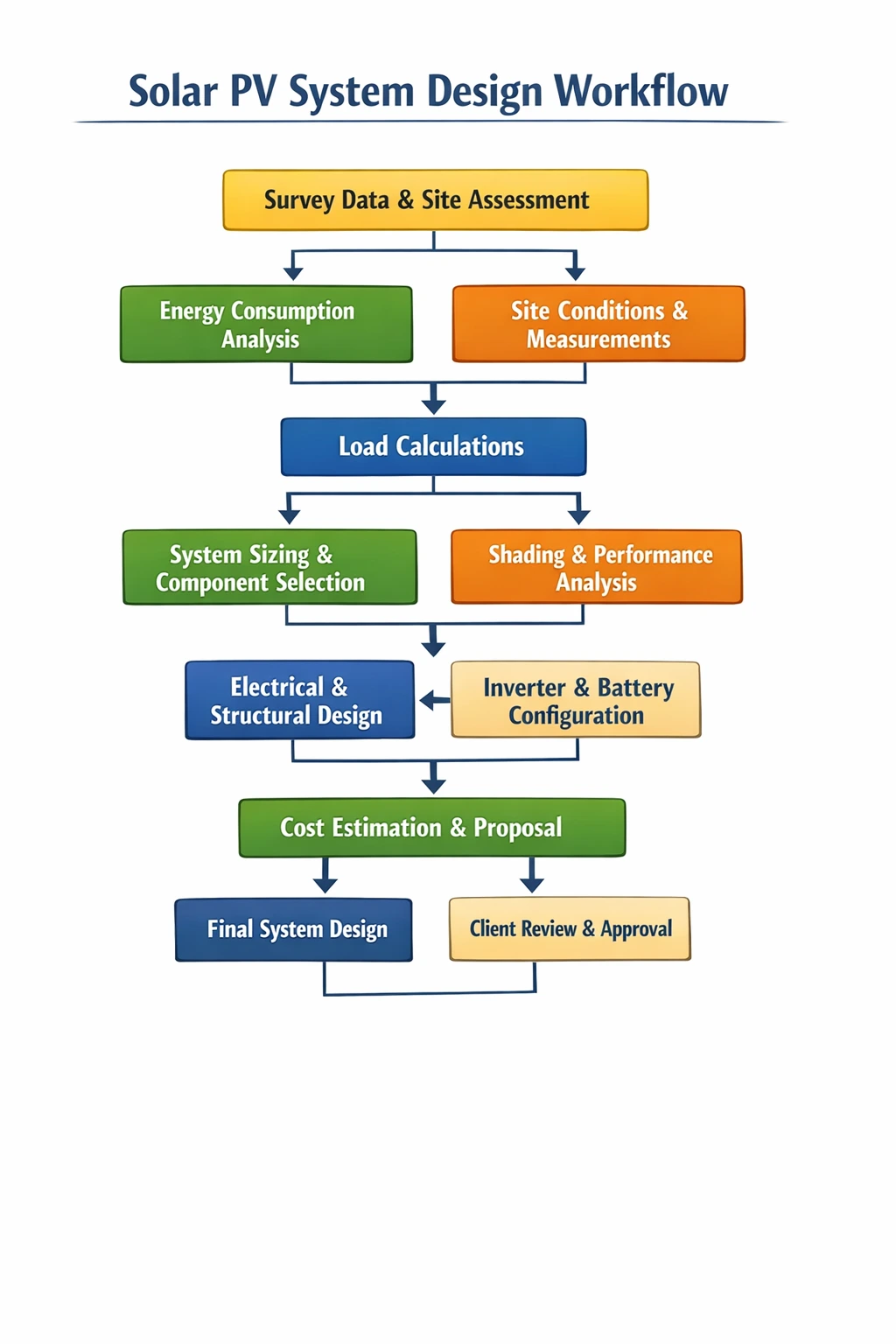
- Solar PV System Design Workflow
Demonstrates how survey inputs lead to final system design.
Conclusion
A well-designed questionnaire is an essential component of solar site assessment. It ensures that all critical factors, such as customer requirements, rooftop conditions, shading, electrical infrastructure, and safety considerations, are thoroughly evaluated before installation. By using a structured questionnaire, solar installers can design efficient and reliable solar PV systems tailored to specific needs.
Systematic data collection plays a key role in successful solar installations. Incorporating a detailed questionnaire into the site survey process helps optimize solar energy installation cost, improve system performance, and support the effective implementation of renewable energy technology.
With proper planning and accurate data, solar installations can deliver efficient solar energy for home use, reduce electricity expenses, and contribute to a sustainable energy future.
FAQs
Q1. Why is a questionnaire used during a solar site survey?
Ans: A questionnaire ensures systematic data collection and helps avoid missing important details during site assessment.
Q2. What information is collected in a solar site survey questionnaire?
Ans: It includes customer details, electricity consumption, rooftop conditions, shading analysis, structural strength, and electrical infrastructure.
Q3. How does a questionnaire help reduce solar installation cost?
Ans: Accurate data helps in proper system design, avoiding unnecessary equipment and reducing overall expenses.
Q4. Is load assessment included in the site survey questionnaire?
Ans: Yes, load assessment is an important part of the questionnaire to determine energy requirements.
Q5. Can a site survey be conducted without a questionnaire?
Ans: While possible, it is not recommended as important information may be missed, affecting system performance and cost.
What Is an Array Junction Box in Solar PV Modules? | Complete Guide
The Array Junction Box (AJB) is a critical component in solar PV systems, connecting multiple solar modules and ensuring safe flow of electricity to the inverter. This blog explains what an AJB is, its key features, types, and why it is essential for both residential and commercial solar installations. Understand how AJBs protect your system from overload, short circuits, and environmental factors while maintaining optimal performance.
Agrovoltaics Innovation: Boosting Solar Energy While Supporting Farming
Explore agrovoltaics innovation: how combining solar energy with farming boosts efficiency, supports agriculture, and maximizes land use.
Tools and Tackles Required for Installation of Solar PV Panels: Complete Installer Checklist
Proper tools and tackles are essential for efficient and safe solar PV installation. This guide provides a complete checklist of mechanical, electrical, and safety tools required for installers and EPC teams.
Series & Parallel Wiring in Solar Modules: Installer Guide
A practical guide to solar module interconnection using series and parallel wiring, covering setup, calculations, and best practices for installers.

Commercial Solar Power Plant Subsidy in India: What Businesses Need to Know
Businesses in India can reduce their solar installation costs through various MNRE-backed subsidies and state incentives. Learn eligibility, benefits, and the application process for commercial solar plants.
Solar PV Procurement Process Guide for EPC & Installers | Step-by-Step
A well-planned procurement process is critical for the success of any solar PV project. This guide explains step-by-step how EPC companies and installers can efficiently source solar panels, inverters, and balance of system components while ensuring quality, cost-effectiveness, and timely delivery.
Monitoring Services for Solar Plants by Smart Roof Solar to Maximize Performance and Efficiency
Smart Roof Solar provides advanced monitoring services for solar plants to ensure maximum performance and efficiency. With real-time data tracking and intelligent analytics, our monitoring solutions help detect issues early, reduce downtime, and enhance the overall energy yield of your solar system.

Cut Factory Electricity Bills with Solar Energy: Smart Power Saving Guide for Industries in India
Discover how solar energy helps factories in India reduce electricity bills, improve ROI, and achieve long-term industrial power savings.