
Solar photovoltaic (PV) systems are designed to generate clean, reliable, and renewable electricity throughout their operational lifespan. However, installing a solar power system is only the first step toward achieving optimal performance. Continuous monitoring of power generation is equally important because it helps ensure that the system consistently operates at its expected efficiency, delivers maximum energy output, and quickly identifies faults before they lead to significant energy losses or equipment failure.
Power generation monitoring is a critical activity during the commissioning, operation, and maintenance phases of residential, commercial, industrial, and utility-scale solar projects. By regularly tracking parameters such as energy production, inverter output, system efficiency, voltage, current, irradiance, temperature, and equipment status, solar installers, EPC contractors, commissioning engineers, and operations and maintenance (O&M) professionals can detect abnormal performance, improve system reliability, reduce downtime, and maximize return on investment.
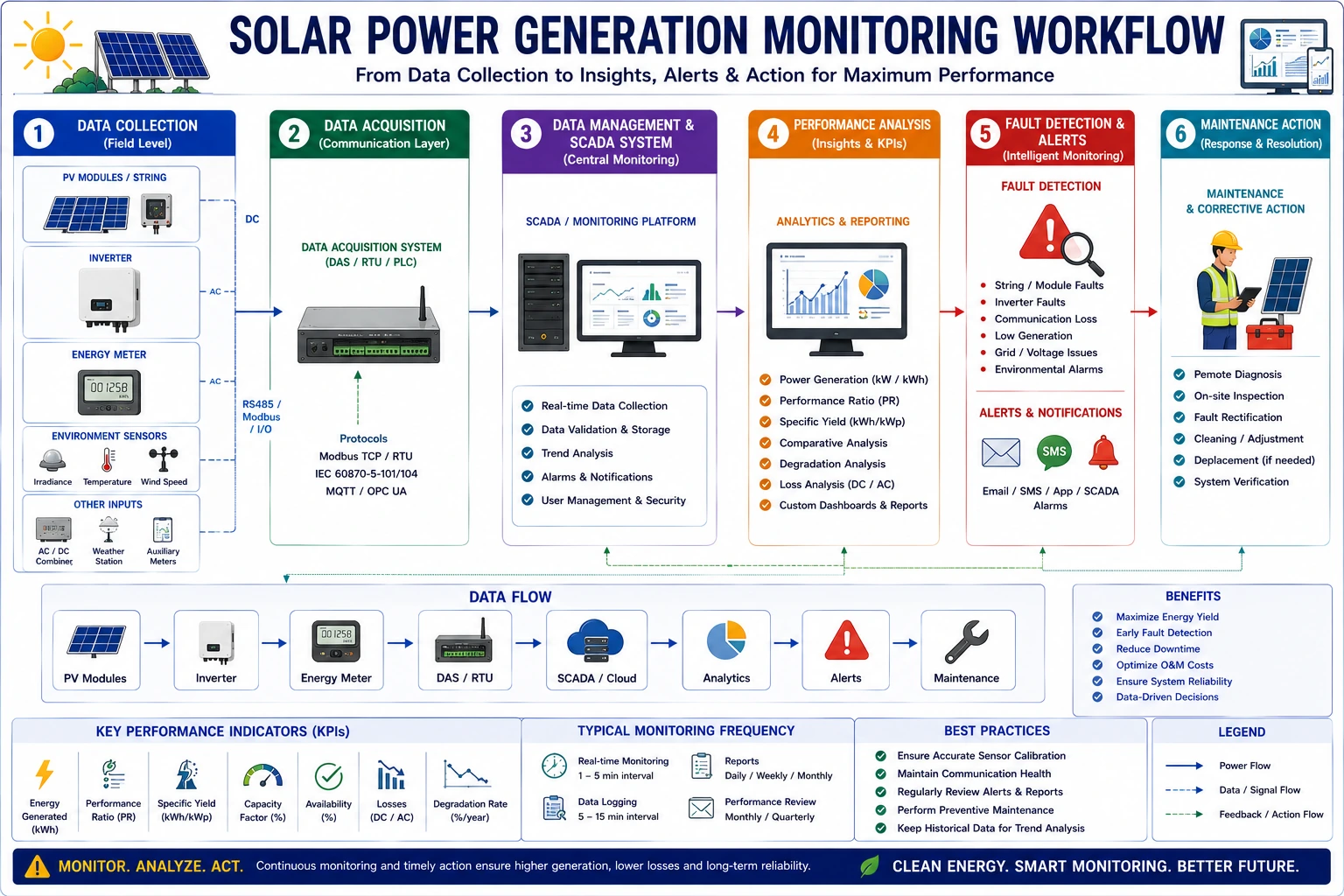
Modern solar PV systems often include advanced monitoring solutions such as Data Acquisition Systems (DAS), Supervisory Control and Data Acquisition (SCADA) platforms, remote monitoring software, smart energy meters, and inverter monitoring portals. These technologies provide real-time insights into solar electricity generation, allowing technicians to identify underperforming components, compare actual output with expected performance, and schedule preventive maintenance before major failures occur.
Monitoring power generation is an essential practice for ensuring efficient operation, maintaining renewable solar system reliability, and maximizing the long-term performance of solar PV installations.
This comprehensive guide explains the importance of power generation monitoring, key performance parameters, monitoring methods, required tools, troubleshooting techniques, documentation practices, safety considerations, and industry best practices.
What is Power Generation Monitoring?
Power generation monitoring is the process of continuously measuring, recording, and analyzing the electrical output of a solar PV system to verify that it is operating according to design expectations.
Monitoring involves collecting data from different system components and comparing actual energy production with expected values based on weather conditions, system size, and historical performance.
The objective is to maximize solar electricity generation while ensuring safe and efficient system operation.
Why is Monitoring Power Generation Important?
Regular monitoring provides valuable insights into system performance and enables timely corrective actions.
It helps to:
- Verify energy production
- Detect equipment faults early
- Improve the renewable solar system efficiency
- Reduce downtime
- Optimize preventive maintenance
- Extend equipment lifespan
- Improve financial returns
- Support warranty claims
Continuous monitoring ensures that energy losses are identified before they become significant.
Key Parameters to Monitor
Several electrical and environmental parameters should be monitored regularly.
1. Energy Generation (kWh)
The total electrical energy generated over a specific period is one of the most important performance indicators. Daily, monthly, and annual energy production should be recorded and compared with expected values.
2. DC Voltage
Monitoring DC voltage helps identify:
- String faults
- Module failures
- Loose electrical connections
- Wiring issues
3. DC Current
Current measurements help evaluate:
- Module performance
- String balance
- Shading effects
- Electrical continuity
4. AC Voltage
Monitoring inverter AC output ensures proper grid synchronization and power delivery.
5. AC Current
Abnormal AC current values may indicate inverter problems or load-related issues.
6. Inverter Efficiency
The inverter should operate close to its rated conversion efficiency. Efficiency losses should be investigated promptly.
7. Solar Irradiance
Since energy production depends on sunlight availability, irradiance measurements are essential for evaluating system performance.
8. Module Temperature
High module temperatures reduce efficiency. Temperature monitoring helps explain variations in power generation.
9. Performance Ratio (PR)
Performance Ratio compares actual energy production with theoretical energy output. It is widely used to evaluate overall system efficiency.
10. System Availability
Availability indicates the percentage of time the solar PV system remains operational and capable of generating electricity.
Methods of Monitoring Solar Power Generation
Power generation can be monitored using several techniques.
Manual Monitoring
Technicians record energy meter readings, inverter displays, and test results during routine inspections.
Inverter Monitoring Systems
Most modern inverters include built-in monitoring that displays:
- Power output
- Voltage
- Current
- Energy production
- Fault codes
Data Acquisition System (DAS)
A DAS continuously collects operational data from multiple system components for analysis and reporting.
SCADA Systems
Large utility-scale solar plants commonly use SCADA systems to monitor and control plant operations remotely.
Remote Monitoring Platforms
Cloud-based monitoring software allows users to monitor system performance from computers or smartphones.
Tools Required for Power Generation Monitoring
Common monitoring tools include:
- Smart energy meters
- Digital multimeter
- Clamp meter
- Data Acquisition System (DAS)
- SCADA software
- Pyranometer
- Temperature sensors
- Inverter monitoring software
- Data logger
- Personal Protective Equipment (PPE)
All measuring instruments should be calibrated periodically.
Step-by-Step Procedure to Monitor Power Generation
Step 1 – Review System Documentation
Before monitoring:
Review:
- Design drawings
- Commissioning reports
- Previous maintenance records
- Manufacturer specifications
Determine expected performance values.
Step 2 – Verify Safe Working Conditions
Ensure:
- Safe weather conditions
- Proper electrical safety
- Appropriate PPE
- Safe access to equipment
Step 3 – Record Environmental Conditions
Measure and record:
- Solar irradiance
- Ambient temperature
- Module temperature
- Weather conditions
Environmental data is necessary for accurate analysis.
Step 4 – Record Energy Meter Readings
Measure:
- Daily generation
- Monthly generation
- Cumulative energy production
Compare values with expected production.
Step 5 – Monitor Inverter Performance
Check:
- Operating status
- Output voltage
- Output current
- AC power
- Efficiency
- Fault alarms
Investigate abnormal indications immediately.
Step 6 – Verify DC Parameters
Measure:
- String voltage
- String current
- Combiner box output
Compare measurements across strings.
Step 7 – Compare Actual and Expected Generation
Analyze whether energy production matches:
- System design
- Weather conditions
- Historical performance
Significant deviations require troubleshooting.
Step 8 – Investigate Performance Losses
Common causes include:
- Dirty modules
- Partial shading
- Module degradation
- Faulty inverter
- Cable losses
- Loose connectors
- Ground faults
Corrective actions should be implemented promptly.
Step 9 – Document Monitoring Results
Record:
- Energy generated
- Environmental conditions
- Electrical measurements
- Fault observations
- Corrective actions
- Technician details
Update maintenance records.
Common Causes of Reduced Power Generation
Performance losses may result from:
- Dust accumulation
- Bird droppings
- Shading
- Module degradation
- Loose electrical connections
- Damaged cables
- Inverter faults
- High module temperatures
- Ground faults
- Component aging
Early detection minimizes energy losses.
Integrating Power Generation Monitoring with Preventive Maintenance
Power generation monitoring becomes even more effective when integrated with a structured preventive maintenance program. Regular analysis of generation trends, inverter logs, weather data, and equipment inspections helps technicians detect gradual performance degradation before it affects system output significantly.
For example, a steady decline in energy production over several weeks may indicate dust accumulation, aging modules, cable losses, or inverter efficiency issues. By correlating monitoring data with field inspections, EPC contractors and O&M teams can schedule maintenance proactively, minimizing downtime and improving the overall reliability of the renewable solar system.
Conclusion
Monitoring power generation is a fundamental aspect of operating and maintaining an efficient solar PV system. Continuous tracking of electrical output, environmental conditions, inverter performance, and system efficiency enables solar professionals to identify faults early, reduce energy losses, optimize maintenance schedules, and maximize long-term electricity generation. Whether for residential rooftops, commercial buildings, industrial facilities, or utility-scale solar power plants, systematic monitoring ensures that every component of the renewable solar system operates as designed and delivers maximum value throughout its service life.
Regular monitoring of power generation is an essential responsibility for solar installers, commissioning engineers, EPC contractors, and operations and maintenance professionals. Furthermore, following technical recommendations and operational practices promoted by the Ministry of New and Renewable Energy, together with manufacturer guidelines, helps ensure safe, standards-compliant, and high-performance operation of solar PV systems.
By implementing continuous monitoring, using calibrated instruments, maintaining detailed performance records, analyzing generation trends, responding promptly to abnormal readings, and integrating monitoring with preventive maintenance, solar professionals can optimize solar panel system cost, improve cost of solar per kWh installed, maximize solar electricity generation, strengthen the reliability of renewable energy technology, and ensure the long-term success of residential, commercial, industrial, and utility-scale solar energy projects.
FAQs
Q1. Why is power generation monitoring important in a solar PV system?
Ans: Power generation monitoring helps verify that the system is producing the expected amount of electricity, identifies equipment faults early, reduces downtime, improves renewable solar system efficiency, and supports preventive maintenance.
Q2. Which parameters should be monitored regularly in a solar PV system?
Ans: Key parameters include energy generation (kWh), DC voltage, DC current, AC voltage, AC current, inverter efficiency, solar irradiance, module temperature, system availability, and performance ratio (PR).
Q3. What equipment is commonly used for monitoring solar power generation?
Ans: Common monitoring equipment includes smart energy meters, inverter monitoring software, Data Acquisition Systems (DAS), SCADA platforms, pyranometers, temperature sensors, data loggers, digital multimeters, and clamp meters.
Q4. What are the common reasons for reduced solar power generation?
Ans: Reduced generation may result from dirt accumulation, shading, damaged PV modules, inverter faults, loose electrical connections, cable losses, module degradation, high operating temperatures, and adverse weather conditions.
Q5. How often should solar power generation be monitored?
Ans: Energy generation should ideally be monitored daily through automated monitoring systems or inverter portals. Detailed performance analysis and preventive maintenance inspections should be conducted periodically according to the manufacturer’s recommendations and the project’s maintenance schedule.
Developers fear unfair state-specific levies will make solar more expensive
Developers in India are concerned that state-specific levies on solar projects could increase costs, slow adoption, and impact the growth of renewable energy across residential, commercial, and industrial sectors.
Solar Energy Myths vs. Facts: What You Should Know
Solar power myths often mislead homeowners. Learn the facts about cost, efficiency, and reliability of solar energy.
Different Components of a Solar PV System: Importance and Operation
Earthing and lightning protection are critical safety components in solar PV installations. This guide explains their importance, types, components, and best practices for solar installers.
Battery Bank Stand & Spill Containment Installation Guide
A complete guide to battery bank stand installation and spill containment, covering setup, safety, and best practices for solar projects.
Go Off-Grid with Solar Energy: A Complete Guide
Living off-grid, more commonly defined as not having a dependence on public utilities such as electricity, sounds appealing for a lot of reasons. The idea of being self-sufficient, powering your own home with solar energy, and maybe even building that home with your own two hands can sound like a dream and a challenge for people who wish to live life on their terms.

Breakthrough in Solar Technology: 33.2% Efficient Perovskite-Silicon Cell
Scientists achieve a breakthrough in solar technology with a perovskite-silicon tandem cell reaching a record 33.2% efficiency for higher energy output.
Civil Structural General Arrangement (GA) Drawing in Solar Projects: Complete Design & Layout Guide
A Civil Structural General Arrangement (GA) drawing in solar projects is a detailed layout that defines the placement of solar modules, mounting structures, inverters, and civil foundations. It plays a crucial role in ensuring accurate design, optimal space utilization, and smooth execution of both rooftop and ground-mounted solar installations. This guide explains the key components, design considerations, and best practices for creating effective GA drawings in solar EPC projects.

Solar PPA for Commercial Buildings: Cost, Benefits & Savings
Looking to cut electricity bills without investing in solar assets? Commercial Solar PPA providers offer zero-investment solar solutions where businesses pay only for the power generated—simple, risk-free, and cost-effective.