
In solar photovoltaic (PV) projects, the quality of solar panels directly determines system performance, reliability, and lifespan. Even minor defects in PV modules can significantly impact solar electricity generation, increase maintenance needs, and raise overall solar installation charges.
For EPC (Engineering, Procurement, and Construction) professionals, conducting thorough damage inspection and quality checks of PV modules is a critical step before installation. Identifying defects early helps avoid costly replacements and ensures optimal system efficiency.
Proper inspection and quality assurance are essential for successful renewable solar installations.
This blog provides a complete guide to PV module damage inspection and quality checks, helping installers maintain high standards and optimize solar panel system cost.
Why PV Module Inspection is Important
Solar panels are sensitive components that can be damaged during:
- Transportation
- Unpacking
- Storage
- Handling
Undetected damage can lead to:
- Reduced solar electricity generation
- Hotspots and overheating
- System failure
- Increased solar energy installation cost
Proper inspection ensures long-term performance and reliability.
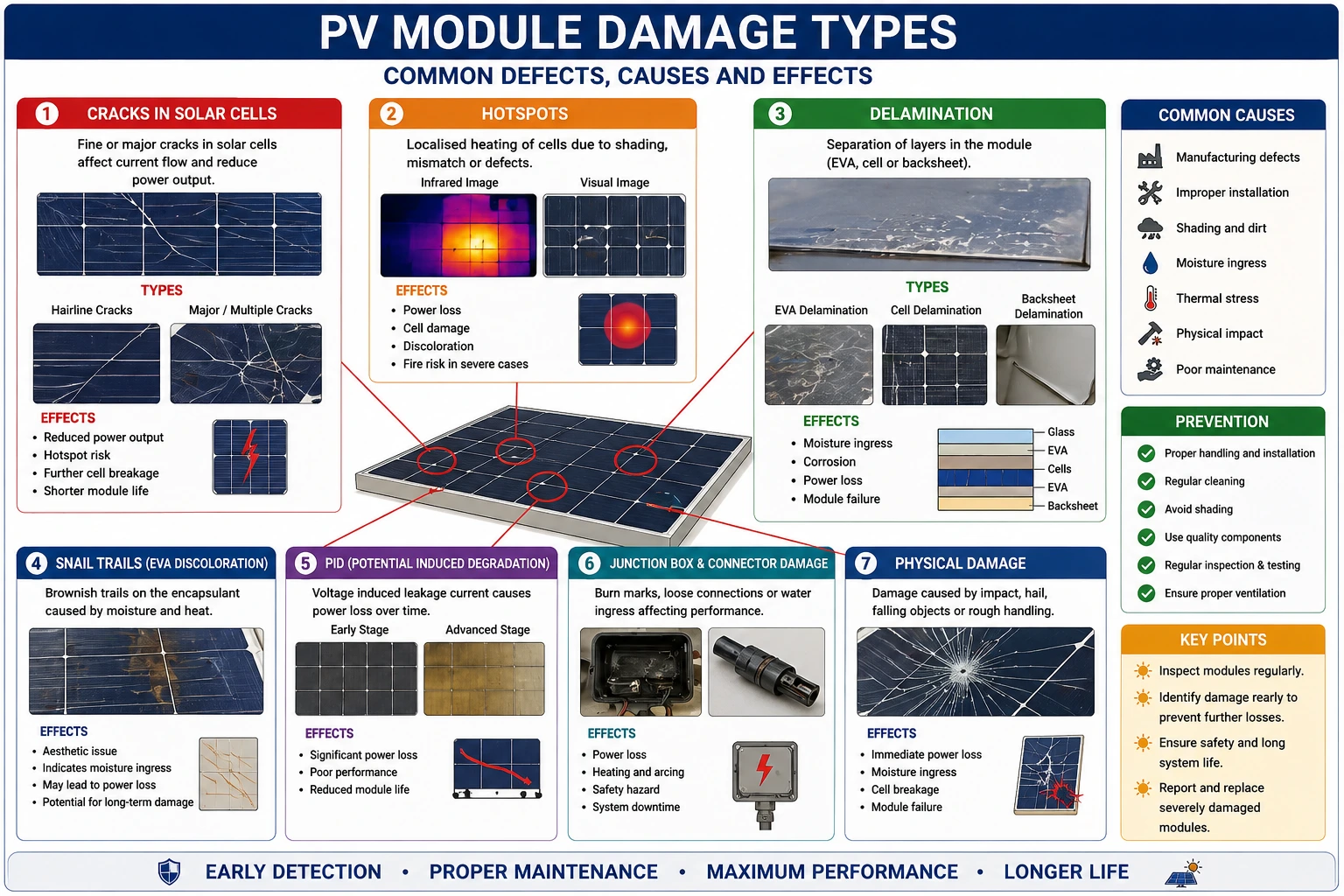
Types of PV Module Damage
1. Micro-Cracks
- Invisible cracks in solar cells
- Reduce efficiency over time
2. Glass Breakage
- Visible cracks on the panel surface
- Compromises durability
3. Frame Damage
- Bent or damaged aluminum frame
- Affects mounting and alignment
4. Delamination
- Separation of layers within the module
- Reduces performance
5. Hotspots
- Localized overheating areas
- Can cause permanent damage
6. Junction Box Issues
- Loose connections
- Damaged wiring
Stages of Inspection
1. Pre-Delivery Inspection
- Verify manufacturer quality
- Check certifications
2. Delivery Inspection
- Inspect packaging
- Check for transport damage
3. Site Inspection
- Inspect panels after unpacking
- Perform visual and technical checks
Step-by-Step Inspection Process
Step 1 – Visual Inspection
Check for:
- Cracks on glass
- Scratches
- Frame damage
- Discoloration
Step 2 – Check Label and Specifications
Verify:
- Module rating
- Serial number
- Manufacturer details
Step 3 – Electrical Testing
- Measure open-circuit voltage (Voc)
- Check short-circuit current (Isc)
Step 4 – Check Junction Box
- Inspect connectors and cables
- Ensure proper sealing
Step 5 – Infrared (IR) Testing
- Detect hotspots
- Identify hidden defects
Step 6 – Electroluminescence (EL) Testing (if available)
- Detect micro-cracks
- Identify internal defects
Step 7 – Documentation
- Record inspection results
- Report damaged modules
Tools and Equipment Required
- Multimeter
- IR camera
- EL testing equipment
- Visual inspection checklist
Quality Check Parameters
1. Electrical Performance
Ensure output matches specifications.
2. Physical Condition
No visible damage or defects.
3. Structural Integrity
Frame and glass must be intact.
4. Connector Quality
Ensure proper electrical connections.
5. Compliance with Standards
Modules should meet quality certifications.
Conclusion
PV module inspection and quality checks are critical steps in solar PV projects that ensure system reliability, efficiency, and durability. By conducting thorough inspections and following best practices, EPC professionals can prevent damage-related losses and improve overall system performance.
Quality assurance is a key aspect of successful renewable solar installations. Additionally, compliance with standards set by the Ministry of New and Renewable Energy ensures safety and reliability.
With proper inspection practices, solar professionals can optimize solar panel system cost, enhance solar electricity generation, and contribute to sustainable solar energy for home use and large-scale renewable solar solutions.
FAQs
Q1. Why is PV module inspection important?
Ans: It ensures modules are free from defects and perform efficiently.
Q2. What are common types of PV module damage?
Ans: Micro-cracks, glass breakage, frame damage, and hotspots.
Q3. What tools are used for inspection?
Ans: Multimeter, IR camera, and EL testing equipment.
Q4. How does inspection affect solar panel system cost?
Ans: It reduces replacement and maintenance costs.
Q5. Can damaged modules be used?
Ans: No, damaged modules should be replaced to ensure system performance.

Latest MNRE List: Approved Solar Module Manufacturers
Check the latest MNRE-approved list of solar module manufacturers to ensure quality and compliance for your solar projects in India.

How to Connect Solar Panels to Battery: Step-by-Step Guide
Connecting solar panels to a battery is essential for storing solar energy and ensuring power availability when sunlight is low. This step-by-step guide explains how to connect solar panels to a battery safely using a charge controller, wiring diagrams, and best practices for beginners and professionals alike.

New IREDA Loan Scheme for Solar Rooftop Projects: Benefits, Eligibility & Interest Rates
India’s renewable energy push gets a major boost with the new IREDA loan scheme for solar rooftop projects. This scheme offers low-interest financing, simplified approvals, and better support for residential, commercial, and industrial consumers. Here’s a detailed look at its benefits, eligibility, interest rates, and how to apply for funding.
What is MPPT in a Solar System? Meaning, Working & Benefits
Solar radiation on a tilted surface directly affects how much energy a solar panel produces. Learn why tilt angle matters and how it impacts solar output.
Everything You Need to Know About Solar PV Modules
Solar PV modules explained: how they generate electricity, their benefits, and why they’re key to renewable energy growth.
Optimizing Solar Layout for DC Combiner Box Placement
A complete guide to choosing the best location for DC combiner box placement to improve safety, cable routing, and solar system efficiency.
Delhi charges one of the highest tariffs for commercial load and industrial – average over Rs 10.00 per kWh
Delhi imposes some of the highest electricity tariffs for commercial and industrial consumers, averaging over ₹10 per kWh, impacting businesses and operating costs

Improve Your Power Factor After Solar Installation: Complete Guide
Power factor after solar installation often fluctuates due to system design and load patterns. Learn the key causes, challenges, and solutions for better efficiency.