
Solar photovoltaic (PV) systems are designed to operate efficiently for decades, delivering reliable renewable energy with minimal environmental impact. However, like any electrical and mechanical installation, solar systems may develop faults, defects, performance deviations, or abnormal operating conditions during installation, commissioning, operation, and maintenance phases. These abnormal situations, commonly referred to as anomalous conditions, can affect system safety, energy production, equipment lifespan, and overall renewable solar system performance.
Identifying, documenting, and repairing anomalous conditions is one of the most important responsibilities of solar installers, commissioning engineers, operations and maintenance (O&M) personnel, EPC contractors, and site supervisors. Prompt detection and corrective action help prevent equipment failures, reduce downtime, improve solar electricity generation, and optimize the overall solar panel system cost.
An anomalous condition may involve electrical faults, mechanical defects, environmental damage, communication failures, battery abnormalities, grounding issues, inverter alarms, performance losses, safety hazards, or non-compliance with project specifications. Regardless of the type of anomaly, proper documentation and systematic repair procedures are essential to maintain system reliability and ensure safe operation.
Recording and rectifying abnormal conditions is a critical component of solar PV inspection, testing, commissioning, and maintenance activities.
This comprehensive guide explains the types of anomalous conditions found in solar PV systems, inspection methods, documentation procedures, repair processes, reporting requirements, safety precautions, and industry best practices.
What is an Anomalous Condition?
An anomalous condition refers to any abnormal, unexpected, unsafe, defective, or non-compliant condition that deviates from the intended design, operating parameters, manufacturer recommendations, or project specifications.
Examples include:
- Electrical faults
- Equipment damage
- Low performance
- Overheating
- Corrosion
- Communication failures
- Mechanical defects
Anomalies may occur during installation, commissioning, operation, or maintenance.
Why Recording Anomalous Conditions is Important
Proper documentation provides a structured approach to maintenance and troubleshooting.
Benefits include:
- Early fault detection
- Improved safety
- Better maintenance planning
- Reduced downtime
- Enhanced system reliability
- Compliance with quality procedures
Without proper documentation, recurring issues may remain unresolved.
Objectives of Anomaly Recording and Repair
The primary objectives include:
Safety Protection
Preventing accidents and equipment damage.
Reliability Improvement
Maintaining consistent solar power generation.
Performance Optimization
Ensuring systems operate according to design expectations.
Regulatory Compliance
Supporting audits and inspection requirements.
Asset Protection
Extending equipment lifespan through timely intervention.
Common Types of Anomalous Conditions in Solar PV Systems
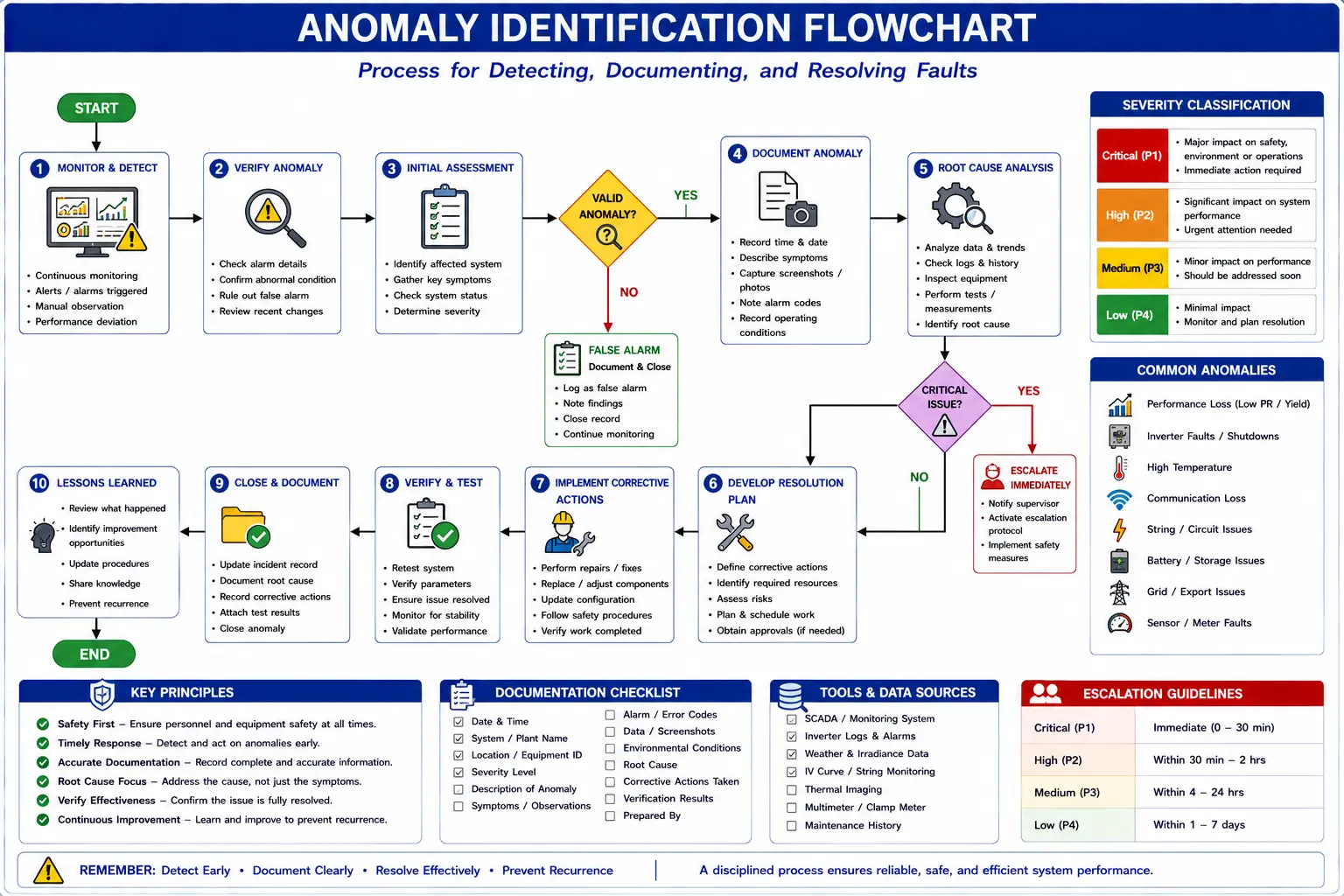
Solar installations may experience various abnormalities.
1. Electrical Anomalies
Electrical issues are among the most common faults.
Examples include:
- Open circuits
- Short circuits
- Ground faults
- Reverse polarity
- Voltage imbalance
- Excessive voltage drop
These conditions can significantly affect solar electricity generation.
2. Inverter Anomalies
Solar inverters continuously monitor system conditions.
Common inverter-related anomalies include:
- Fault alarms
- Grid synchronization failures
- Overvoltage warnings
- Undervoltage conditions
- Communication errors
- Overtemperature alarms
3. Battery System Anomalies
Battery energy storage systems may develop issues such as:
- Low voltage
- Cell imbalance
- Excessive temperature
- Electrolyte leakage
- Corrosion
- Charging abnormalities
Battery anomalies require prompt investigation.
4. Mechanical Anomalies
Mechanical defects may affect structural integrity.
Examples include:
- Loose fasteners
- Bent mounting structures
- Corroded components
- Damaged supports
- Structural misalignment
5. Grounding and Earthing Anomalies
Common issues include:
- Loose grounding conductors
- High earth resistance
- Broken grounding connections
- Improper bonding
Grounding defects can create serious safety risks.
6. Cable and Conduit Anomalies
Potential problems include:
- Damaged insulation
- Loose terminations
- Cable overheating
- Improper routing
- Rodent damage
7. Monitoring System Anomalies
Monitoring systems may experience:
- Communication failures
- Data loss
- Sensor malfunction
- Calibration errors
These issues can affect performance tracking.
8. Environmental Anomalies
Environmental factors may create operational challenges.
Examples include:
- Water ingress
- Dust accumulation
- Vegetation shading
- Bird nesting
- Flood damage
Sources of Anomalous Conditions
Several factors contribute to abnormalities.
Installation Errors
Improper installation practices may lead to faults.
Equipment Aging
Components naturally degrade over time.
Environmental Exposure
Sunlight, moisture, dust, and temperature variations affect equipment.
Manufacturing Defects
Occasionally, equipment defects emerge during operation.
Inadequate Maintenance
Neglected maintenance increases failure risks.
Inspection Methods for Identifying Anomalies
Effective inspections combine multiple assessment techniques.
Visual Inspection
Inspect for:
- Physical damage
- Corrosion
- Loose components
- Burn marks
- Water ingress
Visual inspections often reveal early warning signs.
Electrical Testing
Perform:
- Voltage measurements
- Current measurements
- Continuity testing
- Insulation resistance testing
Electrical tests identify hidden defects.
Thermal Inspection
Thermal imaging can reveal:
- Hotspots
- Loose connections
- Overheating equipment
Monitoring Data Analysis
Review system monitoring data for:
- Production losses
- Unexpected trends
- Fault messages
Step-by-Step Procedure for Recording Anomalous Conditions
Step 1 – Identify the Abnormal Condition
Observe and verify the anomaly.
Determine:
- Equipment affected
- Severity
- Potential risks
Step 2 – Gather Relevant Information
Collect details such as:
- Equipment identification
- Location
- Date and time
- Operating conditions
Accurate information supports troubleshooting.
Step 3 – Document the Condition
Record:
- Description of anomaly
- Observed symptoms
- Test results
- Photographs if available
Documentation should be clear and detailed.
Step 4 – Assess Severity
Classify anomalies based on risk.
Categories may include:
- Critical
- Major
- Minor
- Observation only
Step 5 – Recommend Corrective Action
Determine required repairs or maintenance activities.
Step 6 – Obtain Necessary Approvals
Follow project procedures for maintenance authorization.
Repairing Anomalous Conditions
Once anomalies are documented, corrective actions should be implemented.
Electrical Repairs
Examples include:
- Replacing damaged cables
- Correcting polarity
- Tightening connections
- Replacing protection devices
Mechanical Repairs
May involve:
- Replacing damaged components
- Tightening fasteners
- Correcting alignment issues
Battery Repairs
Possible actions include:
- Cleaning terminals
- Balancing battery banks
- Replacing defective batteries
Monitoring System Repairs
May include:
- Sensor replacement
- Communication restoration
- Software updates
Verification After Repairs
Repairs should always be verified.
Functional Testing
Confirm proper operation after repair.
Electrical Testing
Verify:
- Voltage levels
- Current values
- Protection functions
Monitoring Verification
Ensure system data is being reported correctly.
Final Inspection
Confirm the anomaly has been fully resolved.
Documentation Requirements
Anomaly reports should include:
Information | Details |
Equipment ID | Component identification |
Date & Time | Inspection reference |
Anomaly Description | Detailed observations |
Test Results | Supporting measurements |
Corrective Action | Repairs performed |
Verification Results | Post-repair findings |
Inspector Name | Responsible personnel |
Comprehensive documentation supports maintenance management.
Conclusion
Recording and repairing anomalous conditions is a critical aspect of solar PV system commissioning, operation, and maintenance. Prompt identification of faults, accurate documentation of abnormalities, effective corrective actions, and thorough verification procedures help ensure system safety, improve renewable solar system reliability, reduce downtime, and maximize energy production.
Systematic inspection and corrective maintenance practices are essential for maintaining efficient solar electricity generation and supporting long-term renewable energy technology performance. Additionally, following quality standards, safety procedures, and maintenance guidelines promoted by the Ministry of New and Renewable Energy helps ensure professional, compliant, and reliable solar PV installations.
By implementing structured anomaly reporting systems, conducting regular inspections, maintaining accurate maintenance records, prioritizing safety-related defects, performing timely repairs, and verifying corrective actions thoroughly, solar installers, EPC contractors, commissioning engineers, O&M teams, and project managers can optimize solar panel system cost, extend equipment lifespan, improve renewable solar system efficiency, and ensure the long-term success of residential, commercial, industrial, and utility-scale solar energy projects.
FAQs
Q1. What is an anomalous condition in a solar PV system?
Ans: An anomalous condition is any abnormal, defective, unsafe, or non-compliant situation that deviates from expected system performance, design specifications, or manufacturer recommendations.
Q2. Why is anomaly documentation important?
Ans: Documentation helps track faults, support maintenance planning, facilitate troubleshooting, improve reliability, and provide records for audits and warranty claims.
Q3. What are common solar PV anomalies?
Ans: Common anomalies include inverter faults, battery issues, cable damage, grounding defects, communication failures, structural damage, and performance losses.
Q4. How should repairs be verified after corrective action?
Ans: Repairs should be verified through visual inspection, electrical testing, functional checks, monitoring system verification, and final documentation.
Q5. What information should be included in an anomaly report?
Ans: An anomaly report should include equipment identification, description of the issue, inspection findings, test results, corrective actions, verification results, and inspector details.

Latest MNRE List: Approved Solar Module Manufacturers
Check the latest MNRE-approved list of solar module manufacturers to ensure quality and compliance for your solar projects in India.
How to Perform Cable Continuity Tests in Solar PV Systems
A complete guide to cable continuity testing for solar PV systems, ensuring safe, reliable, and properly connected electrical installations.
Developers fear unfair state-specific levies will make solar more expensive
Developers in India are concerned that state-specific levies on solar projects could increase costs, slow adoption, and impact the growth of renewable energy across residential, commercial, and industrial sectors.

Electrical Measuring Instruments Every Solar Installer Must Know
Solar installers rely on accurate electrical measurements for safe and efficient system performance. This guide explains the role of voltmeters, ammeters, digital multimeters, and clamp meters in solar installations.
India and Japan Strengthen Renewable Energy Cooperation
India and Japan have initiated a partnership under the Asia Energy Transition Initiative (AETI) to support India’s clean energy transition. India has set an ambitious target of achieving net-zero by 2070, while Japan aims to achieve the same by 2050.
Maintenance Of Solar Power Plant in India: Everything You Need to know
Proper maintenance is key to maximizing the efficiency and lifespan of solar power plants in India. Learn essential tips, best practices, and common maintenance tasks.
Cut Factory Electricity Bills with Solar Energy: Smart Power Saving Guide for Industries in India
Discover how solar energy helps factories in India reduce electricity bills, improve ROI, and achieve long-term industrial power savings.

Basics of Electricity and Electric Terms and Laws Required for Renewable Energy – Complete Guide
Understanding the basics of electricity is essential for anyone working in renewable energy and solar power systems. From voltage and current to Ohm’s Law and power calculations, strong electrical fundamentals ensure safe and efficient solar installations. This complete guide explains key electrical terms, units, formulas, and laws required for renewable energy professionals, students, and solar PV installers.