
In solar photovoltaic (PV) projects, mounting structures are the backbone that support solar panels and ensure their correct positioning for maximum solar electricity generation. A well-installed solar mounting structure guarantees stability, durability, and optimal performance, while poor installation can lead to system inefficiencies and increased solar installation charges.
For EPC professionals and installers, understanding the complete process of solar mounting structure installation is essential for delivering reliable and cost-effective solar solutions. Proper installation practices are critical for the long-term success of renewable solar systems.
This blog provides a complete step-by-step guide to solar mounting structure installation, covering preparation, execution, quality checks, and best practices.
What is a Solar Mounting Structure?
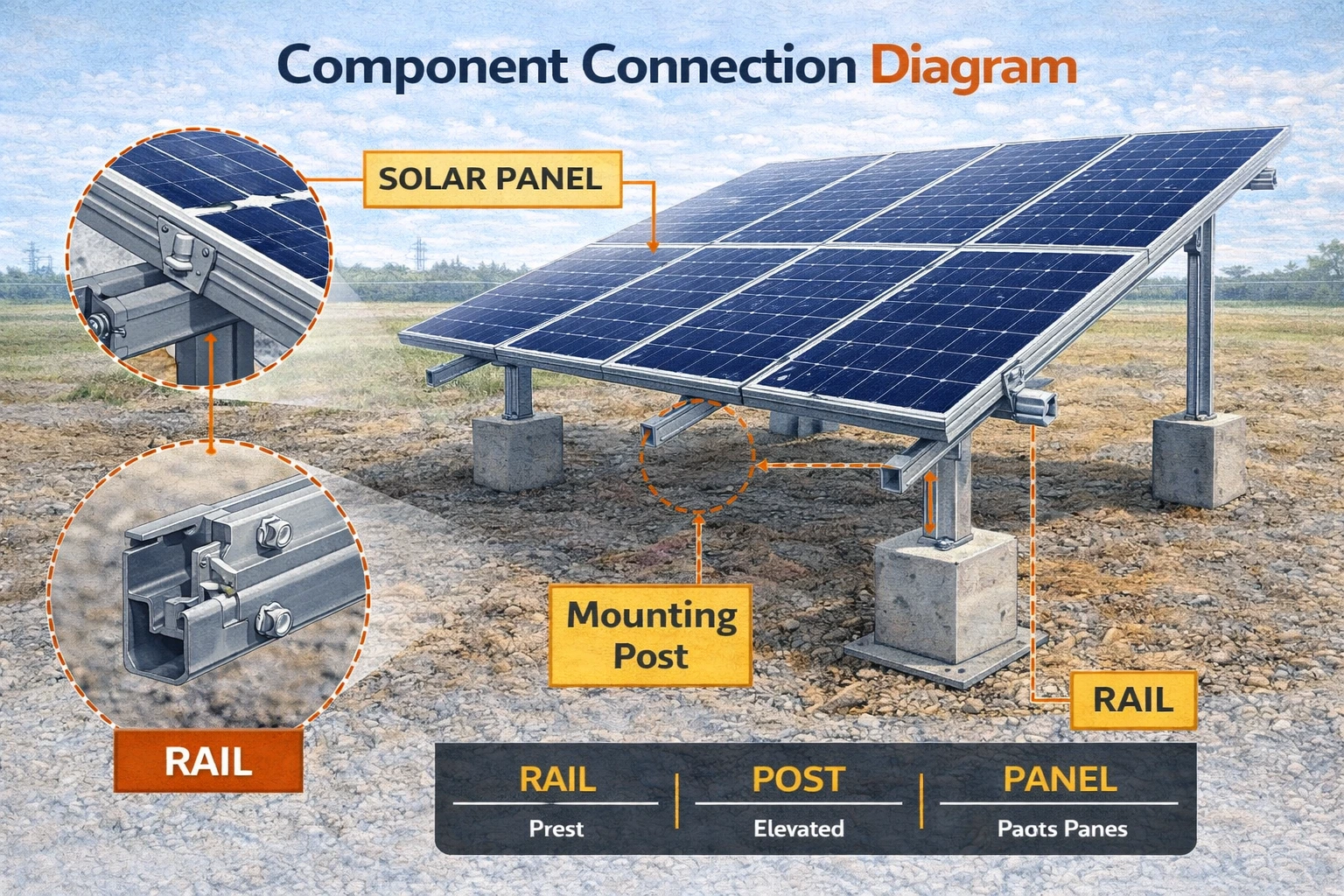
A mounting structure is a framework that supports solar panels and positions them at the correct tilt and orientation to maximize sunlight exposure.
It plays a key role in:
- Maintaining structural stability
- Ensuring proper panel alignment
- Withstanding environmental loads
- Enhancing solar electricity generation
Importance of Proper Installation
Correct installation ensures:
- Long-term durability
- Accurate alignment and tilt
- Resistance to wind and weather
- Reduced maintenance
- Lower solar energy installation cost
Improper installation can result in structural failure and reduced system efficiency.
Types of Solar Mounting Structures
Common types include:
- Ground-mounted structures
- Rooftop structures (flat and sloped)
- Ballasted systems
- Elevated structures
- Tracking systems
Each type requires specific installation techniques.
Tools and Materials Required
Tools
- Measuring tape
- Spirit level
- Torque wrench
- Spanners and wrenches
- Drilling machine
- Alignment tools
Materials
- Mounting rails
- Mounting posts (legs)
- Fasteners (nuts, bolts, washers)
- Anchor bolts
- Clamps
Pre-Installation Preparation
1. Site Assessment
Evaluate:
- Soil condition (for ground systems)
- Roof condition (for rooftop systems)
- Shading and orientation
2. Review Design Documents
Study:
- General Arrangement (GA) drawings
- Structural drawings
- Layout plans
3. Material Inspection
- Check all materials before installation to avoid defects.
4. Safety Planning
- Ensure safety measures and PPE are in place.
Step-by-Step Installation Process
Step 1 – Foundation Preparation
- Construct footings as per design
- Ensure proper curing of concrete
Step 2 – Installation of Mounting Posts
- Fix posts on footings
- Ensure vertical alignment
Step 3 – Fixing of Rails and Beams
- Attach horizontal members
- Ensure proper alignment and spacing
Step 4 – Structure Alignment
- Check tilt angle
- Ensure rows are straight and evenly spaced
Step 5 – Tightening of Fasteners
- Use a torque wrench
- Ensure secure connections
Step 6 – Panel Mounting Preparation
- Install clamps and supports
- Prepare the structure for panel installation
Step 7 – Final Inspection
- Check alignment, stability, and dimensions
- Verify all connections
Quality Checks During Installation
1. Alignment Check
- Ensure proper orientation and spacing.
2. Structural Stability
- Check for movement or looseness.
3. Fastener Tightness
- Ensure all bolts are properly tightened.
4. Tilt Angle Verification
- Ensure panels will receive optimal sunlight.
5. Corrosion Protection
- Check protective coatings on structures.
Impact on Solar Panel System Cost
Proper installation helps:
- Reduce maintenance costs
- Avoid rework
- Improve efficiency
- Optimize the cost of solar per kWh installed
Efficient installation lowers the overall solar energy installation cost.
Conclusion
The installation of solar mounting structures is a fundamental step in solar PV projects that directly impacts system performance, safety, and durability. By following a structured installation process, using appropriate tools, and ensuring quality checks, installers can achieve efficient and reliable solar systems.
Proper installation techniques are essential for successful renewable solar projects. Additionally, compliance with guidelines from the Ministry of New and Renewable Energy ensures safety and reliability.
With the right approach, solar professionals can optimize solar panel system cost, enhance solar electricity generation, and contribute to sustainable solar energy for home use and large-scale renewable solar solutions.
FAQs
Q1. What is the role of mounting structures in solar PV systems?
Ans: They support solar panels and ensure proper alignment and stability.
Q2. What tools are required for installation?
Ans: Measuring tape, torque wrench, spanners, and alignment tools.
Q3. Why is alignment important in solar mounting structure installation?
Ans: It ensures maximum sunlight exposure and system efficiency.
Q4. How does installation affect solar panel system cost?
Ans: Proper installation reduces maintenance and improves efficiency, lowering costs.
Q5. Are safety measures necessary during installation?
Ans: Yes, safety measures prevent accidents and ensure smooth execution.
Important Factors Deciding the Type of Solar PV System to be Installed
A solar site assessment helps installers evaluate location, shading, structure, and energy requirements before installation. This guide explains the essential steps for accurate solar system planning.

Solar Energy Myths vs. Facts: What You Should Know
Solar power myths often mislead homeowners. Learn the facts about cost, efficiency, and reliability of solar energy.
Solar PV Module Damage Inspection & Quality Checks in Solar EPC
A practical solar panel unpacking guide covering safe handling, on-site precautions, and key do’s and don’ts to avoid module damage.
Solar Inverter Wire Connection Inspection Guide
A complete guide to inspecting solar inverter wire connections, identifying damaged cables, loose terminals, and ensuring safe, efficient, and reliable solar PV system operation.
Solar Panel Sizes and Features in Delhi/NCR: A Complete Guide
Planning to install solar panels in Delhi/NCR? Explore the different sizes, technologies, and key features of solar panels available for residential, industrial, and commercial use. Learn how to choose the right one for your energy needs and roof space.
Solar ROI for Commercial & Industrial Projects in India: Cost, Payback & Profits
Learn how commercial and industrial solar projects deliver strong ROI for businesses in India through lower energy costs, faster payback, and long-term profit generation.
How to Test Current Output of Solar PV Strings
A complete guide to solar PV string current testing, including current measurement, comparison of string outputs, fault identification, and troubleshooting techniques for optimal system performance.
Difference Between Single-Phase and Three-Phase Voltage and Its Use for Solar PV Installer – Complete Guide
Understanding the difference between single-phase and three-phase voltage is essential for solar PV installers. While single-phase supply is common in residential systems, three-phase power is widely used in commercial and industrial solar projects. This complete guide explains electrical phase differences, applications in solar installations, and how choosing the right phase connection impacts system efficiency, safety, and performance.