
In solar photovoltaic (PV) projects, mounting structures are the backbone that support solar panels and ensure their correct positioning for maximum solar electricity generation. A well-installed solar mounting structure guarantees stability, durability, and optimal performance, while poor installation can lead to system inefficiencies and increased solar installation charges.
For EPC professionals and installers, understanding the complete process of solar mounting structure installation is essential for delivering reliable and cost-effective solar solutions. Proper installation practices are critical for the long-term success of renewable solar systems.
This blog provides a complete step-by-step guide to solar mounting structure installation, covering preparation, execution, quality checks, and best practices.
What is a Solar Mounting Structure?
A mounting structure is a framework that supports solar panels and positions them at the correct tilt and orientation to maximize sunlight exposure.
It plays a key role in:
- Maintaining structural stability
- Ensuring proper panel alignment
- Withstanding environmental loads
- Enhancing solar electricity generation
Importance of Proper Installation
Correct installation ensures:
- Long-term durability
- Accurate alignment and tilt
- Resistance to wind and weather
- Reduced maintenance
- Lower solar energy installation cost
Improper installation can result in structural failure and reduced system efficiency.
Types of Solar Mounting Structures
Common types include:
- Ground-mounted structures
- Rooftop structures (flat and sloped)
- Ballasted systems
- Elevated structures
- Tracking systems
Each type requires specific installation techniques.
Tools and Materials Required
Tools
- Measuring tape
- Spirit level
- Torque wrench
- Spanners and wrenches
- Drilling machine
- Alignment tools
Materials
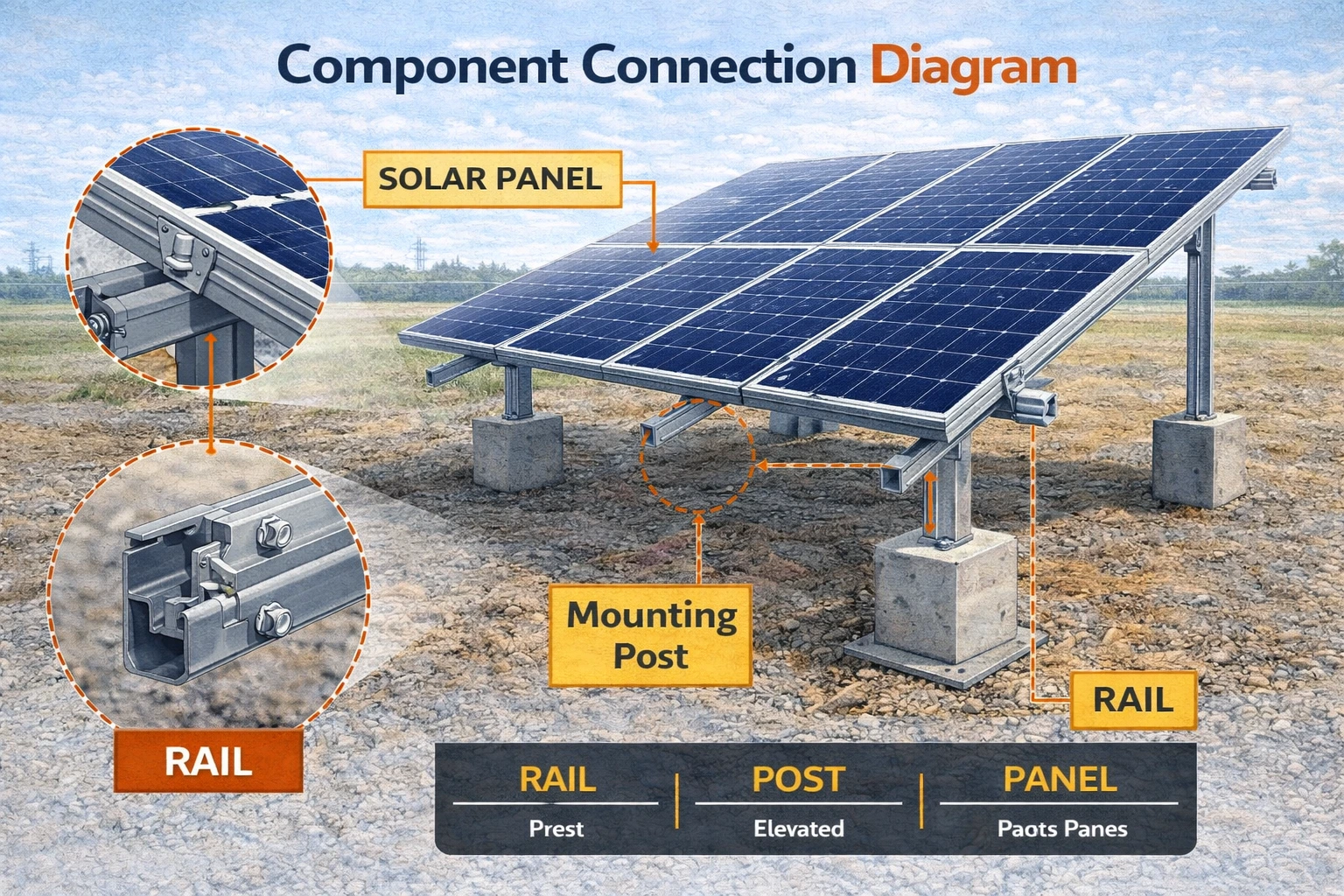
- Mounting rails
- Mounting posts (legs)
- Fasteners (nuts, bolts, washers)
- Anchor bolts
- Clamps
Pre-Installation Preparation
1. Site Assessment
Evaluate:
- Soil condition (for ground systems)
- Roof condition (for rooftop systems)
- Shading and orientation
2. Review Design Documents
Study:
- General Arrangement (GA) drawings
- Structural drawings
- Layout plans
3. Material Inspection
- Check all materials before installation to avoid defects.
4. Safety Planning
- Ensure safety measures and PPE are in place.
Step-by-Step Installation Process
Step 1 – Foundation Preparation
- Construct footings as per design
- Ensure proper curing of concrete
Step 2 – Installation of Mounting Posts
- Fix posts on footings
- Ensure vertical alignment
Step 3 – Fixing of Rails and Beams
- Attach horizontal members
- Ensure proper alignment and spacing
Step 4 – Structure Alignment
- Check tilt angle
- Ensure rows are straight and evenly spaced
Step 5 – Tightening of Fasteners
- Use a torque wrench
- Ensure secure connections
Step 6 – Panel Mounting Preparation
- Install clamps and supports
- Prepare the structure for panel installation
Step 7 – Final Inspection
- Check alignment, stability, and dimensions
- Verify all connections
Quality Checks During Installation
1. Alignment Check
- Ensure proper orientation and spacing.
2. Structural Stability
- Check for movement or looseness.
3. Fastener Tightness
- Ensure all bolts are properly tightened.
4. Tilt Angle Verification
- Ensure panels will receive optimal sunlight.
5. Corrosion Protection
- Check protective coatings on structures.
Impact on Solar Panel System Cost
Proper installation helps:
- Reduce maintenance costs
- Avoid rework
- Improve efficiency
- Optimize the cost of solar per kWh installed
Efficient installation lowers the overall solar energy installation cost.
Conclusion
The installation of solar mounting structures is a fundamental step in solar PV projects that directly impacts system performance, safety, and durability. By following a structured installation process, using appropriate tools, and ensuring quality checks, installers can achieve efficient and reliable solar systems.
Proper installation techniques are essential for successful renewable solar projects. Additionally, compliance with guidelines from the Ministry of New and Renewable Energy ensures safety and reliability.
With the right approach, solar professionals can optimize solar panel system cost, enhance solar electricity generation, and contribute to sustainable solar energy for home use and large-scale renewable solar solutions.
FAQs
Q1. What is the role of mounting structures in solar PV systems?
Ans: They support solar panels and ensure proper alignment and stability.
Q2. What tools are required for installation?
Ans: Measuring tape, torque wrench, spanners, and alignment tools.
Q3. Why is alignment important in solar mounting structure installation?
Ans: It ensures maximum sunlight exposure and system efficiency.
Q4. How does installation affect solar panel system cost?
Ans: Proper installation reduces maintenance and improves efficiency, lowering costs.
Q5. Are safety measures necessary during installation?
Ans: Yes, safety measures prevent accidents and ensure smooth execution.

Solar for Commercial Buildings in India: Costs, Benefits & ROI Explained
Solar for commercial buildings in India is becoming the smartest way to cut electricity bills and increase energy independence. This guide explains system costs, benefits, ROI, and how solar power helps offices, malls, hotels, and commercial complexes become more sustainable and profitable.

PPA Model Solar for Manufacturing Units: A Complete Guide
The PPA model allows factories to use solar power without any capital investment. Under a Power Purchase Agreement, industries buy clean electricity at a fixed, lower tariff while the solar developer owns, operates, and maintains the plant—making solar adoption simple, risk-free, and cost-effective.

India’s Renewable Energy Revolution: The Role of Agrivoltaics
Agrivoltaics, the integration of solar panels with agricultural land, is emerging as a key driver in India’s renewable energy revolution. This blog explains how agrivoltaics supports sustainable farming, increases land efficiency, and contributes to clean energy production, helping India meet its solar energy targets while boosting rural economies.
Standalone Solar PV System Startup Guide
A complete guide to standalone solar PV system startup, including commissioning steps, safety inspections, and operational checks for reliable performance.
UP Government Incentive: Stamp Duty Exemption for Solar Land
Uttar Pradesh offers stamp duty exemption on land for solar projects, encouraging investment and growth in renewable energy.
500 kW Solar System Price in Indore: Complete Industrial Guide
Planning to install a 500 kW solar power plant in Indore? Discover the complete cost details, government subsidy options, and potential savings for industries in 2025.

1 MW Solar Plant for Industry: Cost, Generation & Payback
A detailed guide on 1 MW solar plant for industry covering installation cost, area requirement, power generation, ROI, and long-term savings in India.

MPPT and PWM: Which Solar Charge Controller Is Better?
MPPT and PWM are the two most common solar charge controllers. This guide explains MPPT and PWM differences, efficiency, cost, and usage.