
In solar photovoltaic (PV) systems, solar mounting post installations are critical structural components that support the entire solar array. These posts transfer loads from solar panels to the foundation, ensuring stability against environmental forces such as wind and weight.
Proper installation of mounting posts is essential for maintaining alignment, structural integrity, and long-term performance of the solar plant. Any error at this stage can lead to misalignment, reduced solar electricity generation, and increased solar installation charges.
Correct installation of mounting structures is a fundamental requirement for reliable and efficient renewable solar systems.
This blog provides a complete step-by-step guide for installing mounting posts for fixed solar structures with legs, ensuring accuracy, safety, and optimized solar panel system cost.
What are Mounting Posts (Legs)?
Mounting posts or legs are vertical structural elements that support the solar mounting structure and panels.
They are typically used in:
- Ground-mounted solar plants
- Elevated solar structures
These posts are anchored into footings to provide a stable base.
Importance of Solar Mounting Post Installation
Correct installation of mounting posts ensures:
- Structural stability
- Accurate panel alignment
- Resistance to wind loads
- Long-term durability
- Efficient solar electricity generation
Improper installation can lead to structural failure and increased solar energy installation cost.
Types of Mounting Posts
1. Steel Posts
- High strength
- Corrosion-resistant (galvanized)
2. Aluminum Posts
- Lightweight
- Resistant to corrosion
3. RCC Posts
- Durable
- Used in specific applications
Tools and Materials Required
Tools
- Measuring tape
- Spirit level
- Torque wrench
- Spanners and wrenches
- Drilling machine
Materials
- Mounting posts
- Anchor bolts
- Fasteners (nuts, bolts, washers)
- Concrete or foundation base
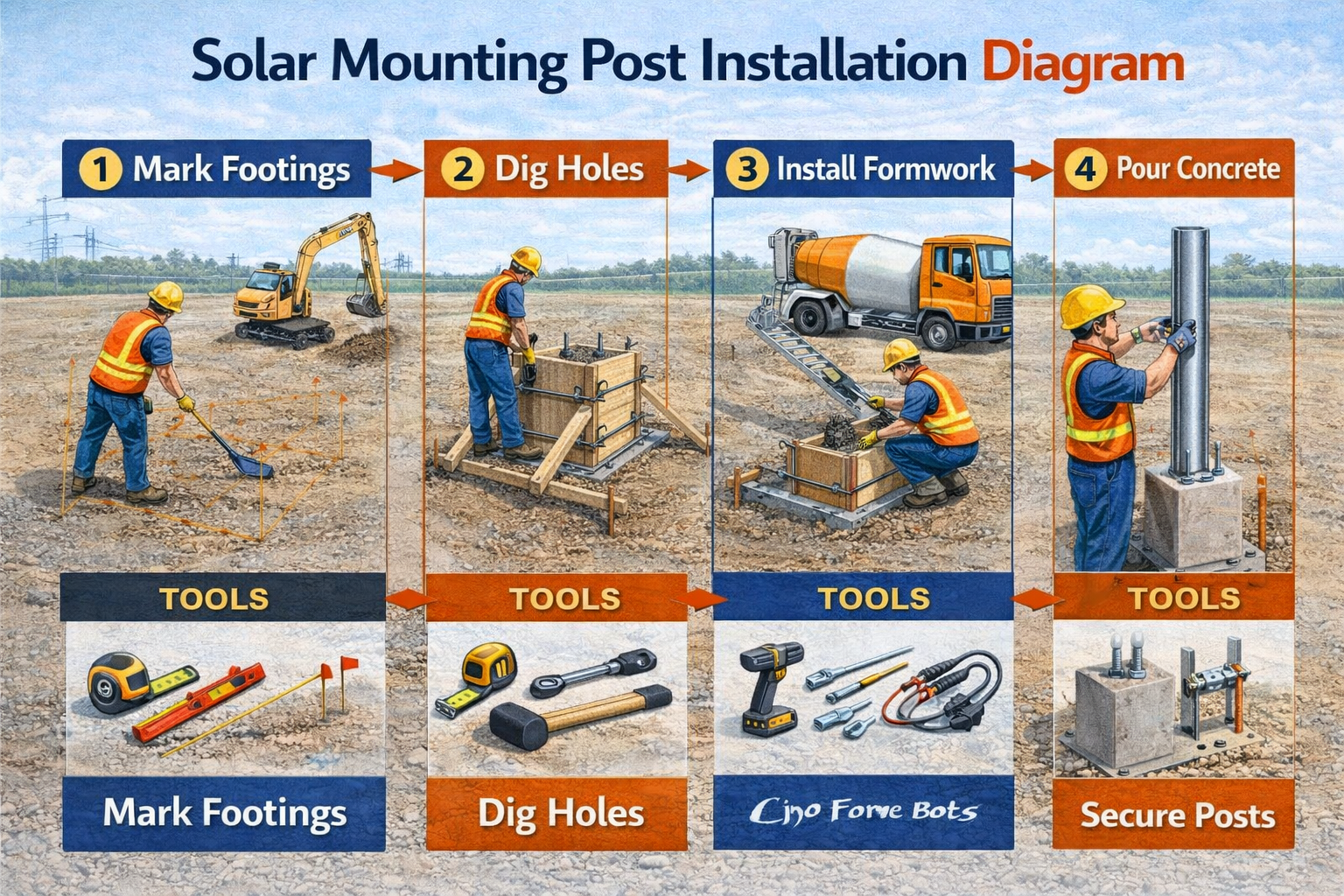
Step-by-Step Installation Process
Step 1 – Site Preparation
- Clear and level the site
- Ensure footings are constructed as per design
Step 2 – Verify Footing Positions
- Check alignment and spacing
- Ensure positions match design drawings
Step 3 – Place Mounting Posts
- Position posts on footings
- Align with anchor bolts
Step 4 – Fix Posts to Foundation
- Secure posts using anchor bolts
- Tighten bolts properly
Step 5 – Check Vertical Alignment
- Use spirit level
- Ensure posts are perfectly vertical
Step 6 – Adjust and Align Posts
- Ensure uniform height
- Maintain correct spacing between posts
Step 7 – Tighten Fasteners
- Use torque wrench for proper tightening
- Avoid over-tightening
Step 8 – Inspect Installation
- Check stability
- Verify alignment and dimensions
Step 9 – Proceed to Structure Assembly
- Once posts are fixed, proceed with mounting structure installation.
Quality Checks for Mounting Post Installation
1. Vertical Alignment
- Posts must be perpendicular to the ground.
2. Spacing Accuracy
- Ensure correct distance between posts.
3. Tightness of Fasteners
- All bolts must be securely tightened.
4. Structural Stability
- Posts should not wobble or shift.
5. Corrosion Protection
- Ensure protective coatings are intact.
Impact on Solar Panel System Cost
Proper installation helps:
- Reduce structural issues
- Avoid rework
- Improve efficiency
- Optimize cost of solar per kWh installed
Incorrect installation increases maintenance and repair costs.
Conclusion
The solar mounting post installation for fixed solar structures is a critical step in solar PV projects that directly impacts system stability and performance. By following proper procedures, using appropriate tools, and ensuring accurate alignment, installers can achieve reliable and efficient installations.
Proper installation practices are essential for successful solar projects. Additionally, compliance with standards set by the Ministry of New and Renewable Energy ensures safety and quality.
With correct installation techniques, solar professionals can optimize solar panel system cost, improve solar electricity generation, and contribute to sustainable solar energy for home use and large-scale renewable solar solutions.
FAQs
Q1. What is the role of mounting posts in solar PV systems?
Ans: They support the mounting structure and transfer loads to the foundation.
Q2. Why is vertical alignment important?
Ans: It ensures proper structure alignment and stability.
Q3. What tools are required for installation?
Ans: Measuring tape, spirit level, torque wrench, and spanners.
Q4. What happens if posts are not properly aligned?
Ans: It can lead to structural issues and reduced efficiency.
Q5. Are safety measures important during installation?
Ans: Yes, safety measures prevent accidents and ensure safe working conditions.
Flat Roof Solar Installation Guide: Design, Mounting Systems & Best Practices
A practical guide to flat roof solar installation covering key design considerations, mounting system types, and best practices for efficient and reliable performance.

Solar PPA for Commercial Buildings: Cost, Benefits & Savings
Looking to cut electricity bills without investing in solar assets? Commercial Solar PPA providers offer zero-investment solar solutions where businesses pay only for the power generated—simple, risk-free, and cost-effective.
Types of Hazards in PV Installations Guide
A complete guide to the types of hazards in PV installations, covering electrical, mechanical, fire, chemical, environmental, structural, and workplace safety risks.
Solar Panel Specifications Explained: How to Read Datasheets & Choose the Right PV Module
Choosing the right solar panel requires a clear understanding of technical specifications. This guide explains how to read solar panel datasheets, interpret key parameters, and select the best PV module for your project.
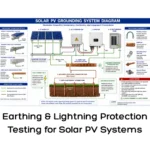
Earthing & Lightning Protection Testing for Solar PV Systems
A complete guide to earthing and lightning protection testing for solar PV systems, ensuring safety, regulatory compliance, and long-term system reliability.
Solar Power Set to Overtake Coal as World’s Largest Energy Source in Four Years
Solar power has come a long way in the past decade, moving from being an also-ran to one of the major players in the global energy race. According to the International Energy Agency, next year, solar photovoltaic capacity will surpass hydropower, followed by gas-fired generation in three years and coal in four years.
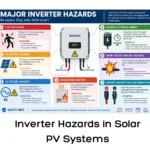
Solar Inverter Hazard Prevention Guide
A complete guide to identifying inverter hazards in solar PV systems and following safe work practices during installation, testing, operation, and maintenance.

Solar Loans, Subsidies & EMI Plans: Financing Made Easy
Explore solar loans, government subsidies, and flexible EMI plans to make installing solar panels affordable and hassle-free.