
In any solar photovoltaic (PV) system, the inverter is the heart of the system, converting DC power from solar panels into usable AC electricity. While much attention is given to inverter selection, proper installation of the inverter stand is equally critical for safety, performance, and durability.
An improperly installed inverter stand can lead to vibration issues, overheating, electrical hazards, and increased solar installation charges due to maintenance and repairs. Correct mounting and placement of electrical components is essential for reliable renewable solar installations.
This blog provides a complete step-by-step guide to installing an inverter stand as per drawings and manufacturer manuals, ensuring safety, compliance, and optimal solar electricity generation.
Importance of Proper Inverter Stand Installation
1. Structural Stability
Provides strong support for the inverter.
2. Heat Management
Ensures proper ventilation and cooling.
3. Safety
Prevents electrical hazards and accidents.
4. Ease of Maintenance
Allows easy access for inspection and servicing.
5. Compliance
Ensures adherence to installation standards.
Components of Inverter Stand Setup
- Inverter stand/frame
- Anchor bolts
- Fasteners (nuts, bolts, washers)
- Anti-vibration pads
- Protective coatings
Tools and Materials Required
Tools
- Drilling machine
- Torque wrench
- Spanners and wrenches
- Measuring tape
- Spirit level
Materials
- Inverter stand structure
- Anchor bolts
- Fasteners
- Protective coatings
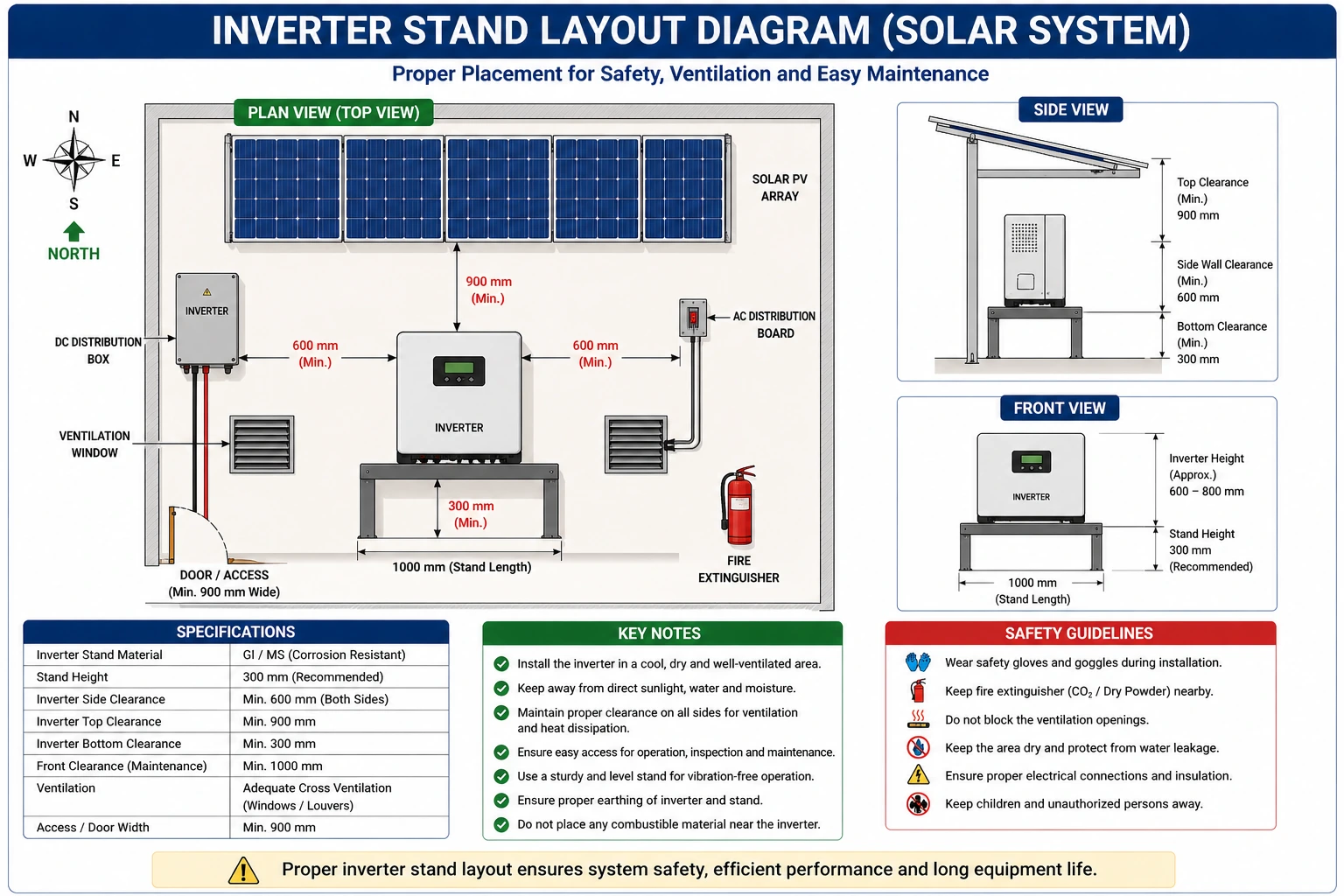
Step-by-Step Installation Process
Step 1 – Mark Installation Area
- Mark positions as per the drawings
- Ensure proper spacing
Step 2 – Prepare Foundation/Base
- Construct a concrete base if required
- Ensure a level surface
Step 3 – Assemble Inverter Stand
- Assemble frame components
- Ensure proper alignment
Step 4 – Fix the Stand to the Floor
- Use anchor bolts
- Ensure firm fixing
Step 5 – Install Anti-Vibration Pads
- Reduce vibrations
- Protect inverter components
Step 6 – Apply Protective Coating
- Prevent corrosion
- Enhance durability
Step 7 – Check Alignment and Leveling
- Use a spirit level
- Ensure proper positioning
Step 8 – Mount the Inverter on the Stand
- Place the inverter securely
- Follow manufacturer instructions
Step 9 – Secure the Inverter
- Tighten bolts properly
- Ensure stability
Step 10 – Final Inspection
- Verify alignment and stability
- Check compliance with drawings
Quality Checks
1. Structural Stability
Ensure the stand can support the inverter’s weight.
2. Leveling
Verify horizontal alignment.
3. Fastener Tightness
Ensure proper torque application.
4. Ventilation Clearance
Ensure adequate airflow around the inverter.
5. Compliance with Manuals
Follow manufacturer guidelines.
Conclusion
Proper installation of an inverter stand as per drawings and manufacturer manuals is essential for ensuring safety, durability, and efficient performance of solar PV systems. By following structured installation steps and maintaining quality standards, installers can prevent risks and improve system reliability.
Correct mounting and placement of components are crucial for successful renewable solar installations. Additionally, adherence to standards set by the Ministry of New and Renewable Energy ensures compliance and operational safety.
With the right installation approach, solar professionals can optimize solar panel system cost, enhance solar electricity generation, and support sustainable solar energy for home use and large-scale renewable solar solutions.
FAQs
Q1. Why is an inverter stand important?
Ans: It provides structural support and ensures safe operation.
Q2. What should be checked before installation?
Ans: Drawings, site conditions, and load-bearing capacity.
Q3. How does proper installation affect solar panel system cost?
Ans: It reduces maintenance and improves efficiency.
Q4. Is ventilation important for inverter installation?
Ans: Yes, it prevents overheating and improves performance.
Q5. Are safety measures necessary during installation?
Ans: Yes, they ensure safe and efficient execution.

Solar Chankya: Complete Guide to Solar Systems and Components
Discover the key components of solar systems—from panels to inverters and batteries—and how they work together for efficient energy solutions
Solar for Pharma & Chemical Industries: Cost, Benefits, Installation & ROI in India
A complete guide on solar systems for the FMCG industry in India covering installation cost, benefits, ROI, system sizing, and the installation process.

Photovoltaic Power Output Explained: A Practical Guide for Homes & Businesses
Photovoltaic power output determines how much electricity a solar system can generate. This simple guide explains PV output, how it is calculated, and what it means for homes and businesses planning to go solar.
PV Cable & Conduit Labeling Guide: Best Practices for Solar Installations
A complete guide to cable termination in solar installations, including tools, step-by-step methods, and best practices for safe connections.
Verify Grounding and Insulation Resistance in Solar PV Systems
A complete guide to solar PV grounding and insulation resistance testing, ensuring electrical safety, compliance, and reliable system performance.

Complete Guide to Solar Panel Subsidy Scheme in Haryana
Solar power is not only less expensive, but it is also the most abundant source of clean energy.
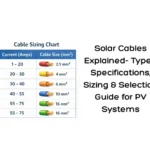
Solar Cable Guide | Types, Sizing & Specifications for PV Systems
Solar cables play a critical role in ensuring efficient and safe power transmission in PV systems. This guide explains cable types, specifications, sizing methods, and best practices for selecting the right solar cables.
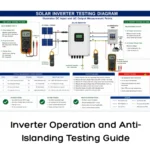
Inverter Operation and Anti-Islanding Testing Guide
A complete guide to solar inverter testing and anti-islanding performance verification, including AC system measurements and commissioning best practices.