Food processing units operate with continuous and energy-intensive requirements, cold storage, refrigeration, washing lines, grading machines, packaging systems, boilers, air compressors, and quality control laboratories all depend on stable electricity. With rising grid tariffs and increasing sustainability demands, solar for food processing units is rapidly becoming a strategic investment.
By installing solar panel systems on factory rooftops, cold storage sheds, warehouse structures, and unused land, food industries can shift to renewable energy and solar energy, significantly reducing operating costs while strengthening brand sustainability.
Why Solar for Food Processing Units is Ideal
Food processing facilities typically function for long hours and experience heavy daytime electricity consumption, making them perfectly aligned with solar electricity generation profiles.
Key benefits include:
- Major reduction in monthly power bills
- Stabilised energy costs for long-term planning
- Support for refrigeration and cold chain systems
- Improved sustainability and food-grade compliance
- Lower carbon footprint across operations
- Adoption of advanced renewable energy technology
For an industry where margins, reliability, and compliance are crucial, solar becomes a dependable energy foundation.
Solar for Food Processing Units: Types of Solar Systems
1. Rooftop Solar Panel Systems
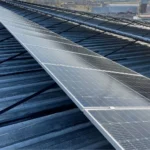
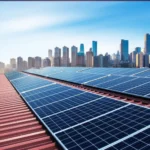
A solar panel in rooftop system utilises processing hall roofs, cold storage blocks, warehouses, and packaging facilities without disturbing daily operations.
2. Ground-Mounted Solar Plants
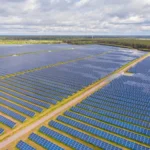
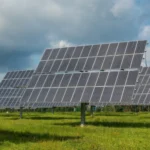
Large food parks and agro-processing clusters can install utility-scale plants for bulk energy consumption.
3. Hybrid Solar Systems
Hybrid systems with battery storage support uninterrupted power for refrigeration, testing labs, and temperature-sensitive operations.
Solar for Food Processing Industry: Installation Cost
The solar panel system cost depends on plant capacity, rooftop structure, safety requirements, and power conditioning needs.
Key cost factors include:
- Solar module price per watt
- Industrial inverters and protection equipment
- Mounting structures for food-grade facilities
- Electrical works and compliance approvals
- Engineering, installation, and commissioning
Commonly evaluated financial metrics:
- Solar installation cost per kWh
- Solar energy installation cost
- Solar roof installation cost
- Total cost of solar installation
- Cost of solar per kWh installed
- Home roof solar panels cost (for admin offices and testing labs)
With proper design, solar provides one of the lowest long-term energy costs in the food industry.
Space Requirement & Design Planning
System capacity is determined by energy demand and available area.
Important planning aspects include:
- Solar panel area per kW
- Roof hygiene and contamination prevention
- Structural load and corrosion protection
- Cable routing around wash-down zones
- Safe maintenance access
Professional engineering ensures solar systems comply with food safety and industrial regulations.
Electricity Savings, Performance & ROI
Food processing units benefit strongly from high self-consumption of solar power.
Expected advantages:
- 40-70% grid power offset
- Protection from tariff escalation
- 3-5 year estimated ROI period
- 25+ years of stable power supply
- Improved operational cost control
Over time, solar delivers one of the most competitive average cost of solar panels on a house or industrial facility, driving consistent financial performance.
Government Support & Policy Environment
While direct capital subsidies for large food industries are limited, multiple frameworks support industrial solar growth:
- Net-metering and open-access policies
- Accelerated depreciation benefits
- Electricity duty exemptions
- Green manufacturing and ESG frameworks
These initiatives align with national renewable goals and indirectly strengthen the government solar subsidy scheme ecosystem and subsidised solar panels for home and industrial adoption.
Solar for Food Processing Plants: Smart Solar Technology
Modern installations integrate:
- High-efficiency solar modules
- Multi-MPPT industrial inverters
- Cloud-based performance monitoring
- Predictive maintenance tools
- Energy analytics dashboards
Advances in renewable energy technology enable solar plants to operate as intelligent, performance-driven infrastructure.
Solar for Food Processing Industries: Making Solar Energy Economical
As the cost of solar panels continues to fall and power demand rises, solar remains one of the most reliable methods for making solar energy economical for food processors.
It enables companies to control energy expenses, meet sustainability benchmarks, and enhance supply-chain competitiveness.
Conclusion
Solar for food processing units offers more than energy savings, it strengthens business resilience. From cold storage and washing lines to packaging and warehousing, solar power supports the full operational ecosystem of the food industry.
For food processors aiming to lower operating costs, secure energy reliability, and meet sustainability expectations, solar energy provides a long-term, scalable solution.
FAQs
Q1. Can solar power run cold storage units?
Ans: Yes, solar can significantly offset cold storage and refrigeration electricity demand.
Q2. Is solar safe for food-grade environments?
Ans: Yes, systems are designed to meet hygiene and industrial safety standards.
Q3. Does solar affect production hygiene?
Ans: No, installations are non-intrusive and contamination-free.
Q4. Can solar support continuous food processing operations?
Ans: Yes, especially when combined with grid or battery backup.
Q5. How much area is needed for a food processing solar plant?
Ans: Roughly 90-110 sq. meters per 10 kW, depending on module efficiency.